
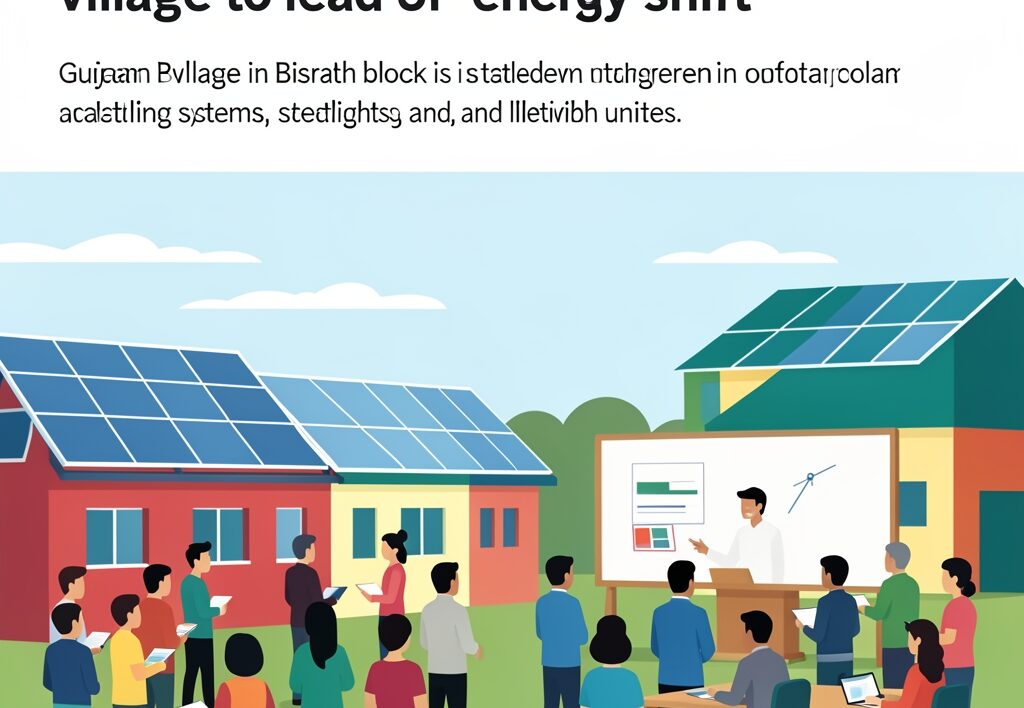
Dujana village becomes a model solar village to lead UP energy shift
Dujana village steps up as a model solar village in western UP
Dujana village in the Bisrakh block is set to become a model solar village, bringing renewable energy infrastructure directly to rural Uttar Pradesh. Announced by the Gautam Buddha Nagar district administration, this initiative aims to integrate clean power into both household consumption and local commercial activities. While major urban hubs grapple with grid reliability and rising power demands, this rural experiment offers a blueprint for sustainable development across the state.
For residents and regional policymakers watching from Lucknow, this pilot scheme represents a tangible step toward decentralized power generation. State energy planners hope that shifting rural outlays toward solar assets will ease pressure on conventional grids while shielding agrarian communities from volatile electricity costs.
Powering rural livelihoods with clean energy
The transformation involves more than just putting panels on rooftops. According to Lavlesh Kumar Sisodia, project officer at the UP New and Renewable Energy Development Agency (UPNEDA) in Gautam Budh Nagar, the blueprint integrates income-generating infrastructure directly with clean energy generation. The administration has planned several vital facilities to boost local commerce:
- Rooftop solar systems installed across residential and public buildings.
- Comprehensive solar street lighting along village roads and public gathering spaces.
- Dedicated solar-powered units including a milk chiller, a flour mill, and a cold-press unit.
These initiatives draw backing from the national PM Surya Ghar: Muft Bijli Yojana framework, scaling clean energy down to grassroots commercial needs. By powering agro-processing units with the sun, the village cuts down operational overheads for local farmers and small entrepreneurs. Similar decentralized models are frequently discussed in policy circles when reviewing administrative milestones, much like how the state evaluates broader educational reforms such as the Sarvodaya Schools Overhaul Ordered by UP Government After Protests or local governance measures seen in Allahabad High Court Orders Sitapur and Bahraich DMs to Pay Compensation to Rape Victims Within 40 Days.
Why it matters for local communities
As Uttar Pradesh scales its industrial ambitions—partnering with international entities as seen in recent trade dialogues and UP-Japan student interaction in Lucknow bridges cultural and linguistic divides—balancing high-tech growth with rural upliftment remains a core administrative challenge. Small-town and village transitions like the Dujana project prove that green infrastructure is not reserved solely for smart cities. If successful, this framework could easily replicate across other districts, altering how rural households interact with electricity.
For the UP diaspora and urban observers tracking state progress from afar, these grassroots developments signal a practical shift in governance. Infrastructure projects must address basic economic viability alongside environmental goals. Whether managing security updates like the recent UP Police Seek Terror Tag for Gangster Shahzad Bhatti and Network or investigating local tragedies such as the Lucknow murder-suicide fallout: Locked iPhones and alimony battles deepen mystery in Gomti Nagar tragedy, state machinery is constantly tested across multiple fronts. Ground-level energy transformations provide a welcome narrative of constructive development.
Clean energy integration at the village level directly reduces operating costs for rural enterprises while establishing a scalable framework for sustainable state growth.