
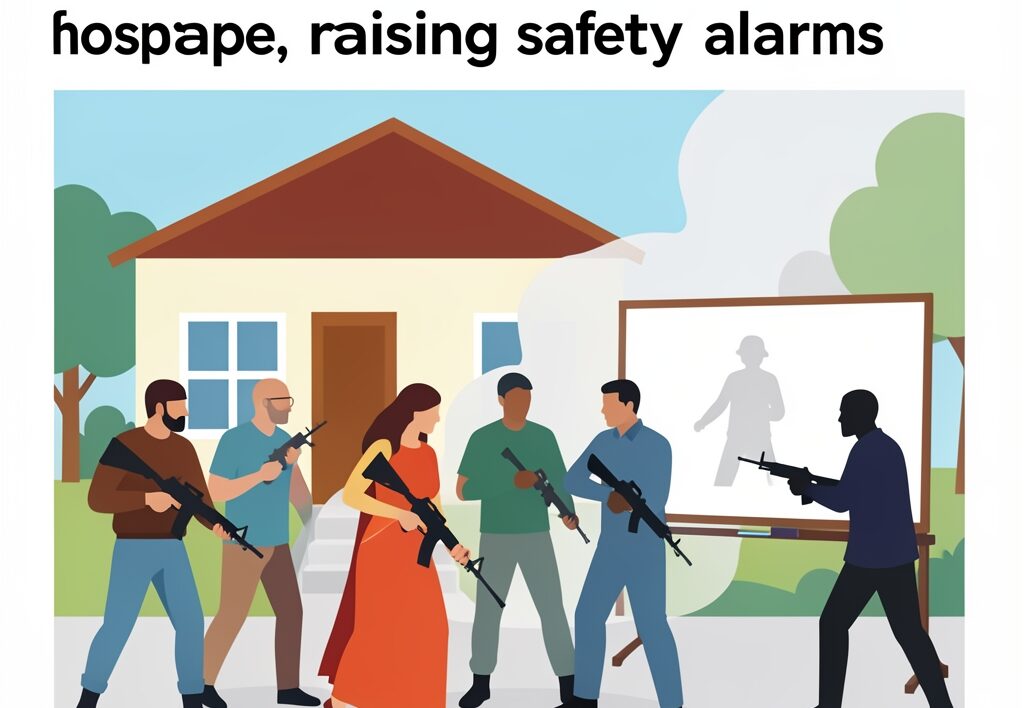
Ghaziabad armed robbery leaves family hostage, raising safety alarms
Ghaziabad armed robbery leaves family hostage, raising safety alarms
Early Tuesday morning at around 2 am, a quiet residential pocket in Kalchhina near Modinagar transformed into a nightmare during a violent Ghaziabad armed robbery. Several armed intruders breached a local home, held five family members hostage for an entire hour, and escaped with cash and valuables worth ₹3 to ₹4 lakh. Local residents and communities across Uttar Pradesh are now questioning suburban perimeter security as details of the tactical raid emerge from the district.
According to Siddharth Gautam, assistant commissioner of police (ACP) for Modinagar, the attackers specifically targeted the house because of its vulnerable location on the outskirts of the locality. Armed with sharp weapons and crude tools, the gang executed a calculated plan that left the household completely helpless before local police arrived at the scene.
Tactical Breach and Suburban Vulnerability
Investigators at the crime scene uncovered a disturbing method used by the perpetrators to subdue the household. Officers found chilli powder wrapped in cloth that had been deliberately burned outside domestic openings. This created thick, acrid smoke designed to suffocate the inhabitants and force them to unlock doors out of sheer desperation and fear for their lives.
Incidents of violent intrusion bear distinct tactical signatures that law enforcement agencies must address proactively across developing municipal zones. When paired with other regional security breakdowns, such as Ghaziabad Street Crime Claims Life Over Online Dispute, residents living in high-growth districts face mounting anxieties regarding everyday policing, local intelligence gathering, and neighborhood vigilance.
Furthermore, suburban properties lacking perimeter sensors, security gates, or active community night patrols remain prime targets for organized criminal elements operating across district boundaries. The ease with which the gang neutralized the household points to gaps in rural and semi-urban night policing.
The Broader Impact on UP Households
For families residing in peripheral neighborhoods across the National Capital Region and expanding urban centers like Lucknow, domestic security is a constant talking point at tea stalls and resident welfare association meetings. While state authorities frequently announce major infrastructure pushes—such as those highlighted in Yogi Cabinet Clears ₹1,008-Crore Expressway, Ex-Agniveer Quota and Smart Schools in Major Policy Push—grassroots policing in outlying municipal wards requires immediate reinforcement and boots on the ground.
Families tracking regional news from afar often worry about elderly relatives living in independent houses rather than modern gated apartment complexes. Property layouts on village borders or highway exits lack the layered access controls found in metropolitan societies, making them attractive options for habitual offenders seeking quick gains.
- Outlying residential pockets face distinct security vulnerabilities due to delayed physical response times.
- Criminal gangs utilize specialized harassment techniques, including chemical irritants, to break domestic resistance.
- Local police stations have intensified perimeter patrols following the formal Bhojpur FIR filing.
Strict nighttime vigilance and upgraded physical security barriers are now essential for households situated on municipal borders where emergency help takes longer to arrive.
Why it matters
Crime trends in industrial and commuter hubs like Ghaziabad quickly reverberate across the entire state, shaping public perception of law and order. When violent break-ins occur, they alter how everyday citizens assess municipal safety, urban planning, and police responsiveness. For readers keeping track of regional law and order developments—much like those following Kanpur domestic dispute shooting leaves family shattered as police hunt for suspects or monitoring institutional bottlenecks like KGMU Autopsy Delays in Lucknow Under Scanner Despite Four-Hour Order—this incident underscores the urgent need for robust local intelligence networks.
Cases involving financial frauds or commercial violations, such as those seen in ED Raids Muzaffarnagar and Ghaziabad in Bogus ITC Case Targeting Fake Supply Chains, show that law enforcement agencies are stretched across multiple high-priority fronts. Ensuring that suburban domestic safety does not take a backseat to white-collar investigations remains a primary test for district administrations seeking to build public trust.
As the Bhojpur police continue questioning local informants and reviewing potential suspect movements across state highways, victims are left recovering from both physical trauma and material loss. Local communities expect swift arrests and visible patrolling to restore confidence in regional policing before winter sets in.