
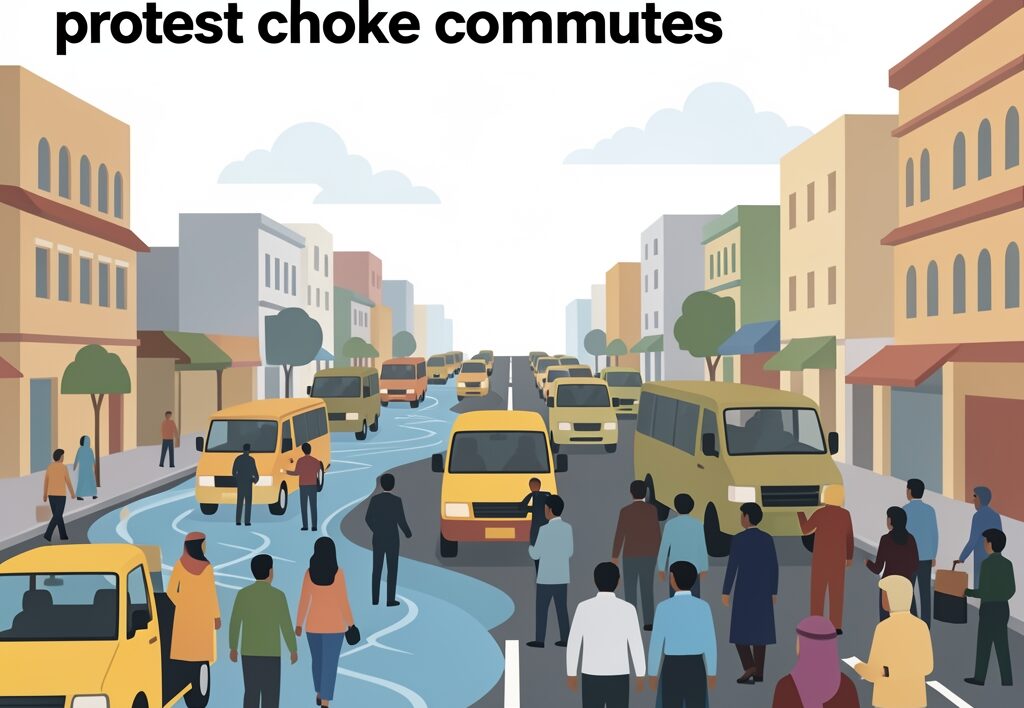
Lucknow traffic chaos hits the city as rain, road cave-in and protest choke commutes
A severe bout of Lucknow traffic chaos gripped the city on Tuesday as heavy monsoon downpours triggered localized road cave-ins and extensive waterlogging across major intersections. Commuters navigating key transit arteries found themselves trapped in monumental gridlocks from early morning until late afternoon. When drainage networks fail to absorb sudden heavy rainfall, asphalt surfaces quickly erode under the pressure of continuous vehicle movement. For everyday residents traveling from Hazratganj to Alambagh, the sudden infrastructural breakdowns exposed persistent flaws in municipal stormwater management.
City authorities rushed to deploy emergency response teams, barricading hazardous depressions and attempting to clear clogged drains. Yet, the reactive nature of these measures left motorists frustrated. Local shopkeepers and office workers noted that routine spells of heavy rain routinely transform busy thoroughfares into virtual swimming pools, crippling commercial activity and wasting precious hours. These recurring disruptions echo similar infrastructural bottlenecks documented when Lucknow Monsoon Rain Floods Key Stretches and Paralyzes Traffic during peak commuting hours earlier this season.
Infrastructure Strains and Public Frustration
Underground utility networks across Uttar Pradesh’s capital are clearly buckling under rapid urbanization and unyielding vehicular growth. Decades-old drainage lines lack the capacity to handle modern precipitation volumes, causing water to pool and destabilize sub-surface soil layers. When roads collapse without warning, public trust in municipal oversight takes a direct hit. Citizens asking questions about accountability point out that routine pre-monsoon desilting operations often fall short of promised benchmarks.
Compounding the transit misery, localized demonstrations added fresh hurdles for stranded motorists. Frustrated student groups and local residents took to the streets to voice their grievances regarding neglected civic amenities and delayed public projects. Such protests mirror recent unrest seen when Lucknow Gen Alpha Students Protest Teacher Shortage on Budheshwar-Mohan Road, highlighting how civil discontent rapidly spills over into street-level blockades. Motorists trying to find alternate routes frequently encountered further delays, underscoring the interconnected fragility of the city’s transport grid.
Urban planners emphasize that surface-level road repairs offer little long-term relief without a complete overhaul of subsurface utility corridors. As municipal corporations draft new development agendas, aligning road expansion with robust drainage capacity remains an urgent necessity. Similar regional challenges surface in neighboring districts managing major transit corridors, such as those analyzed in Ayodhya road traffic woes mapped with 153 digital pins in Lucknow and highway upgrades outlined in New Gorakhpur Road Project Streamlines Commutes for Lucknow Travelers.
Navigating the Gridlock: What Commuters Can Do
Until permanent engineering fixes are implemented across vulnerable zones, navigating Lucknow during heavy downpours requires careful planning. Traffic police regularly update alternate routes on social media platforms, helping drivers bypass severe waterlogging hotspots. Residents living near older neighborhoods must remain vigilant about structural shifts in local roadways following heavy storms.
- Check real-time traffic advisories before starting your morning or evening commute across Lucknow.
- Avoid low-lying underpasses and known waterlogging zones like Gomti Nagar extensions during heavy showers.
- Report sudden road depressions or overflowing manholes immediately to the Nagar Nigam helpline.
- Utilize ring roads and outer bypasses such as the New Gorakhpur Road Project Streamlines Commutes for Lucknow Travelers network where applicable.
Municipal bodies must prioritize comprehensive underground utility audits to prevent recurring road collapses and protect citizens from preventable transit hazards.
Why it matters
For families, office workers, and daily wage earners across Lucknow, paralyzed roads translate directly into lost wages, missed opportunities, and heightened stress levels. Urban infrastructure is the backbone of daily economic life; when it fractures, the entire community feels the shockwaves. Ensuring structural safety and efficient drainage is not merely a matter of aesthetic urban planning, but a fundamental public safety requirement that dictates the quality of life in Uttar Pradesh’s largest urban centers.
Broader regional mobility trends also reflect these infrastructural pressures, whether dealing with temporary closures like Amroha NH 9 Zero Traffic: 48-Hour Vehicle Ban Imposed for Kanwar Yatra, commercial corridor enhancements such as Rajiv Chowk Flyovers Tender Plan: NHAI Sets March 2027 Deadline, temple access upgrades like Varanasi Dalmandi road widening begins to transform temple access and ease congestion, unexpected roadside incidents detailed in Badaun doctor assault: Government physician dragged from SUV by mob after road accident, or security protocols reviewed in Umar Ahmed convoy toll barrier breach in Prayagraj and Pratapgarh triggers police probe. Ground-level accountability remains the single most important factor in transforming how cities manage crisis responses.
Sources used for this report include local ground observations and official municipal traffic bulletins.