
Owaisi and Azad Target Akhilesh Yadav in Lucknow as 2027 Political Battle Lines Harden
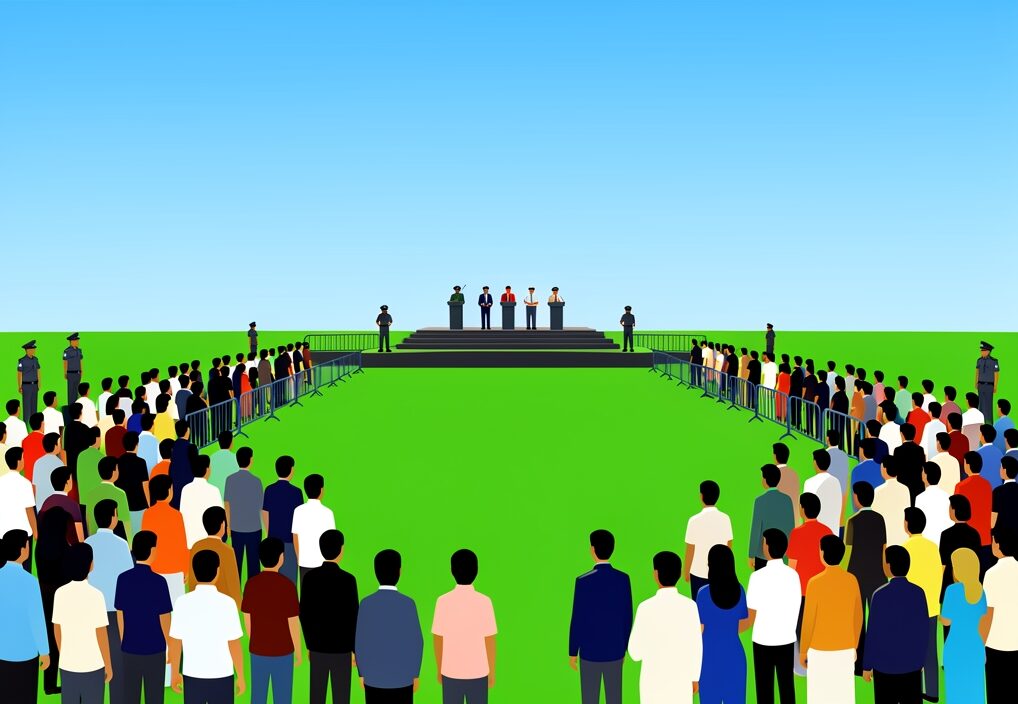
Akhilesh Yadav faced a sharp and coordinated political assault in Lucknow on Thursday as parliamentarians Asaduddin Owaisi and Chandrashekhar Azad took the stage at Ramabai Ambedkar Maidan. Speaking on Constitution Day, the leaders of the newly allied Samajik Parivartan Morcha accused the Samajwadi Party chief of political betrayal, alleging that the party routinely secures minority votes while denying adequate representation and remaining silent on atrocities against Dalits.
For residents and political watchers across Uttar Pradesh, the high-octane rally marks a distinct hardening of battle lines ahead of the upcoming legislative contests. The event underscores how the opposition space in the state is fracturing beyond the traditional binary, introducing complex new dynamics to urban centers like Lucknow where minority and Dalit voter sentiment often sways municipal and state outcomes.
Shifting Alliances and the Battle for the Minority Vote
During the massive gathering, AIMIM chief Asaduddin Owaisi launched a direct critique of the Samajwadi Party’s electoral strategy. He argued that the opposition camp takes minority seats for granted while shifting toward softer ideological positioning. Owaisi specifically pointed to recent political visits, suggesting that such moves reflect a deeper ideological drift that alienates core communities who have long backed secular formations.
This evolving friction is reshaping the political landscape across districts. Observers tracking the Azad-Owaisi alliance reshaping Uttar Pradesh electoral arithmetic note that the coalition is actively attempting to carve out an alternative political axis. By anchoring their campaign in Lucknow’s sprawling public grounds, the leaders signaled that regional grievances will find a loud voice independent of major mainstream parties. As parties prepare for the legislative showdown, local observers are evaluating how UP Assembly Elections 2027: Akhilesh Yadav Signals New Political Reality Ahead will impact opposition unity.
The political maneuvering also revives intense debates over historical narratives and tactical positioning in the state. Many analysts connect these ongoing tensions to previous flashpoints, such as when Akhilesh Yadav’s Ayodhya visit triggered BJP retaliation regarding historical controversies. Meanwhile, other regional discussions focus on how the opposition addresses voter segments, echoing debates seen when Akhilesh Yadav flips 80-20 pitch during statewide tours. As parties recalibrate their messaging, local voters face a crowded field of competing claims regarding social justice and administrative accountability.
Implications for Lucknow Residents and the Wider State
- Urban voters in Lucknow are witnessing early polarization as smaller regional fronts challenge traditional vote banks.
- Youth and diaspora communities monitoring state developments must weigh competing promises of economic relief against identity politics.
- Civic discourse in the capital is increasingly dominated by rallies and counter-rallies, impacting daily transit around major venues like Ramabai Maidan.
Beyond the rhetoric, the emerging alliance between Owaisi’s AIMIM and Azad’s party aims to transcend routine electoral math. Described by organizers as an alliance of hearts, the grouping hopes to deny major players unhindered consolidation of marginalized electorates. Whether this strategy translates into substantial seat conversions or merely splits the anti-incumbency vote remains the central question for political analysts. Furthermore, discussions around SP-Congress seat talks and winnability terms in Lucknow highlight the intense bargaining underway across the opposition camp.
As campaigns gather momentum, residents across the state capital can expect further high-stakes speeches and intensified campaigning. The shifting alliances guarantee that the road to the upcoming assembly battles will test every party’s ability to maintain grassroots coalitions without alienating core constituencies, much like the rhetoric witnessed when Akhilesh Yadav called Ramlila Maidan the Haldighati of democracy during earlier protests.
Key Takeaway: The aggressive outreach by Owaisi and Azad in Lucknow signals a major challenge to the Samajwadi Party’s dominance over minority and Dalit voting blocs, fundamentally altering the electoral equation for the state.
Why It Matters
For anyone living in Lucknow or following UP politics from afar, these developments dictate the tone of civic life and local governance priorities. Rallies at major venues disrupt transit, while the shifting political alliances determine how resource allocation, minority welfare, and social justice issues are framed in the legislature. Understanding these fractures helps residents anticipate how local coalitions will impact neighborhood issues and urban development policies in the months ahead.
For further details on the statements made during the Constitution Day event, read the original reports on Hindustan Times.