Akhilesh Yadav Lucknow Presser: SP Chief Alleges Vote Theft
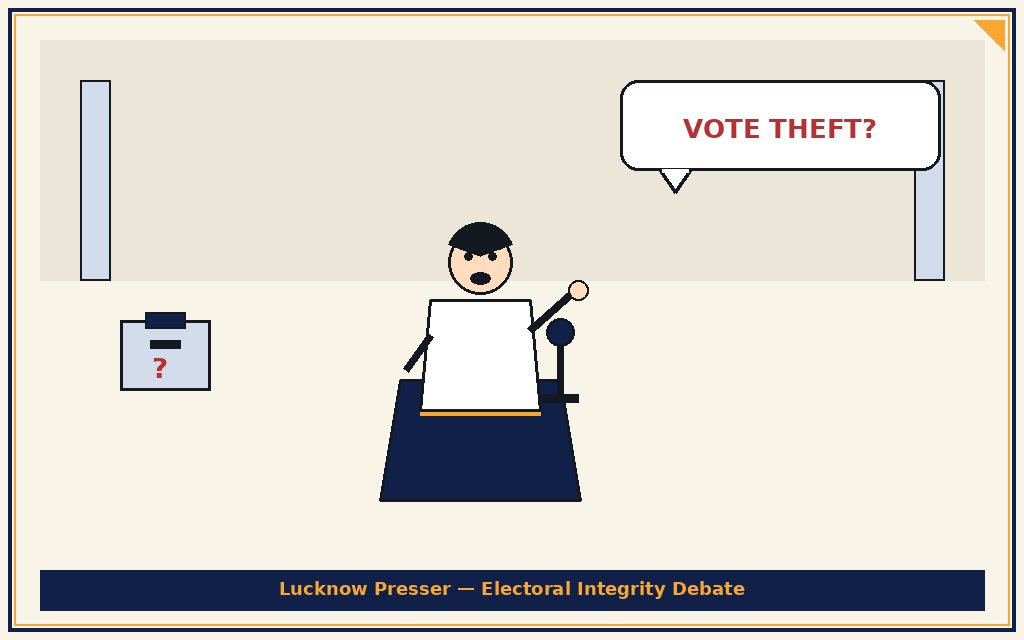
Samajwadi Party president Akhilesh Yadav Lucknow headquarters became the focal point of state politics on Sunday as he launched a sharp critique against the ruling Bharatiya Janata Party. Addressing a packed press conference at the party office, Yadav accused the BJP of shielding the Election Commission while actively engaging in vote theft and systemic electoral manipulation across Uttar Pradesh.
The latest political showdown highlights the mounting friction between the principal opposition outfit and central electoral authorities. For residents across the state capital tracking daily developments, the war of words signals an increasingly volatile political climate as parties position themselves for upcoming electoral battles.
Allegations of Systemic Malpractice and Silence
Yadav claimed that his party has repeatedly knocked on the doors of the Election Commission to report blatant vote theft and procedural violations. According to the SP chief, these grievances have consistently fallen on deaf ears. He pointed directly to previous electoral contests to substantiate his claims of administrative bias.
“There were large-scale irregularities in the Rampur by-election and subsequent bypolls in Uttar Pradesh, where voters were prevented from exercising their franchise, names were deleted, and officials were posted arbitrarily, yet the EC remained silent,” Yadav told reporters at the Lucknow press conference.
The opposition camp argues that institutional neutrality is facing severe stress. Similar concerns have echoed across other regional party platforms, as seen when the Samajwadi Party Meerut unit raised alarms over mass BLO transfers and bogus voter lists. Critics maintain that these administrative maneuvers undermine grassroots democracy long before citizens even step up to electronic voting machines.
- Voters reportedly blocked from casting ballots in key bypolls.
- Allegations of arbitrary bureaucratic postings favoring ruling interests.
- Persistent demands for the poll body to preserve its constitutional independence.
The Battle for Institutional Credibility and Public Trust
Beyond immediate electoral disputes, Sunday’s address serves as a broader warning shot targeting the administrative machinery. Yadav urged election regulators to step back from political influence and protect their institutional integrity. This posture mirrors previous confrontations where the opposition has accused top leadership of violating model codes or giving local law enforcement unmonitored operational scope, a theme touched upon in discussions surrounding Akhilesh Yadav’s critique of the UP government and police.
Ruling party strategists, meanwhile, continue to counter these narratives through intensive ground mobilization. The RSS-BJP strategy sessions in Lucknow have explicitly instructed cadres to neutralize opposition messaging ahead of 2027. State leaders are rolling out structured outreach plans, contrasting opposition complaints with their own vision of administrative delivery, as detailed in recent BJP Seva Sankalp roadmaps. Meanwhile, organizational shifts such as the BJP UP headquarters relocation to Jiamau highlight how both major parties are fortifying their physical and political infrastructure across the city.
Senior leaders from the ruling coalition, including figures tracking the BJP UP elections 2027 strategy outlined by Nitin Nabin, maintain that public support remains firmly behind current development initiatives. At the same time, contentious policy debates such as the Uniform Civil Code UP alignment keep allied parties walking a careful political tightrope as voter alignments shift across districts.
Electoral trust depends entirely on the transparent handling of voter registries and fair administrative conduct by unbiased election officials.
Why it matters
For everyday citizens, students, and the wider diaspora keeping tabs on Uttar Pradesh affairs, these escalating tensions dictate how local governance functions. When political parties lock horns over the basic mechanics of voting rights and administrative neutrality, public faith in civic institutions takes a direct hit. Whether these intense public accusations force a course correction by election authorities remains to be seen, but they undoubtedly set a combative tone for the state’s political future.
As the political temperature rises in the state capital, voters are left weighing competing claims of institutional integrity versus governance delivery. For additional context on how opposition figures interact with regulatory bodies, read about earlier friction points detailed in Akhilesh Yadav’s Election Commission complaint regarding code breaches or examine past demands regarding poll halts highlighted in Akhilesh Yadav’s confrontation with the CEC.