
Cardamom Mixture Offers New Hope Against Mouth Stiffness in Lucknow Research Breakthrough
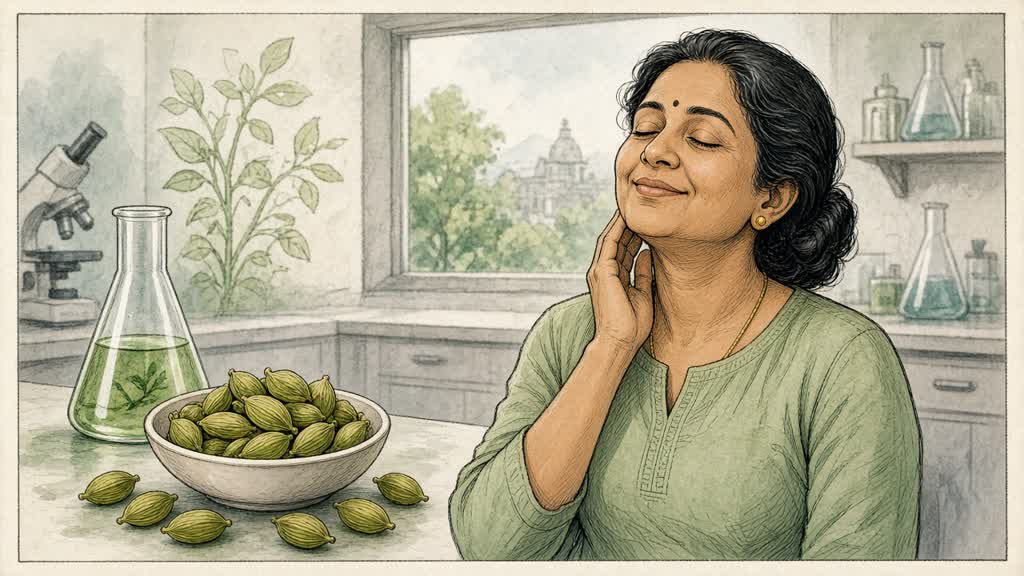
A breakthrough cardamom mixture developed by Lucknow scientists offers a promising plant-based therapy against oral submucous fibrosis, a debilitating condition affecting millions globally. Researchers from CSIR-CIMAP, CSIR-CDRI, and Lucknow University jointly formulated the treatment to target the disintegration of the mucosal lining in the mouth. This condition, known medically as OSMF, creates severe mouth stiffness and makes simple daily actions like eating or speaking painful.
For decades, local health advocates and medical practitioners across Uttar Pradesh have grappled with the massive public health footprint of chewing guthka, betel quid, and areca nut. These habits drive high rates of oral morbidity in the region. Traditional treatments often fall short, leaving patients with limited relief. The involvement of premier local research institutions brings homegrown scientific muscle to a problem that plagues millions worldwide. Daily habits in our state often take a heavy toll on oral tissues, making local scientific intervention an urgent necessity for thousands of families.
When municipal challenges surface, like when officials discuss Lucknow roads repair ordered by Yogi Adityanath or when municipal officers review building safety following Lucknow structural audits reveal severe municipal gaps, the conversation usually centers on urban infrastructure. Yet, public health and civic safety extend far beyond concrete and asphalt. They touch every aspect of daily life in our neighborhoods, from street corners where tobacco products are sold to the laboratories where scientists quietly work on life-changing remedies.
Decoding the Science Behind the Plant-Based Therapy
The collaborative study leverages the botanical expertise of the Central Institute of Medicinal and Aromatic Plants (CSIR-CIMAP) alongside the pharmacological depth of the Central Drug Research Institute (CSIR-CDRI) and Lucknow University. By turning to natural extracts, the team formulated a specialized remedy centered around cardamom. Plant-based approaches often reduce side effects compared to synthetic interventions, making botanical screening a major focus for regional labs.
Laboratory evaluations indicate that the mixture targets the fibrotic tissue buildup characteristic of OSMF. However, scientists emphasize caution. Preclinical milestones mark only the initial phase of drug development. Rigorous clinical trials must follow to verify human safety and therapeutic efficacy before doctors can prescribe the treatment in clinics. This methodical approach ensures that safety remains the absolute priority for everyday patients.
Key takeaways from the research milestone include:
- Joint collaboration uniting CSIR-CIMAP, CSIR-CDRI, and Lucknow University experts.
- Focus on reversing mucosal disintegration caused by gutkha and betel nut consumption.
- Necessity for upcoming clinical trials to validate safety profiles for patients.
Why It Matters for Lucknow and Beyond
Public health challenges in Uttar Pradesh often require localized solutions rooted in indigenous resources. When state institutions pioneer medical therapies, it elevates the scientific standing of the city. Residents, students, and medical aspirants look to these labs for innovations that directly impact community wellbeing. While administrative bodies handle other urgent matters, such as enforcing rulings in the wake of the Aliganj fire tragedy or cracking down on corrupt networks like the Basti RTO licence scam, scientific discoveries point toward long-term societal healing and preventative healthcare.
Other systemic issues frequently demand state attention, mirroring the wide scope of governance in Uttar Pradesh. For instance, vigilance bureaus recently pursued cases such as the vigilance case against a former Firozabad tehsildar, while education departments opened new avenues through UP assistant prof recruitment policies. Balancing administrative vigilance with breakthrough medical research creates a more resilient society for all residents.
The successful formulation of a cardamom-based remedy underscores Lucknow’s capacity to lead indigenous healthcare innovations from laboratory bench to clinical horizon.
As the scientific community awaits formal clinical trial phases, local residents should remain aware of the severe risks posed by betel nut and gutkha consumption. Preventive habits remain the strongest defense against irreversible oral health degradation.
Sources: