
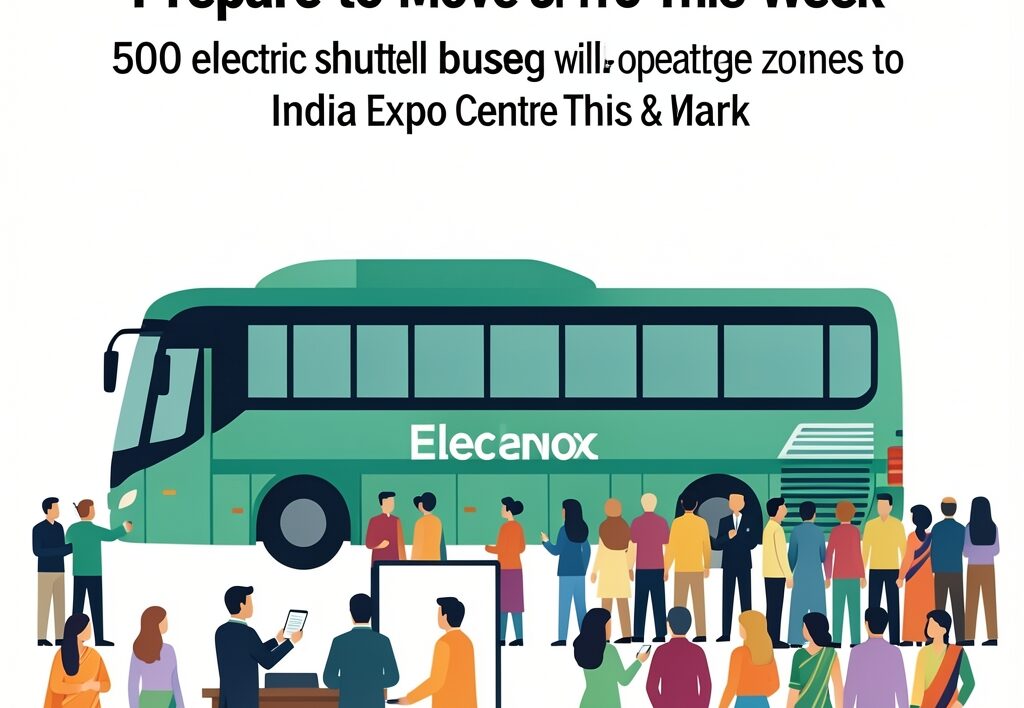
Electric Buses in Greater Noida Prepare to Move UPITS Visitors This Week
Electric Buses are set to transform transit logistics as Greater Noida gears up to host the high-profile Uttar Pradesh International Trade Show this Friday. Beginning September 25, a massive fleet of 500 zero-emission electric shuttle buses will deploy across the region to ferry visitors seamlessly between sprawling parking lots and the main venue at the India Expo Centre & Mart. For residents, business owners, and diaspora members tracking state-level developments from Lucknow, this massive transport rollout highlights a major push toward clean urban mobility across Uttar Pradesh.
Chief Minister Yogi Adityanath personally reviewed these logistical arrangements on Sunday, emphasizing smooth visitor movement, stringent security, and heightened international participation for the five-day exhibition ending September 29. Such large-scale administrative coordination often mirrors security reviews seen during state announcements, much like the recent developments noted when CM Yogi Adityanath women PAC batallions were announced at a Greater Noida event, highlighting the state government’s tight grip on public safety and large gatherings.
Seamless Transit and Regional Coordination
Managing crowds at large-scale industrial summits often creates severe urban bottlenecks. To bypass traditional traffic snarls, transport authorities designed the dedicated electric bus network to handle thousands of daily attendees. Furthermore, state officials have set up a specialized facilitation counter directly at the Noida International Airport to welcome international delegations and VVIP guests arriving for the expo. This proactive approach aims to prevent the reckless driving incidents and transit chaos that sometimes plague high-density regional corridors, echoing ongoing conversations sparked after a rash driving incident near a Greater Noida college led to an arrest and renewed safety debates across NCR roadways.
Local authorities hope these synchronized transit steps will prevent the chaotic gridlocks seen at past regional events. Similar large-scale administrative coordination often influences future municipal policies closer to home, offering lessons for urban planners dealing with congestion in Lucknow. While major industrial showcases take place in the National Capital Region, the economic ripples and infrastructural blueprints resonate across every corner of Uttar Pradesh. These collaborative efforts tie directly into broader regional initiatives, such as the UP International Trade Show 2026 sports department highlights, which showcase state talent on a national stage.
At the same time, regional transport management must account for unexpected disruptions. Road safety remains a paramount concern for commuters traveling across the state, especially after tragic reminders like the Greater Noida hit-and-run that left a birthday celebration shattered, prompting stricter traffic surveillance and enforcement during high-traffic weeks.
Why it matters for everyday commuters
Transportation infrastructure remains the backbone of any successful commercial expo. By relying heavily on electric fleets rather than conventional diesel vehicles, the state government is visibly prioritizing sustainable public transit on a massive public stage. For students and everyday commuters observing these large-scale deployments, the shift signals a long-term transition in how Uttar Pradesh handles mass transit during major state events. Such policy shifts can sometimes ignite localized friction, similar to the campus dialogues seen when a Noida student protest notice raised questions across Uttar Pradesh campuses regarding administrative overreach and free expression.
Beyond transportation logistics, events like UPITS serve as a vital commercial bridge. Local entrepreneurs, regional artisans, and visitors frequently compare these grand exhibitions to traditional trading hubs found back home, such as bustling markets explored in the Aminabad shopping day guide. Whether you are planning a trip to the exhibition grounds or simply following the economic developments from the comfort of a local café—perhaps enjoying a budget meal reminiscent of a Nawabi dinner under Rs 500 in Lucknow—keeping an eye on these transit updates ensures you stay ahead of the curve.
Furthermore, civic awareness extends beyond transit into essential public services. When municipal infrastructure fails—such as the operational hurdles witnessed when Lucknow electric cremation machines broke down and left families stranded—citizens are reminded of the critical need for reliable, well-maintained public utilities across all municipal corporations in the state. Legal safeguards also play a role in maintaining public trust during state-wide mobilizations, a sentiment echoed by legal observers tracking cases like the Allahabad High Court quashing NSA detention for a student in a Noida protest case.
Finally, these infrastructural movements form part of a much larger geographic and cultural mapping exercise across India, drawing parallels with historic corridors like the Yatra of Seva featuring teams mapping a massive route from Vadnagar to Varanasi. Whether connecting spiritual landmarks or industrial hubs, Uttar Pradesh continues to test new models of large-scale mobility that will eventually reshape urban life for millions of residents.
- 500 electric shuttle buses deployed for UPITS visitors
- Dedicated airport facilitation counters for international VVIP delegations
- Event runs from September 25 to September 29 at India Expo Centre & Mart
Clean electric transit fleets will define the visitor experience at this year’s trade exhibition, setting a new benchmark for sustainable crowd management in the state.
Sources
For further details on the transport arrangements and official announcements, read the original reporting on Hindustan Times.