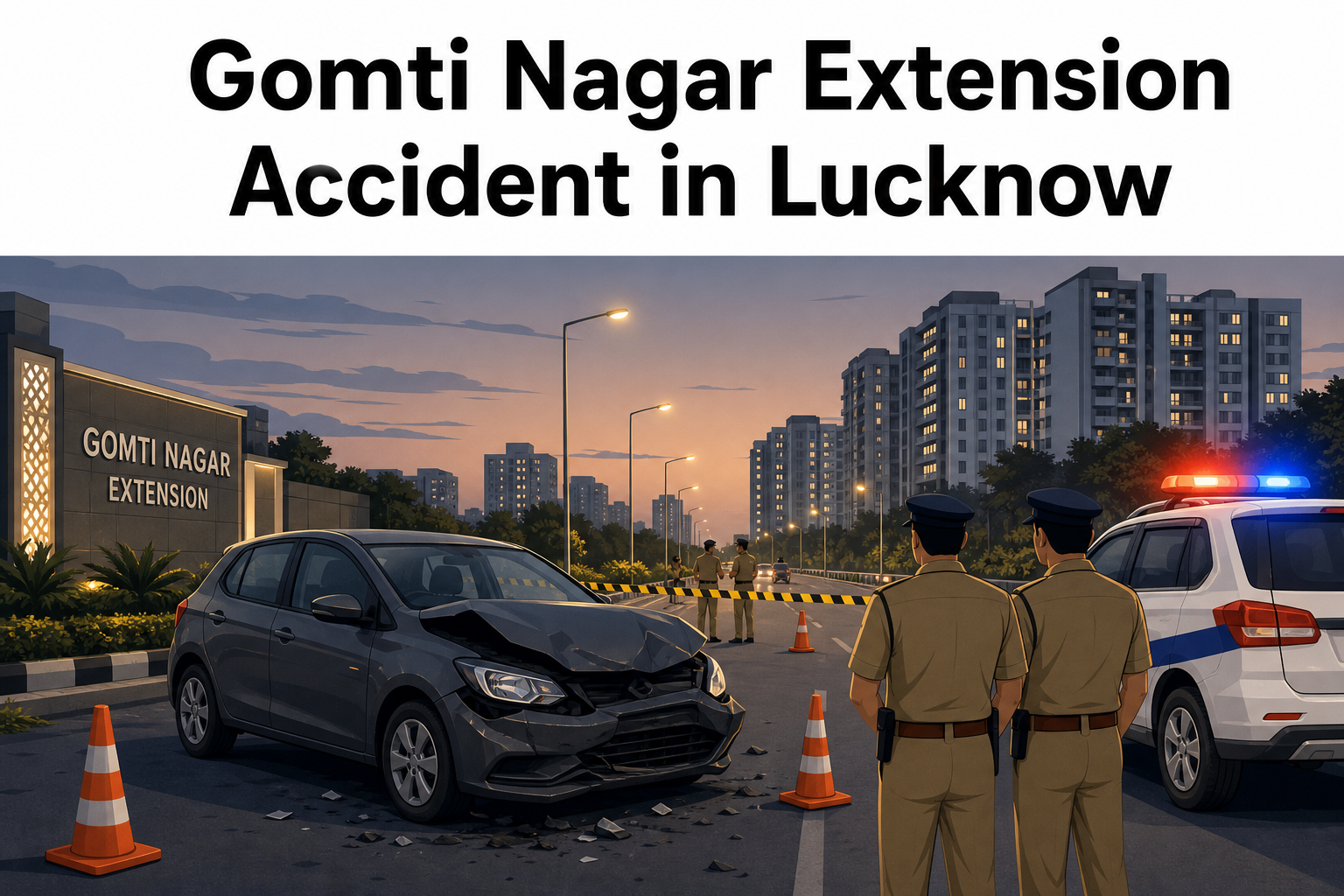
Gomti Nagar Extension Accident Highlights Minor Driving Dangers in Lucknow
Gomti Nagar Extension Accident: A Tragic Night on G20 Road
Gomti Nagar Extension accident claims involving underage drivers continue to shake families across the city, most recently after a 16-year-old student lost his life late Saturday night. Identified as Harsh, a Class 10 student, the teenager died when the motorcycle he was riding with two friends violently crashed into a road divider on G20 Road. According to police reports, the group was returning from Ekana Stadium after watching a live match when the vehicle lost control.
The devastating incident leaves a local family grappling with unbearable grief. In a cruel twist of fate, Harsh’s elder brother had also passed away in a separate road accident approximately 18 months prior. This recurring nightmare highlights a much larger, grim reality on our expanding urban corridors.
As our city grows outward with wide expressways and wide avenues like the G20 Road, speed limits and vehicle access for minors demand active community oversight. Local residents often watch underage youngsters zip through residential pockets and major arteries without helmets or valid licenses. While police occasional crackdowns target traffic violations, consistent deterrence remains a challenge across many neighborhoods.
Urban expansion across Awadh has brought faster roads, yet safety compliance has not kept pace. Families living near major sports and entertainment zones face unique daily anxieties as late-night traffic swells. Without stringent local enforcement and active guardrails, the risks faced by young riders multiply rapidly.
The Broader Safety Challenge for Young Riders
Our municipal infrastructure has transformed dramatically over the past decade. Smooth asphalt and expansive flyovers offer seamless connectivity, but they also tempt high speeds. Similar concerns have plagued other urban civic domains, echoing the infrastructural pressures seen when Lucknow Monsoon Rain Floods Key Stretches and Paralyzes Traffic or when Heavy Rain In Lucknow Floods Roads and Submerges Residential Pockets during seasonal downpours. Road design, signage, and median visibility play massive roles in late-night mishaps.
Consider the systemic safety gaps across our public spaces:
- Inadequate lighting and un-refurbished signage along newly built extension roads.
- Unchecked access of high-powered two-wheelers by minors without parental supervision.
- A lack of swift medical transit points close to major sports and entertainment hubs like Ekana Stadium.
- Gaps in beat patrolling by local police units during late evening hours when speeding peaks.
When emergencies strike, survival often depends on split-second medical intervention, much like when the Lucknow Trauma Centre Saves Six-Year-Old Boy in Rare Emergency Surgery. Yet, preventing the crash altogether remains the only absolute safeguard.
Civic groups and local neighborhood associations must step up public awareness campaigns. Parents hold the primary key to vehicle access. Handing keys to teenagers without proper licensing or maturity invites catastrophe onto our streets. Enforcement from law enforcement agencies must go hand-in-hand with household responsibility. Neighborhood watch groups can also report reckless riding patterns to local thanas before a tragedy occurs.
Key takeaway: Curbing minor driving requires strict parental accountability combined with aggressive civic traffic policing along major extension corridors.
Why It Matters
For families living in Lucknow, road safety is no longer an abstract statistic. It hits home on residential roads, arterial bypasses, and sports zones. Similar civic negligence surfaces in other urban sectors, from Lucknow Cycle Tracks Collapsing Under Disrepair and Encroachments to accountability gaps highlighted when Lucknow Municipal Projects Face Scrutiny as Mayor Reprimands Contractors. Keeping our youth safe demands vigilant monitoring from both administration and homes.
As urban planners design wider roads for future vehicular capacity, they must integrate safety buffers, speed calming measures, and pedestrian crossings. Communities must also engage in open dialogues with teenagers regarding vehicle speeds and peer pressure on the road. Only a united front involving parents, traffic police, and municipal authorities can protect our youth from preventable highway tragedies.