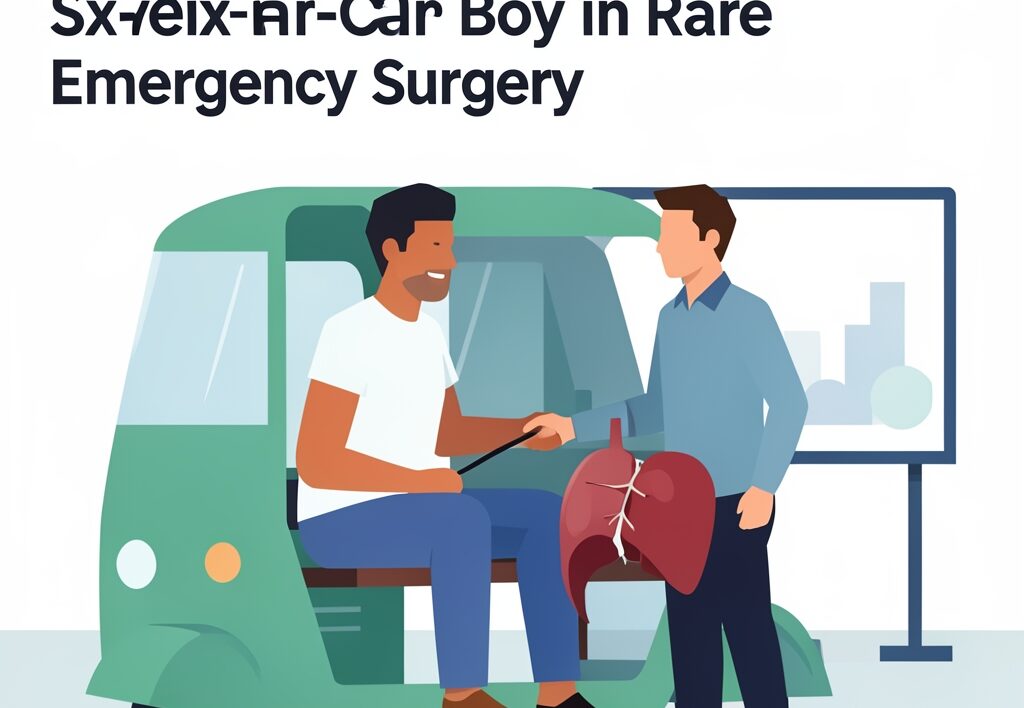
Lucknow Trauma Centre Saves Six-Year-Old Boy in Rare Emergency Surgery
Medical teams at a premier Lucknow trauma centre achieved a remarkable clinical victory this August, saving the life of a young child facing catastrophic internal injuries. On August 19, a six-year-old boy from Bihar walked out of the Apex Trauma Centre at the Sanjay Gandhi Postgraduate Institute of Medical Sciences (SGPGIMS) after surviving an 18-day battle against a severe liver tear and massive abdominal bleeding.
The ordeal began on July 29 when Krishna Kumar, a resident of Gopalganj district in Bihar, was struck by an e-rickshaw. The blunt force trauma caused catastrophic internal damage, leading to his emergency referral to Lucknow. When he finally arrived at the hospital on August 1, clinicians discovered nearly two litres of blood pooled inside his abdomen alongside a severely lacerated liver. Such traumatic presentations in pediatric patients require split-second surgical decisions and advanced critical care infrastructure, capabilities that often dictate whether specialized regional healthcare hubs succeed where local clinics fall short.
The Anatomy of a Complex Pediatric Rescue
Managing pediatric abdominal trauma involves balancing fragile physiology with aggressive surgical intervention. The medical team at SGPGIMS initiated immediate resuscitation and multidisciplinary trauma protocols. Pediatric trauma cases of this severity frequently strain resources, demanding coordinated efforts across blood banks, surgical suites, and intensive care units. While municipal projects often face intense scrutiny—ranging from infrastructure delays to lapses by municipal contractors—specialized medical institutions in the state capital continue to anchor critical healthcare delivery for the entire Gangetic plains region.
Patients from neighboring states regularly travel to Uttar Pradesh looking for advanced care when local facilities lack the equipment or specialist manpower. This incident underscores why tertiary care networks in Lucknow remain a lifeline for families across northern India. Families navigating emergencies often find themselves grappling with various systemic hurdles, much like commuters dealing with waterlogged residential pockets during heavy downpours or consumers managing unexpected billing shocks such as smart meter glitches. Yet, when clinical excellence prevails, it reinforces public faith in regional institutional capabilities.
Access to specialized trauma care remains a defining metric for urban development. When accidents happen on rural roads or busy state highways, the difference between life and death frequently hinges on the swift availability of medevac options and tertiary referral pathways leading straight into Lucknow. Medical professionals point out that managing pediatric liver trauma requires specialized pediatric surgeons, dedicated perfusionists, and an uninterrupted blood supply chain that can respond at a moment’s notice.
Why It Matters
This successful recovery highlights the indispensable role of advanced public health infrastructure in Uttar Pradesh, proving that regional trauma hubs can handle ultra-complex pediatric emergencies that once required long-distance transfers to metropolitan metros.
For residents, students, and the wider UP diaspora, stories like this redefine the city’s growing footprint as a medical destination. Beyond the routine civic news and administrative updates—such as contempt notices involving urban development authorities or enforcement actions like EOW financial crime arrests—healthcare milestones demonstrate tangible progress on the ground. When a child from a distant rural district returns home healthy after a near-fatal accident, it validates the continuous expansion of high-end clinical capacity in the city.
Local doctors note that the steady influx of critical patients from Bihar, Jharkhand, and rural parts of Uttar Pradesh places immense pressure on SGPGIMS and King George’s Medical University. Yet, these institutions consistently step up to deliver world-class care. Community stakeholders argue that sustained investment in public health is just as vital as laying new roads or expanding metro lines.
- Patient: Six-year-old Krishna Kumar from Gopalganj, Bihar
- Incident: Struck by an e-rickshaw on July 29
- Treatment Facility: Apex Trauma Centre, SGPGIMS, Lucknow
- Discharge Date: August 19, following 18 days of care
As the city grows, ensuring that such high-level medical support remains accessible and responsive will define the true quality of urban life. For now, the successful discharge of young Krishna stands as a testament to surgical precision and coordinated institutional care.
Sources: Hindustan Times