Gomti River Swells Eight Feet Above Normal, Swallowing Lucknow’s Riverfront
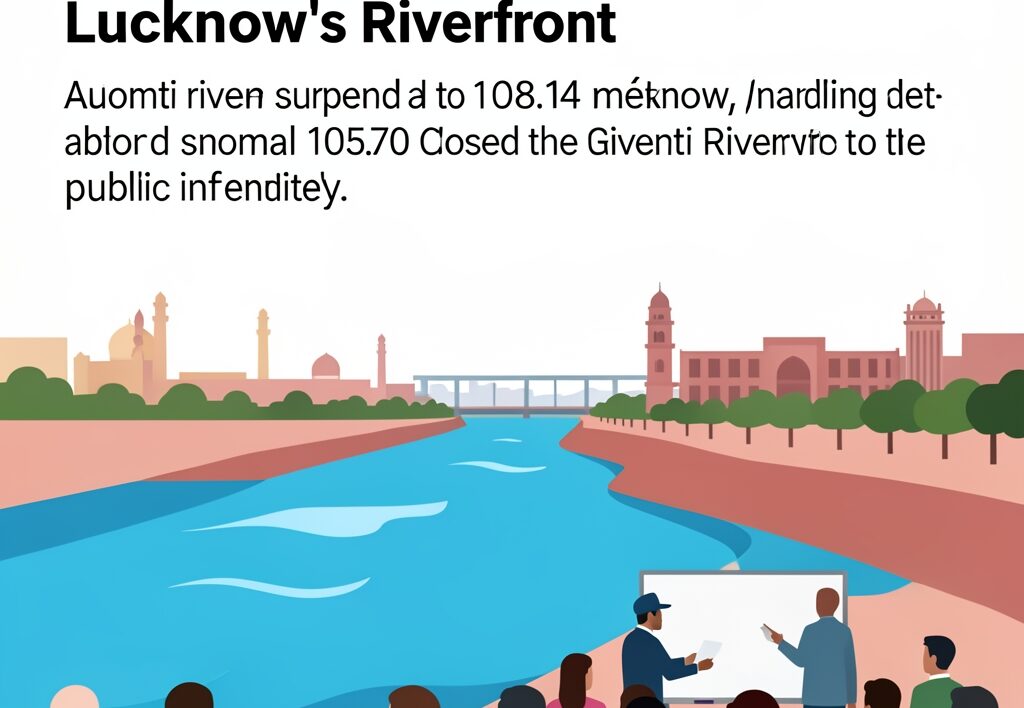
When heavy monsoon rains finally pause across Uttar Pradesh, local residents do not expect the water levels in our city to suddenly spike. Yet, the Gomti river surged nearly eight feet above its normal level on Friday, October 3, 2026. This sudden surge forced municipal authorities to scramble and shut down public access across the iconic Gomti Riverfront in Lucknow.
Driven by heavy runoff from neighboring upstream districts like Lakhimpur Kheri, Pilibhit, and Sitapur, the river level touched 108.14 metres against a normal baseline of 105.70 metres. The rush of water quickly swallowed large, low-lying sections of the promenade that local families frequent for evening strolls and weekend outings. If you were planning to grab a coffee nearby after working remotely from one of the popular cafes in Gomti Nagar, you will find the walking paths completely submerged under feet of turbid water.
Barrage Gates Opened and Drainage Outlets Sealed
In response to the expanding threat, the irrigation department swung into action immediately. All 10 barrage gates were opened to let the massive volume of water pass downstream smoothly. However, managing the flow requires tricky balancing acts to protect low-lying residential pockets across the city.
To stop the swollen river from backing up into municipal pipes and causing widespread urban flooding, engineering teams took the precautionary step of sealing 48 city drainage outlets. While this prevents backflow into neighborhoods, it creates localized monitoring challenges for civic authorities if local rains resume unexpectedly. Similar infrastructure pressures have kept municipal teams on high alert across Uttar Pradesh, mirroring concerns seen during other regional projects like the Khargapur Solar Village project or structural safety delays faced elsewhere in the city, reminiscent of the Wazirganj structural safety clearance delays.
Furthermore, commuters traveling across regional corridors have faced unexpected diversions due to weather-related hazards, echoing recent incidents such as the Gorakhpur Link Expressway accident. Urban planners point out that maintaining robust civic preparedness prevents minor seasonal spikes from escalating into full-scale urban emergencies.
Impact on Daily Life and City Culture
The Gomti is much more than a body of water; it defines Lucknow’s geography and public leisure. When the river overflows its bounds, it disrupts the rhythm of daily life for thousands of residents. Families, students, and visitors who treat the riverfront as a community gathering space must now stay away until structural assessments and water recession happen. The closure hits local vendors and evening visitors hard.
Citizens looking for cultural respite have recently turned to alternative indoor community spaces, such as those seen during the Gomti Book Festival, while outdoor recreational spots remain restricted. Meanwhile, governance watchdogs and residents tracking civic expenditure note how quickly natural weather anomalies test urban planning, drawing parallels to debates over public funds and infrastructure efficiency highlighted in recent state events like the Yogi Adityanath Lucknow event.
Local neighborhoods are also keeping a watchful eye on civic safety initiatives, comparing current municipal responses with regional efforts such as the Uttar Pradesh cattle rescue system and voter outreach drives like the ECI voter drive. Even transit corridors like the Barapullah Phase III opening highlight how infrastructure projects face recurring seasonal and administrative hurdles.
- River level recorded at 108.14 metres against the normal 105.70-metre mark.
- All 10 barrage gates opened by the irrigation department to manage upstream influx.
- Public entry to the Gomti Riverfront barred indefinitely for safety.
- Forty-eight municipal drainage outlets sealed to prevent urban backflow.
Why it matters
Urban safety depends entirely on proactive drainage management and real-time monitoring of upstream barrages during monsoon runoff peaks. When rivers swell this rapidly without local rainfall, it exposes the interconnected nature of Uttar Pradesh’s river basins. For residents of Lucknow, staying informed prevents panic and helps local authorities keep critical infrastructure operational while water levels recede.
As state agencies monitor the water movement, commuters and residents near the banks should avoid low-lying zones. Keep an eye on local advisories before heading toward the riverbank areas.
Sources
Original reporting based on data from Hindustan Times.