
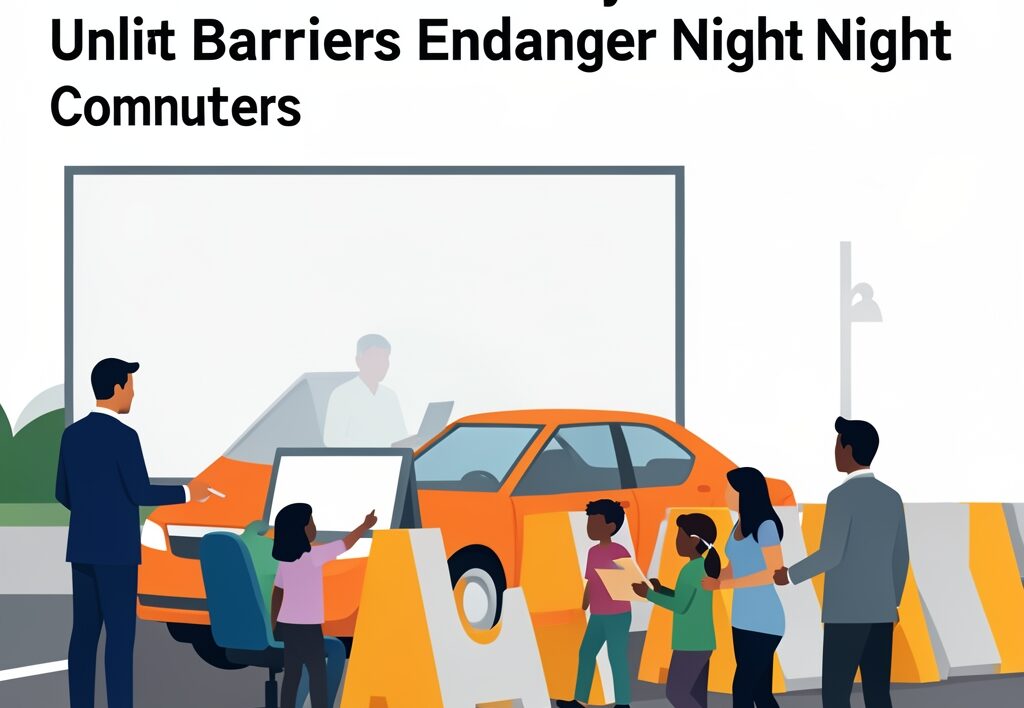
Gurugram Car Crash Sparks Safety Debate Across Uttar Pradesh As Unlit Barriers Endanger Night Commuters
A terrifying Gurugram car crash left six people injured early Wednesday morning after a Hyundai Exter rammed straight into unlit concrete barriers at AIT Chowk near Sector-55 on Golf Course Road. The victims, returning home to Delhi from Gurugram between 3:30 am and 4:00 am, faced sudden danger because critical safety warnings were missing from the roadway during hours of poor visibility.
For residents of Uttar Pradesh and the wider National Capital Region who frequently navigate major expressways and urban corridors at odd hours, this incident strikes a raw nerve. Poor street lighting, sudden diversions, and unmarked road hazards routinely turn night travel into a game of chance for everyday families. As urban centers expand outward at a breakneck pace, the gap between rapid infrastructure construction and basic commuter safety management continues to widen with alarming frequency across regional transit routes.
The Anatomy of an Avoidable Disaster
According to local police reports, the vehicle was carrying Kunal Chawla, his wife Arushi Chawla, their one-and-a-half-year-old son, alongside neighbours Shivam Koli, his wife Priyanka Koli, and their five-year-old son. All six passengers hail from the same locality near Shiv Mandir in Mehrauli, Delhi. They were traveling towards Sikanderpur from Golf Course Extension Road when the crash occurred, catching every adult passenger entirely unawares in the predawn darkness.
The driver’s account points directly to glaring municipal lapses and slipshod contractor oversight. The heavy concrete barricades placed at the U-turn lacked reflective tape, warning signs, and adequate street illumination entirely. Without these basic visual cues mandated by standard highway codes, the solid blocks blended into the dark asphalt until it was far too late to apply brakes. Passing motorists acted swiftly in the aftermath, pulling the trapped families out of the wrecked vehicle before emergency services arrived at the scene.
Broader Implications for Urban Infrastructure
This episode serves as a harsh reminder of how urban design flaws endanger everyday travelers who rely on public roads every single day. Whether navigating newly laid arterial roads or dodging unlit construction zones, motorists carry the heavy burden of municipal neglect on their shoulders. Similar infrastructure debates have played out closer to home for local residents, echoing concerns seen in Noida waterlogging urban planning flaws in Uttar Pradesh where surface-level execution fails basic safety thresholds during monsoon seasons. Furthermore, commuters often find themselves dealing with chaotic traffic management, similar to issues highlighted in the Gurugram autorickshaw accident claims life of bank manager report, which similarly spotlighted acute urban transit risks.
When municipal authorities fail to enforce accountability, nighttime travel becomes perilous. The shadow of lax enforcement stretches far beyond local municipal limits, as seen when law enforcement cracks down on criminal networks in cases like the Greater Noida police encounter following abduction and extortion bids or when authorities track illicit supply chains such as the Gurugram pilot arrested for MDMA linked to Noida supply chain. Civic stability requires rigorous enforcement across every level of local governance.
To prevent tragedies on busy corridors, municipal authorities must enforce strict accountability standards for road contractors and civil agencies. Too often, mega-projects receive heavy praise while day-to-day maintenance items like reflective tape, functional streetlights, and clear signage are completely ignored by oversight boards.
- Ensure immediate deployment of high-visibility reflective markers on all mid-road concrete barriers.
- Mandate regular nighttime audits by municipal traffic cells to catch burnt-out streetlights before accidents happen.
- Hold contractors legally accountable for injuries caused by unlit or unsigned road blockages on public pathways.
Why it matters
Road safety is not merely a matter of personal driving caution; it relies entirely on the state providing predictable, well-lit, and clearly marked transit environments. When basic infrastructure fails, families face life-altering trauma in seconds. For residents across Uttar Pradesh who travel across NCR borders for work or leisure, these hazards demand stronger civic oversight and zero tolerance for sloppy municipal maintenance.
Key Takeaway: Unmarked concrete barriers and broken streetlights transform everyday city roads into silent traps, requiring immediate accountability from urban planning authorities and municipal contractors.
As traffic volumes grow rapidly, municipal bodies must look closely at systemic issues rather than treating accidents as isolated anomalies. Observers note parallels with broader urban infrastructure strains, such as delays addressed in the Rajiv Chowk Flyovers NHAI Tenders 2027 timeline, or local oversight challenges seen when Lucknow municipal projects face scrutiny as mayor reprimands contractors. True urban progress requires matching structural expansion with rigorous daily safety checks.
Sources:
– Hindustan Times