Indian Coffee House Lucknow Closure Leaves Hazratganj Silent
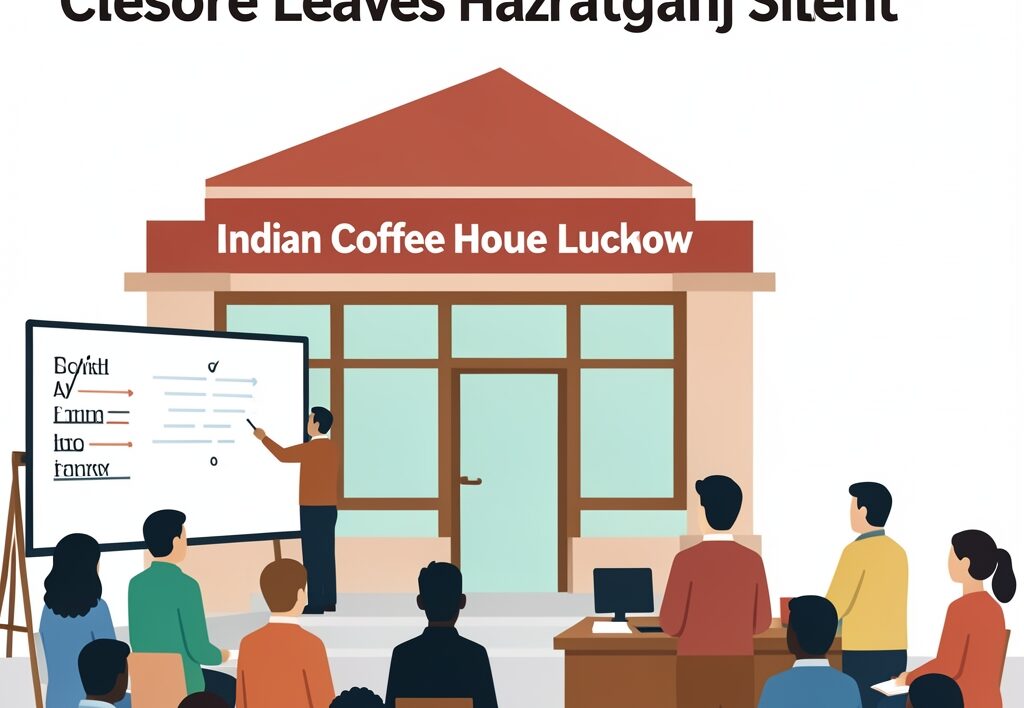
For nearly three months, a heavy silence has settled over the first-floor landing in Hazratganj. The Indian Coffee House Lucknow establishment, long known as the city’s intellectual living room, sits locked behind shuttered doors with no clear word on when it might reopen its welcoming entrance to the public.
Unlike past brief closures triggered by routine maintenance or minor operational hurdles, this three-month silence marks the longest unannounced shutdown in recent memory. Regulars, poets, journalists, and political veterans who spent decades debating over filter coffee and dosas are now left wondering if an irreplaceable piece of old Lucknow history is quietly fading away from our daily streetscapes.
The End of Long Debates Over a Cuppa
Walk down Hazratganj on any ordinary afternoon, and you notice a distinct void in the urban fabric. For generations, this specific coffee house served as an equalizing space where hierarchies dissolved entirely. Bureaucrats rubbed shoulders with struggling student activists, and retired professors shared tables with curious youngsters eager to soak in city lore. It was a space where time genuinely slowed down. Discussions on literature, politics, and daily civic struggles—ranging from Gomti River cleaning delays and municipal project accountability to monsoon waterlogging crises and submerged residential pockets—flowed effortlessly over endless cups of coffee and plates of South Indian snacks.
Yet, behind the nostalgic charm, operational realities caught up with the landmark. The establishment is run under the Indian Coffee Workers’ Co-operative Society Ltd. People close to the organization indicate that deep-seated staff-related troubles forced the shutters down abruptly. Repeated attempts by local reporters to reach cooperative officials have yielded no answers, leaving patrons in the dark about whether the doors will ever unlock again. This sudden halt feels particularly jarring in a city witnessing rapid commercial makeovers, where historic corners are frequently swapped for modern glass-front cafes that lack the same historical soul and community grounding.
Why It Matters for Local Heritage
Urban landmarks are much more than commercial entities; they form the living cultural memory of a city. When a space like the Hazratganj coffee house goes dark, Lucknow loses a vital public anchor that welcomed everyone regardless of their background. For the diaspora tracking hometown updates from afar, or university students returning to campus after semester breaks, these spots represent comforting continuity in a fast-changing urban landscape.
While municipal authorities busy themselves with turning former garbage sites into parks or managing legal rights regarding juvenile arrests, the quiet disappearance of cultural safe havens highlights a different kind of civic loss. It points to the slow erosion of everyday social infrastructure that keeps a city’s conversational heart beating. Other urban updates like new pet licensing rules or anti-corruption investigations dominate headlines, but cultural anchors slipping away affect our daily quality of life in quieter ways.
- The closure has stretched past ninety days with zero formal communication from the managing co-operative society.
- Staffing challenges and internal administrative friction remain the primary drivers behind the sudden halt.
- Patrons and long-time visitors have launched informal appeals online, hoping for a swift and transparent resolution.
The ongoing silence at Hazratganj’s favorite social hub serves as a stark reminder that our heritage spaces require active preservation by the community, not just nostalgic remembrance after they lock their doors.
Looking Ahead at the Future of Hazratganj
Whether the management resolves its internal friction and brings back the waiters in their familiar white uniforms remains to be seen in the coming months. Until then, the tables remain empty, and the spirited conversations that once defined afternoons in Hazratganj have scattered into the wind. For detailed reporting on this developing story, refer to the original coverage on Hindustan Times.
Sources
- Hindustan Times: Lucknow’s Indian Coffee House report