
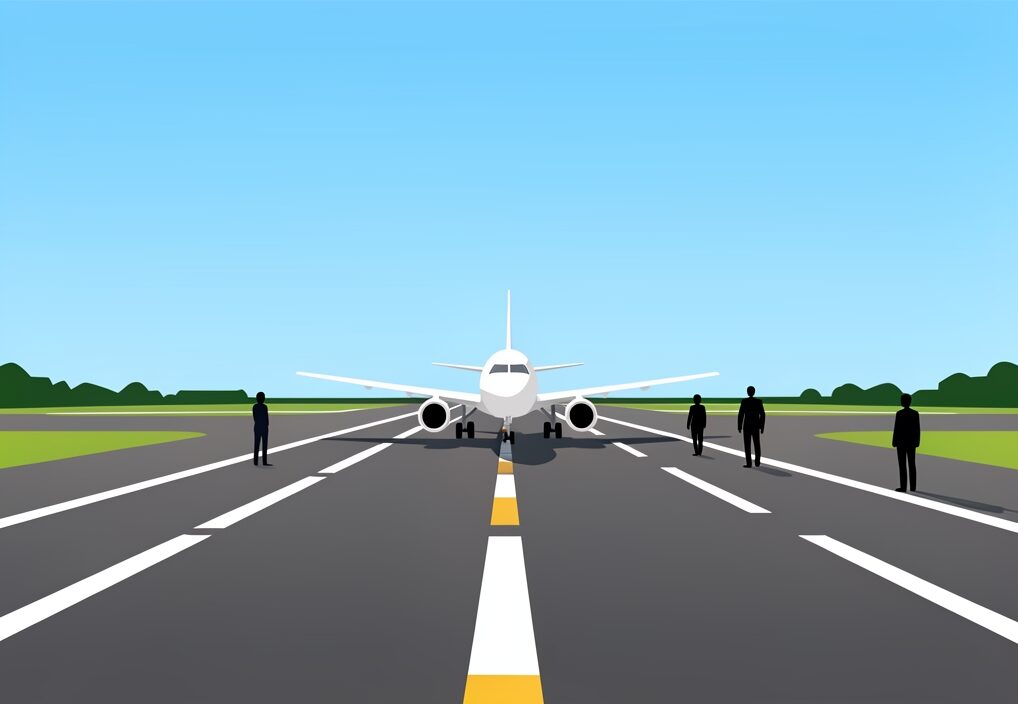
Lucknow airport parallel taxi track opens to ease runway pressure
The new Lucknow airport parallel taxi track operations officially expanded today as Chaudhary Charan Singh International Airport (CCSIA) inaugurated an 804-metre priority section of its upcoming 2,864-metre track. Designed to slash runway pressure and streamline ground movement, the newly paved stretch goes live from midnight on Thursday, marking a substantial leap forward for regional aviation infrastructure.
Developed alongside the Airports Authority of India (AAI), this initial phase targets a persistent bottleneck at the capital’s primary aviation hub. An airport taxi track serves as the vital paved pathway connecting runways directly to parking bays, hangars, and passenger terminals. By giving aircraft a dedicated lane to move to and from the tarmac, the facility reduces what aviation planners call runway occupancy time. Instead of blocking the main runway while taxiing, arriving and departing planes can clear the active strip much faster.
For regular flyers, business travellers, and the extended UP diaspora keeping tabs on home, this upgrade delivers tangible relief. Anyone who has sat on a parked aircraft waiting for a clear path knows the frustration of ground congestion. This development ties into a broader pattern of modernization across city transport arteries, mirroring past expansions like the Chaudhary Charan Singh International Airport Terminal Expansion Set to Ease Lucknow Commuter Congestion which aimed to clear bottlenecks inside the passenger areas. Similar public improvements touch everything from medical diagnostics such as KGMU DNA fingerprinting lab opens in Lucknow to transform Uttar Pradesh forensics to security alerts regarding Sharjah Gold Smuggling Intercepted at Lucknow Airport as Passenger Caught With ₹70L Paste.
Why It Matters for Lucknow Travellers
As flight frequencies climb and passenger volumes swell across Uttar Pradesh, terminal improvements mean little if planes remain gridlocked on the tarmac. Infrastructure upgrades must keep pace with rising commuter demand, balancing airside efficiency with landside access. This sentiment echoes regional safety and development measures implemented elsewhere in the state, such as when authorities address urban risks like Lucknow Road Accidents Claim Three Lives in Alambagh and BKT or monitor health trends through Scrub Typhus Testing Surges in Lucknow As Seasonal Infections Overlap.
The city’s transit network is undergoing continuous adaptation. When infrastructure projects launch, they ripple across the entire metropolitan region, affecting everything from local travel schedules to commercial logistics. Travellers can expect steadier turnaround times once flight crews adapt fully to the new taxi layout. To ensure you stay updated on upcoming transport milestones, keep these points in mind:
- The initial 804-metre segment is operational starting midnight Thursday.
- The remaining 2,060-metre stretch is scheduled for completion by the end of March 2027.
- Runway occupancy times are expected to drop significantly, cutting down tarmac delays.
Other vital metropolitan sectors are also seeing administrative focus, from economic updates detailed in Yogi Adityanath Lucknow Job Models Recast PDA and NDA to local protections noted in Lucknow Traders Protected As UP Government Warns Against Extortion.
Looking Ahead to 2027
The successful rollout of this initial phase signals a commitment to resolving operational bottlenecks before they choke regional growth. While the full 2,864-metre project awaits its final March 2027 deadline, today’s opening proves that gradual infrastructure delivery can yield immediate benefits for everyday commuters.
Urban observers and frequent flyers will watch closely to see how effectively the new path distributes air traffic during peak morning and evening rushes. As Lucknow cements its status as a major economic and transit anchor in northern India, smooth skies on the ground are just as vital as clear skies above.
For more details on the project rollout, read the original reporting at Hindustan Times.