
Lucknow Metro East-West Corridor Faces Massive Tunnelling Challenge Beneath Old City
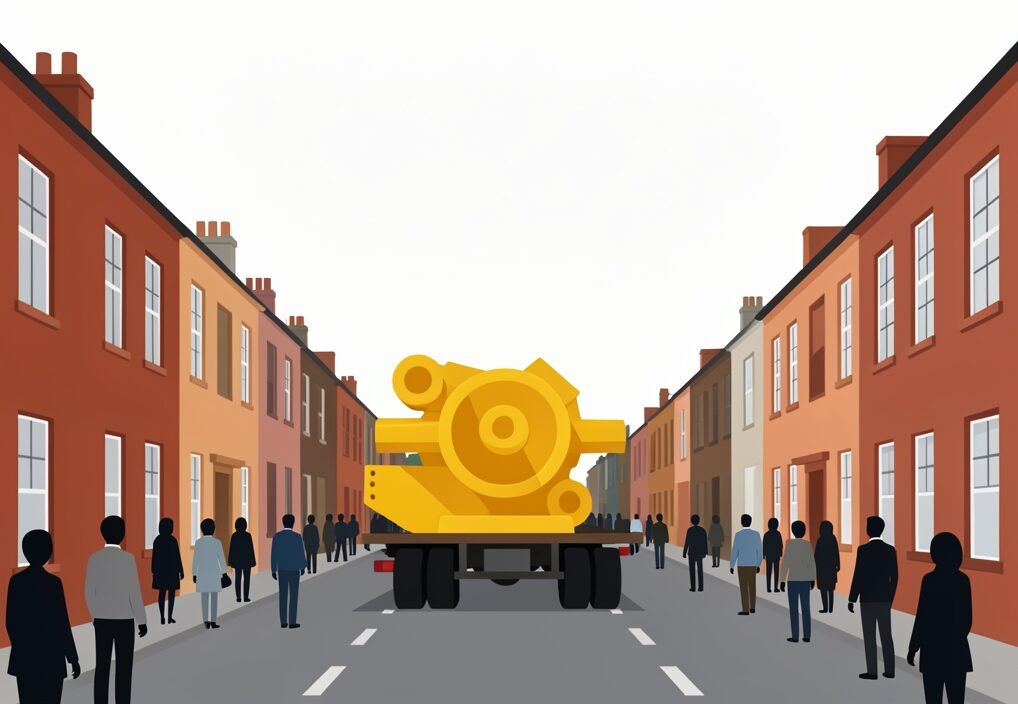
Lucknow Metro is about to enter its most demanding engineering chapter yet as four massive tunnel-boring machines prepare to arrive in the city. The Uttar Pradesh Metro Rail Corporation (UPMRC) faces a complex logistical battle to construct the underground section of the East-West corridor beneath the congested lanes of old Lucknow, aiming for a 2029 completion deadline.
Connecting Charbagh to Vasant Kunj across an 11.165-kilometer stretch, this ambitious project requires carving 6.5 kilometers of twin underground tunnels. Unlike the largely elevated North-South line, this underground route cuts directly through historical neighborhoods where narrow roads, centuries-old buildings, and a dense tangle of underground utilities leave very little room for heavy construction equipment. For daily commuters and local traders, this subterranean mega-project marks a turning point in how the city approaches modern transit expansion.
The Logistics of Tunnelling Beneath History
Moving giant TBM components through narrow corridors is no small feat. Before any earth can be moved, engineers must transport massive machinery parts through buzzing commercial hubs like Aminabad, Pandeyganj, and Chowk. UPMRC Managing Director Sushil Kumar noted that navigating these tight spaces without grinding local trade and daily movement to a halt requires meticulous planning. Traffic diversions, localized barricading, and mapped soil-disposal routes are currently being finalized with municipal authorities.
Old Lucknow’s foundation presents an intricate maze of old drainage systems, heavy commercial basements, and railway infrastructure. Tunnelling here means maintaining structural safety for buildings that have stood for generations while driving state-of-the-art heavy machinery underground. Managing this delicate balance demands constant monitoring and round-the-clock engineering oversight.
For residents who remember the disruptions of earlier infrastructure work, the tight schedule brings both anticipation and anxiety. Citizens often draw comparisons to other large-scale disruptions, noting how crucial it is for agencies to manage traffic during peak hours, much like the caution exercised during major civic interventions or when government hospitals in Lucknow brace for firecracker emergencies. Security personnel also face immense pressure during heavy festival seasons, echoing the deployment patterns seen when Lucknow Festive Security: Undercover Cops Deployed in Markets to keep public spaces safe.
Engineering Realities and Local Impact
Executing underground construction in a densely populated historical district requires adherence to strict safety parameters. Engineers must continuously assess ground settlement risks to protect residential and commercial structures from shifting during boring operations. The sheer scale of machinery handling requires specialized coordination across multiple municipal departments.
- Transportation of four massive TBM components through high-density residential and commercial zones.
- Construction of launching shafts in restricted spatial footprints across tight urban pockets.
- Coordination of soil excavation and muck-disposal routes with local traffic authorities to prevent gridlock.
The ultimate success of the East-West corridor depends on how smoothly UPMRC can execute heavy underground logistics without alienating daily commuters or threatening the structural integrity of heritage zones.
Why it matters
Once operational, the East-West corridor will dramatically reshape urban mobility, connecting the historic quarters directly to modern transit hubs. However, the path to 2029 will test the patience of commuters who already navigate heavy congestion daily. Urban planners point out that managing subterranean mega-projects requires transparency and localized communication, echoing the vigilance seen in other civic movements such as when Congress leaders Lucknow: Party Protest Leads to Police Detentions draw attention to public movement constraints.
Furthermore, residents often compare local development rates with neighboring regions, keeping an eye on economic trends similar to Why Lucknow property market is pulling buyers from Delhi and Bengaluru. This influx of external interest makes efficient mass transit infrastructure an absolute necessity for future economic growth. Meanwhile, managing urban resources remains a pressing civic priority, with studies highlighting how Lucknow groundwater extraction exceeds safe limits by 28 percent, reminding planners that large construction projects must account for long-term environmental sustainability.
For those tracking urban changes from afar, including the diaspora, keeping tabs on these foundational shifts remains essential. Whether watching local skies during celebrations like Lucknow Skyline Jamghat: Modi-Yogi Kites Crown the City or engaging with cultural milestones inspired by the city, the physical transformation of Lucknow continues to capture widespread attention across India.