
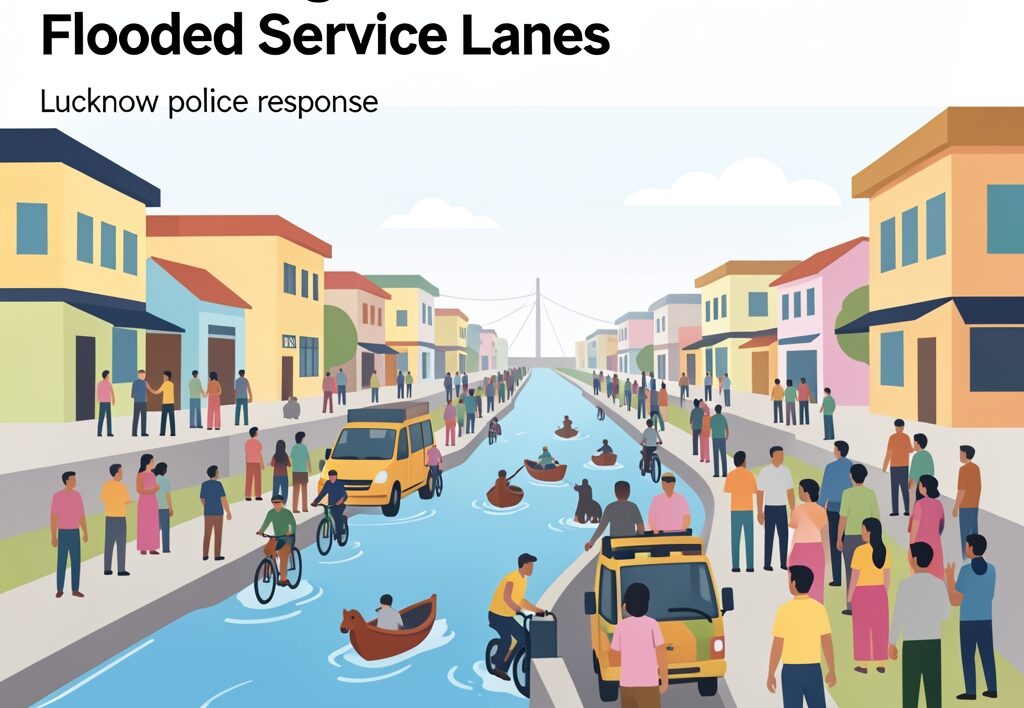
Lucknow Police Response Steps Up Amid Rising Gomti Waters and Flooded Service Lanes
As rising Gomti river waters inundate major thoroughfares and residential sectors, the Lucknow police response has shifted into high gear across the city. According to Hindustan Times reporting, traffic ground to a crawl on Shaheed Path during the evening rush when water flooded two service lanes, prompting an urgent deployment of local police, traffic units, and Provincial Armed Constabulary (PAC) personnel to manage the gridlock.
Meanwhile, in low-lying residential pockets such as Faizullaganj, families find themselves navigating waterlogged streets just to reach basic supplies. The municipal administration has pressed boats into service, yet locals and social workers report encountering severe bottlenecks in securing free transit, compounding daily hardships during an unfolding civic emergency.
Traffic Gridlock on Shaheed Path and Emergency Deployments
The sight of water creeping across the Shaheed Path service lanes caught evening commuters off guard. As arterial movement slowed, local authorities acted quickly to prevent major accidents. Additional Deputy Commissioner of Police (ADCP) South Vasanth Rallapalli confirmed that local forces and PAC units maintain a constant presence to regulate vehicle flow and assist motorists.
This swift action mirrors broader administrative efforts to keep the city moving. For a comprehensive look at urban challenges, residents often track ongoing developments discussed in reports on Pragati-50 urban makeover initiatives and related Faizullaganj floods disrupt daily life updates. Maintaining order on critical infrastructure like Shaheed Path remains vital for thousands of commuters traveling across the capital every day.
City planners note that seasonal overflows test drainage networks built years ago, requiring constant intervention from law enforcement. When major corridors experience bottlenecks, response units must coordinate quickly with traffic control rooms to divert vehicles before gridlock paralyzes entire sectors of the capital.
The Faizullaganj Ground Reality: Boats and Financial Strain
Away from the major highways, the human toll of the rising river is starkly visible. Water stretches across residential lanes, turning routine trips for food and medicines into hazardous journeys. According to details shared in recent local coverage, although official figures cite dozens of operational boats, residents and relief groups point out glaring gaps in ground-level execution.
Social activists visiting the area to distribute relief packages reported being charged steep fares by private boatmen. When community helpers face hurdles, ordinary households suffer even more acute distress. Similar digital distress calls and community hardships have been highlighted previously, as seen in reports on Faizullaganj residents digital SOS campaigns. Ensuring transparent, free public transport for marooned citizens is essential to alleviate this financial burden.
Local neighborhood committees have stepped up volunteer efforts, but families demand a more robust administrative oversight mechanism to prevent private operators from exploiting vulnerable citizens during natural calamities.
Evaluating Municipal Accountability and Relief Coordination
Handling seasonal flooding requires seamless synergy between municipal corporations, irrigation departments, and emergency responders. When water levels surge past danger marks, community members expect clear communication channels and dependable rescue assets deployed without delay. Administrative preparedness determines whether a heavy downpour or upstream release remains a manageable civic hurdle or spirals into a full-scale neighborhood crisis.
Furthermore, residents point out that long-term resilience demands permanent infrastructural upgrades rather than temporary sandbagging. Keeping arterial roads clear and ensuring equitable distribution of boats in marooned zones protects daily wage earners and school children who rely entirely on uninterrupted civic services.
Key Takeaway: While police and disaster response teams have mobilized effectively on major arteries like Shaheed Path, bridging the gap between official relief tallies and ground realities in neighborhoods like Faizullaganj remains an urgent priority for local authorities.
Why It Matters
For residents, students, and visitors navigating Lucknow during monsoon swells, these incidents test the resilience of local civic infrastructure. Effective emergency coordination ensures that safety hazards are addressed before they escalate. Transparency in resource allocation—such as ensuring government-backed boats reach those who need them most without extortionate private fees—directly affects community trust.
As the city addresses these recurring seasonal challenges, citizens keep a close eye on municipal accountability. Past incidents involving administrative shortcomings, such as those analyzed in Lucknow businessman abduction fake cops investigations and local Lucknow traders UP government warns against extortion advisories, highlight why prompt, honest governance is always under public scrutiny.