Meerut Lawyers Strike Over High Court Bench Demand Rattles Western UP
Meerut lawyers strike action began on Wednesday, bringing judicial proceedings to a grinding halt as advocates demanded a high court bench for western Uttar Pradesh. The mobilization spans 22 districts across the region, reflecting deep-seated regional frustrations over judicial accessibility that resonate far beyond western UP and affect legal administrative debates in state power corridors like Lucknow.
The resolution to boycott work was finalized during a Tuesday strategy meeting. Since Wednesday morning, advocates have boycotted courtrooms, staged demonstrations, and raised slogans across local court complexes, cutting off normal legal remedies for citizens.
Escalating Tensions and Political Boycotts
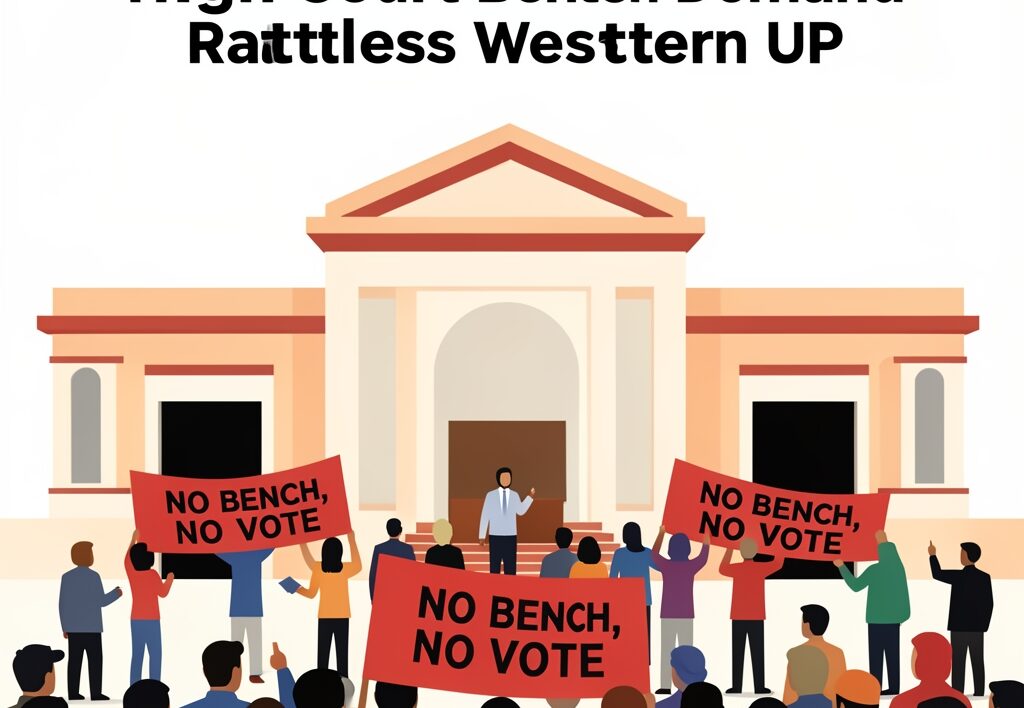
The agitation carries a sharp political edge. Protesting advocates have hung prominent banners bearing the slogan “No Bench, No Vote” at primary entrances of the court complex. In an escalation of tactics, local bar associations voted to bar all ruling BJP elected representatives from entering the premises.
This localized standoff underscores how infrastructure and administrative grievances quickly pivot into high-stakes electoral pressure points. Similar legal disruptions elsewhere in the state have historically stalled critical remands and hearings, causing ripple effects for litigants who travel long distances for justice. For instance, disruptions seen in matters like the Kanpur Lawyers Strike Stalls Remand Plea in Vineet Manocha Murder demonstrate how court boycotts directly impact ordinary citizens caught in legal limbo.
Furthermore, personal and familial friction in the region frequently intersects with broader socio-economic pressures, mirroring cases such as the tragic Meerut Family Dispute Escalates to Acid Attack and Suicide Over Pension and Mobile Phone Demands, which exposed acute local stress points. When institutional safety valves break down, community tension spills over into civic and legal spaces.
Key developments from the ongoing protest include:
- Advocates staying completely away from judicial duties across Meerut.
- Active backing from legal bodies spanning 22 western Uttar Pradesh districts.
- Ban on entry for ruling party politicians within court grounds.
- Deployment of ‘No Bench, No Vote’ messaging across entry points.
- Total standstill of routine civil and criminal filings in the affected courts.
Why It Matters for Uttar Pradesh
The persistent demand for a western UP high court bench is not a new grievance. Litigants from districts like Meerut, Muzaffarnagar, and Saharanpur currently make exhaustive journeys to the Allahabad High Court or its Lucknow bench, incurring heavy financial and logistical burdens. While Lucknow hosts the official Allahabad HC Lucknow Bench Quashes Vigilance Probe Against IAS Officer Abhishek Prakash, the vast geographical expanse of the state makes decentralization a recurrent flashpoint for local bar associations.
For residents and the wider UP diaspora tracking state developments, this strike signals a hardening of political stances as local actors leverage upcoming electoral leverage. Administrative friction in western districts also mirrors other regional flashpoints, such as political controversies over voter rolls noted in reports like Samajwadi Party Meerut: Alleges Mass BLO Transfers and Bogus Voters, keeping civic tensions elevated across the region.
Other localized infrastructure and security challenges, including local disputes or urban mobility projects such as the Ghaziabad Foot Over Bridge construction begins on NH-9 and Delhi-Meerut Expressway to curb accidents, show how public infrastructure demands routinely merge with governance friction. When judicial access is restricted, the backlog expands, punishing everyday litigants.
State political dynamics also face constant friction from shifting alliances and identity politics, as seen in developments surrounding political reorganizations like Chandra Shekhar Azad Blasts Samajwadi Party Over Blue Uniform Makeover. These overlapping political currents mean that local agitations by lawyers quickly capture state-level attention, pressuring the government for a substantive policy response.
The ongoing strike forces state authorities to confront the long-delayed decentralization debate while highlighting how regional bar associations can successfully freeze local judicial machinery to demand political accountability.
Sources
Reporting is based on coverage from Hindustan Times.