Kanpur Lawyers Strike Stalls Remand Plea in Vineet Manocha Murder
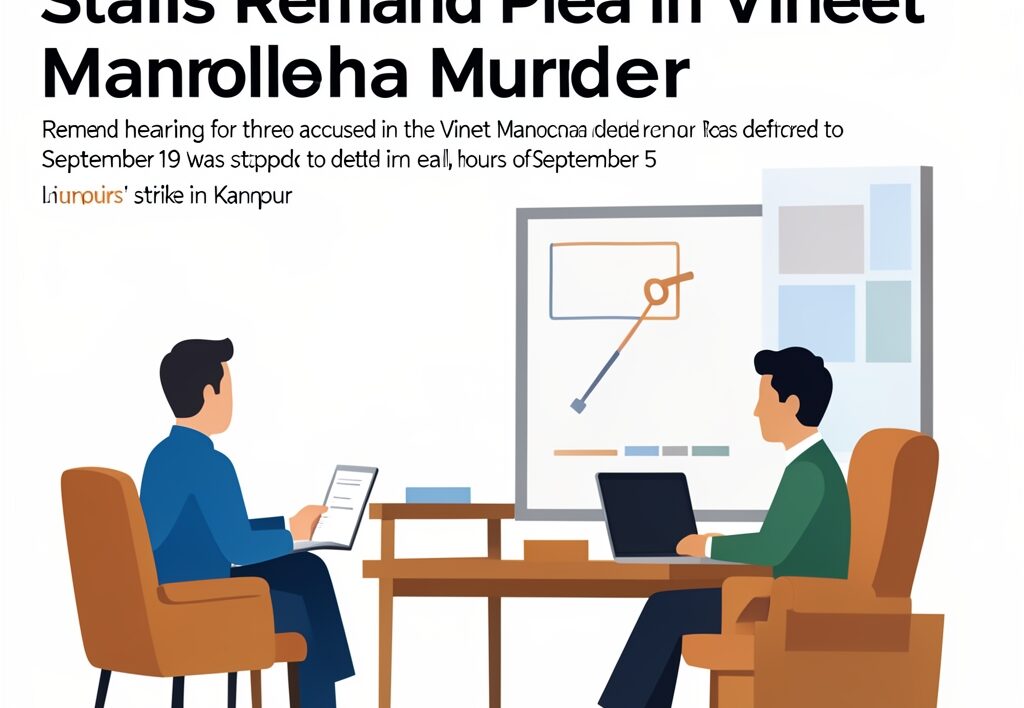
A Kanpur lawyers strike on Wednesday abruptly stalled a crucial police remand hearing in the sensational murder of 60-year-old pharmaceutical firm owner Vineet Manocha, pushing the legal proceedings to September 19. Investigators had brought three jailed suspects—including the victim’s daughter-in-law—to court to secure further custody for interrogation, but judicial proceedings hit a wall when defense representatives failed to show up.
Vineet Manocha ran a pharmaceutical business on Birhana Road alongside his son. His violent death in the early hours of September 5 sent shockwaves across Uttar Pradesh’s commercial capital, mirroring the panic seen in other high-profile regional crimes such as the Kanpur pharma trader murder shocks Uttar Pradesh as police detain two suspects. Wednesday’s court appearance marked the first time the victim’s daughter-in-law, Shalu, was seen publicly on camera since her arrest. Alongside domestic help Vishal and his associate Rajkishore, she was escorted from jail under heavy police watch, attempting to shield her face from media cameras as officials maneuvered through the courthouse.
The Ripple Effects of Courtroom Boycotts
For residents, litigants, and observers tracking the state’s criminal justice delivery, administrative strikes highlight a persistent systemic bottleneck. When local bar associations abstain from work, ongoing investigations into grave offenses pause indefinitely. This creates unnecessary anxiety for grieving families waiting for closure. Similar procedural halts have affected high-profile cases across the state, from the Vivek Tiwari murder case verdict to broader municipal and administrative investigations like the Kanpur municipal bungalow allotment to peon triggers SIT probe.
The convergence of violent crime and stalled legal accountability forces local communities to question how quickly justice can be achieved when courtrooms face disruptions. Families across UP often find themselves navigating a labyrinth of procedural delays, whether dealing with domestic security lapses similar to the Kanpur domestic dispute shooting leaving a family shattered or complex municipal contract controversies like the Kanpur tender row shaking up municipal contracting.
Why It Matters
For readers in Lucknow, Kanpur, and across the wider UP diaspora, procedural delays in capital and bodily offense cases erode public confidence in swift judicial resolutions. Police custody remands are time-sensitive windows for gathering crucial evidence, recovering weapons, and establishing airtight timelines. When lawyers’ boycotts stall these mechanisms, the entire investigative momentum slows down.
- Police custody remand hearings require active judicial oversight to proceed legally.
- Striking lawyers mean accused individuals return to jail without facing questioning, delaying charge-sheet filings.
- Public scrutiny remains high as investigators attempt to unravel the motive behind the Birhana Road killing.
The deferred hearing underscores the fragile balance between statutory defense rights and the urgent administrative need for speedy trials in violent crime investigations. As police wait for the September 19 rescheduled date, pressure mounts on investigators to maintain the integrity of their evidence trail despite courtroom hurdles.