Municipal Sanitation Priorities: Why VIP Routes Get Cleaned While Local Lanes Wait
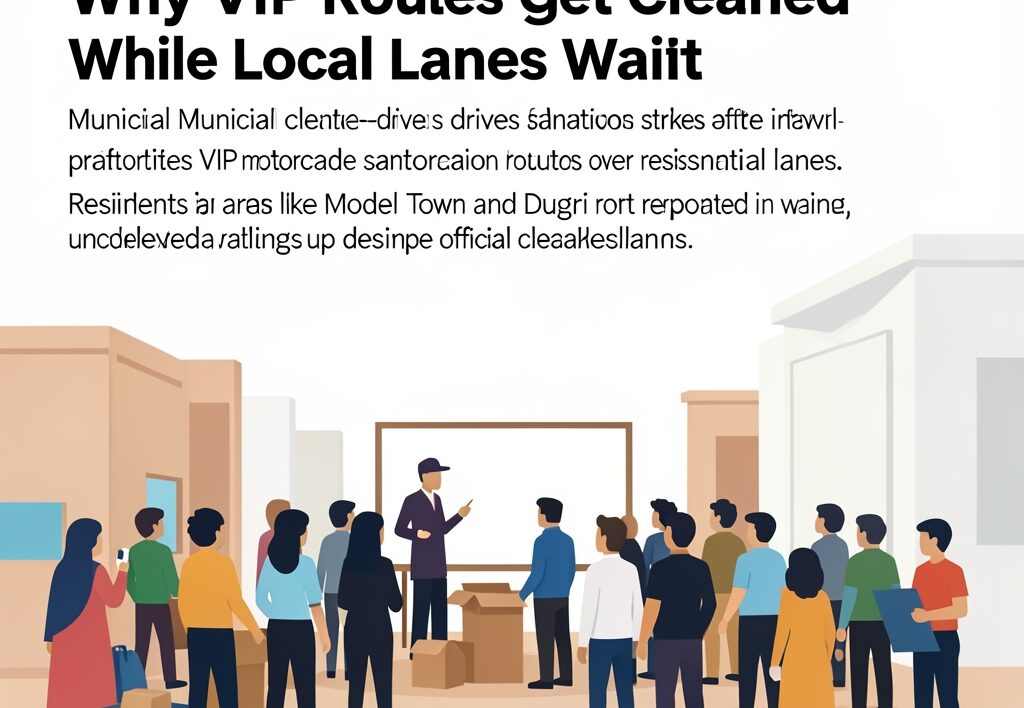
Municipal sanitation priorities came under severe criticism on Sunday when city authorities scrambled to clear major thoroughfares ahead of a high-profile political visit while residential sectors remained buried under rotting garbage. Following the conclusion of a 10-day sanitation workers’ strike on August 1, the municipal corporation launched a massive cleanup drive. However, residents quickly noticed a stark disparity. Arterial stretches like Pratap Chowk and Cheema Chowk—designated parts of the chief minister’s travel route for inaugurating two Schools of Eminence—were meticulously sanitized overnight. Meanwhile, neighbourhoods including Model Town, Dugri, Gill Road near Arora Palace, and Kochar Market continued to choke under mountains of uncollected waste.
For everyday citizens living across urban centres in Uttar Pradesh, this disparity feels all too familiar. Whenever state dignitaries or top leaders schedule official engagements, municipal machinery moves with military precision along designated corridors. Potholes vanish, streetlights spring back to life, and accumulated refuse disappears within hours. Yet, the moment the VIP motorcade passes, the administrative focus evaporates, leaving local lanes to fend for themselves. This selective governance exposes deep structural flaws in how municipal bodies allocate resources and manpower during routine crises.
The Anatomy of Selective Civic Cleanups
When sanitation staff return to work after prolonged strikes, municipal commissioners face a massive backlog of organic and inorganic waste. With limited trucks and exhausted personnel, commanders must make operational choices. Unfortunately, optics consistently trump public health. Instead of deploying teams proportionally across high-density residential wards where disease vectors multiply rapidly, authorities concentrate their entire fleet on ceremonial arteries.
This dynamic triggers immediate frustration among taxpayers. While visiting dignitaries enjoy a sanitized panorama, residents deal with stray cattle, clogged drains, and unbearable stench right outside their front doors. Similar administrative friction often mirrors debates seen during legislative discussions, such as those highlighted during the UP monsoon session where lawmakers urge focus on public interest, or when local governance and accountability issues make daily headlines across the state. Readers tracking these shifts can also examine how CPI(M) Kerala criticism sparks UP governance debate on institutional responsiveness.
Impact on Urban Residents and Daily Life
The persistence of uncollected garbage extends far beyond a visual nuisance. Piling waste creates severe public health hazards, attracting rodents, mosquitoes, and stray animals while contaminating local groundwater run-off during unpredictable monsoon showers. For families living in congested urban clusters, the gap between official press releases and ground realities highlights a persistent breakdown in local accountability.
- VIP corridors receive overnight mechanized sweeping and waste removal.
- Residential markets and inner lanes face delayed pickups lasting days past strike resolutions.
- Sanitation workers remain overburdened without adequate logistical backing to clear entire municipal wards simultaneously.
As urban populations expand, municipal corporations must reform their post-strike recovery protocols to ensure equitable service delivery. Citizens deserve clean streets regardless of whether a motorcade is scheduled to pass their doorstep.
Key Takeaway: Urban municipal bodies must abandon cosmetic cleanup drives tied strictly to VIP itineraries and establish equitable, ward-wise waste management protocols that prioritize public health over political optics.
Why it matters
For residents across Lucknow and other major UP cities, municipal accountability directly dictates daily quality of life. When basic services like garbage clearance are deployed selectively, it erodes trust in local administrative bodies. Observers tracking governance trends often compare these localized failures with broader institutional oversight challenges, drawing parallels to scrutiny faced by development authorities such as the LDA enforcement wing vigilance actions or discussions surrounding regional investment distributions. Ensuring that sanitation workers are backed by robust infrastructure rather than diverted for temporary VIP spectacles remains a vital test of grassroots democracy.
For further details on how this sanitation controversy unfolded, read the original reporting on Hindustan Times.