
Parked Buses Lucknow: How Heavy Vehicles Turn Busy Roads Into Makeshift Homes
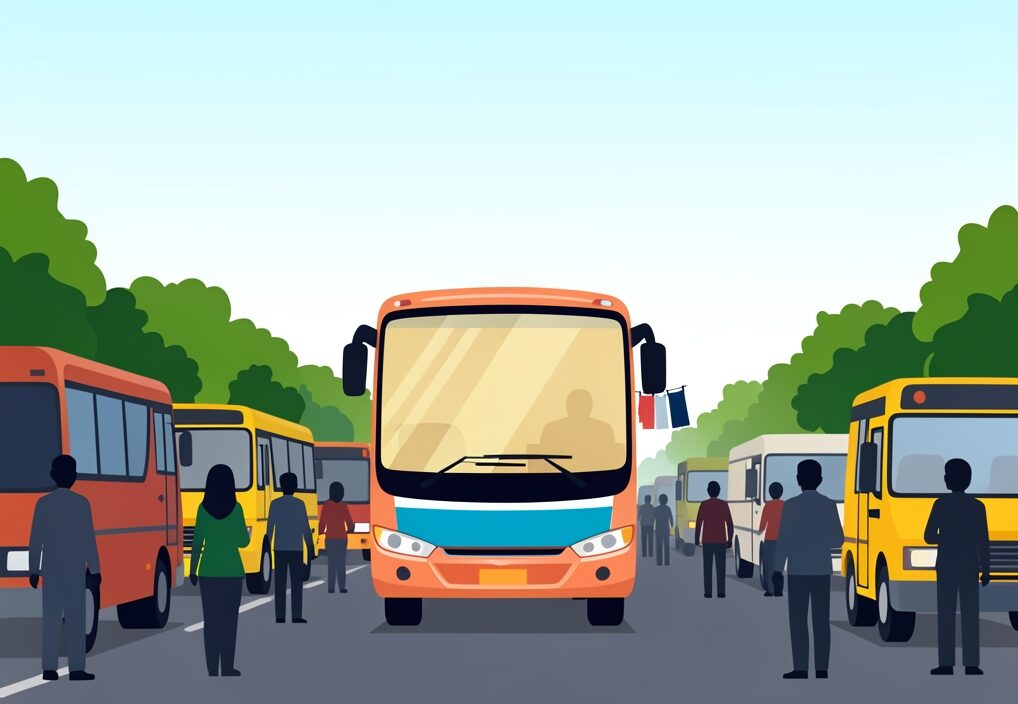
Parked buses Lucknow residents encounter daily are systematically shrinking the state capital’s busiest corridors, turning critical urban thoroughfares into unauthorized parking lots and open-air kitchens. Across major stretches, both private carriers and state transport corporation buses remain stationed for upwards of 24 hours at a time, choking daily commutes. Commuters attempting to navigate these routes encounter massive bottlenecks, while local residents find themselves trapped behind immovable walls of heavy steel as municipal authorities trade blame in an endless regulatory loop.
A ground-level check across key city corridors reveals that these heavy commercial vehicles are not merely stopping to pick up or drop off passengers. Instead, drivers and conductors routinely occupy up to half the available road width between scheduled trips. At spots like Hussainabad near the historic clock tower, public asphalt has effectively morphed into a permanent terminal. Makeshift domestic setups complete with portable stoves and sleeping gear inside the buses paint a picture of civic apathy that directly threatens urban mobility.
The Human Cost of Road Encroachment
For ordinary residents living along these choked arteries, the situation goes far beyond routine traffic frustration. At Kamta crossing, Uttar Pradesh State Road Transport Corporation (UPSRTC) buses line up in massive queues from early evening through the following morning. Families residing in local housing complexes like Parijat Apartment find the service lane right outside their main gates completely impassable during peak travel hours.
Urban congestion often feels like a distant administrative headache until it hits home. Local residents have repeatedly flagged the catastrophic safety implications of this unauthorized parking. If a medical emergency strikes, an ambulance cannot reach our gates because buses completely block the service lane. When residents sought relief, they faced administrative dead ends. Although an alternative exit gate was constructed following persistent appeals to the Lucknow Development Authority (LDA), bureaucratic red tape has left it completely non-operational.
Passing the Buck and the Regional Context
The core issue stems from a persistent vacuum in enforcement. Whenever complaints flood local police stations and transport department helplines regarding rogue parking, agencies quickly point fingers at each other rather than clearing the tarmac. This regulatory inaction contrasts sharply with how the city manages transport spikes during festive seasons, such as the post-Diwali rush when managing Delhi-bound buses Lucknow demands aggressive coordination. Yet, during ordinary weeks, basic corridor management breaks down entirely.
This ongoing parking crisis adds to a growing list of urban pressures facing the city, compounding anxieties similar to those felt when dense fog blankets Lucknow and Uttar Pradesh, severely slowing down urban transit. When roads meant for moving traffic are surrendered to parked heavy vehicles, the entire city’s economic rhythm takes a hit. Commuters lose hours in traffic jams, air pollution spikes due to idling engines, and neighborhood safety plunges.
- Heavy buses occupy up to 50 percent of active road widths on crucial stretches.
- Drivers utilize vehicles as permanent living quarters, cooking and sleeping on-site.
- Emergency services face severe roadblocks due to unaddressed civic encroachment.
- Local development authorities and transport agencies fail to enforce basic parking protocols.
Why it matters
Road infrastructure is a public utility, not an unofficial garage for commercial fleets. When state and private transport operators commandeer public streets without consequence, it erodes trust in municipal governance. For Lucknow to sustain its growth as a major regional hub—drawing interest from property investors and families alike, mirroring trends where Lucknow property market pulls buyers from Delhi and Bengaluru—basic civic order must prevail. Clearing these unauthorized roadside yards and making alternative terminal spaces functional is no longer optional; it is an urgent safety imperative for everyone who calls the city home.
Readers tracking urban developments in the state capital can review the detailed field reports directly via the Hindustan Times Lucknow report. For broader context on regional transport management, see additional analysis on Delhi-bound transport bottlenecks and regional weather-related travel advisories managed alongside fog safety guidelines.