
Chattar Manzil
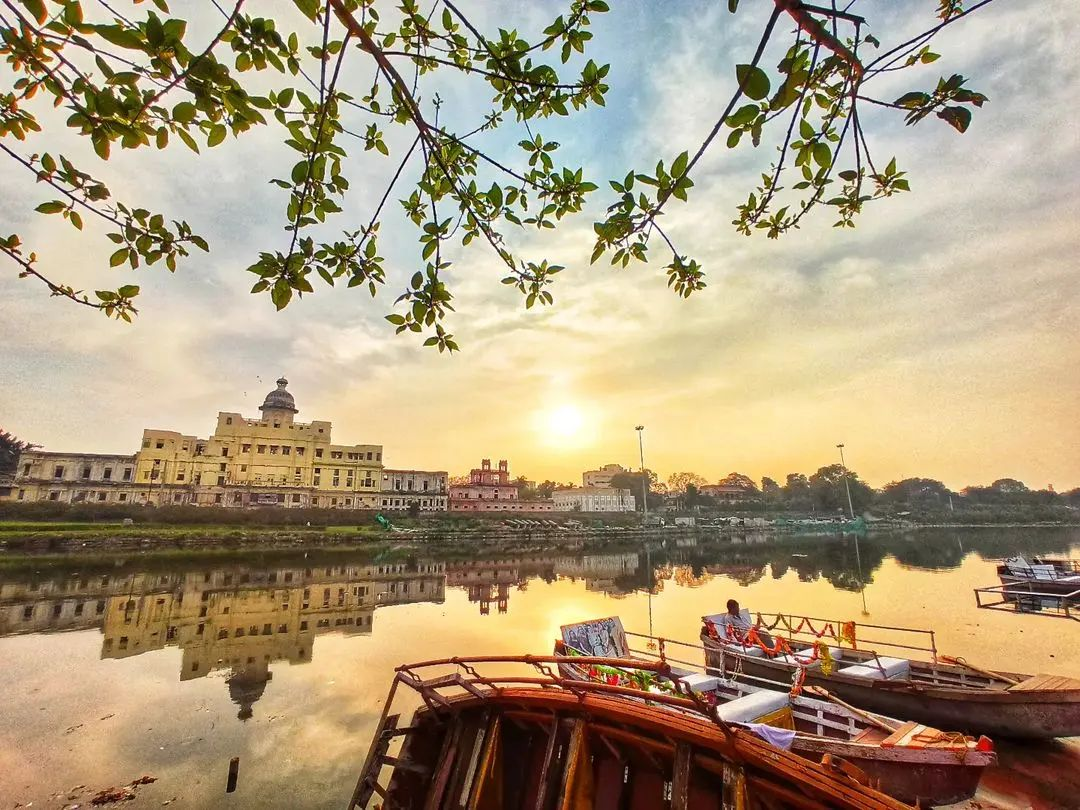
On the Gomti, just off Qaiserbagh, the Umbrella Palace still shows its gilt chhatar against the sky even while its rooms stay closed. Chattar Manzil was a Nawabi riverside house before it was a club, a laboratory, and, in 2026, a heritage project. For now you read it from the outside.
History
The story starts next door. In 1781 the French soldier-architect Claude Martin finished a town house on this bank and called the life in it Farhat Bakhsh. He died in the house in 1800 and was buried at Constantia, now La Martiniere College. Nawab Saadat Ali Khan bought the property. Ghazi-ud-Din Haider, the first King of Awadh, began a large riverside palace beside it. His successor, Nasir-ud-Din Haider, completed the work. That palace is Chattar Manzil, named for the chhatar, the umbrella-shaped gilt dome on the octagonal pavilion that crowns the roof. A smaller twin, Chhoti Chattar Manzil, later collapsed. The larger house is the one you still see.
The architecture mixes European windows and river terraces with Awadhi vaults and a basement that once met the flood of the Gomti. Kings used it as a royal residence until Wajid Ali Shah moved his court toward Qaiserbagh. In 1857 the buildings became a stronghold of the uprising. British guns wrecked part of the complex. After the war the surviving house served as the United Services Club. From 1950 the Council of Scientific and Industrial Research ran the Central Drug Research Institute inside the rooms. CDRI has since moved out. The vacated palace is what Lucknow has been arguing over ever since: museum, cultural centre, or hotel.
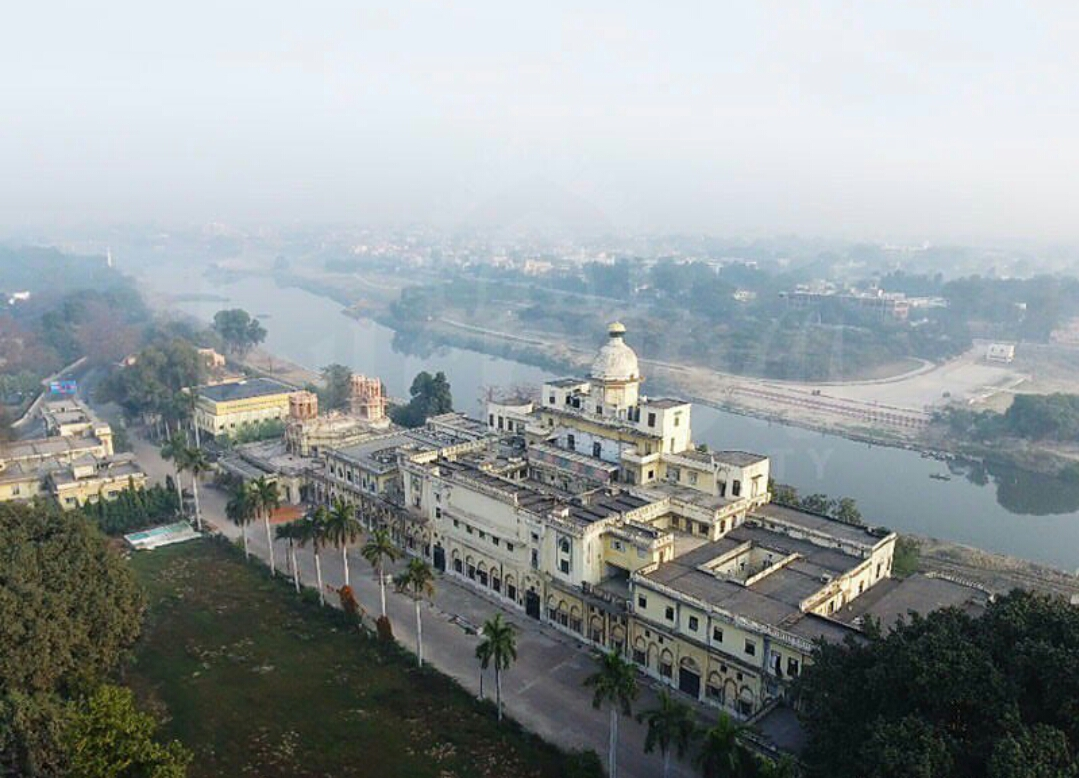
As of 2026 the Uttar Pradesh cabinet has transferred ownership of Chattar Manzil and nearby Roshan-ud-Daula from the district administration to the Tourism Department. The state is pushing an adaptive-reuse plan under a public-private partnership, widely reported as a luxury heritage hotel with conservation at its centre. Earlier INTACH and state archaeology work had pointed toward a city museum. Those plans shifted. What has not shifted is that this is not, at present, a furnished museum you can tour room by room. Older copy that described restored durbar halls, jewellery galleries, and a musical fountain was ahead of the facts, or simply wrong.
What to see
See the river elevation. The chhatar on the roof is the signature, a metal umbrella catching light. Count the storeys: some floors sat below ordinary ground level so the Gomti could lap the lower rooms in the rains. Octagonal towers and a long terrace still read as a palace even with boarded openings and conservation clutter. Farhat Bakhsh, Martin’s older house, stands in the same cluster. You will photograph the pair better from the Gomti side or from a little distance on the Qaiserbagh approaches than by pressing the gate.
If barriers are up, respect them. Restoration and hotel works change month by month. A facade you can walk in March may be closed in August. The point of a visit today is the silhouette, the river, and the knowledge of what the rooms once held, not an interiors checklist.
Visiting
There is no reliable public ticket for the interiors in 2026. Do not pay a pavement guide for a “museum tour” of rooms that are not open. Walk the exterior where the street and riverbank allow, and ask at any official hoarding whether a viewing window has been announced. Hours listed on old tourism pages, including all-day entry and garden fountains, should be ignored until the Tourism Department publishes a visitor notice.
Chattar Manzil sits on the Gomti in the Qaiserbagh belt, close to the British Residency and a short auto from Hazratganj Metro. Pair the river stop with the Residency ruins. Lucknow Zoo and Banarasi Bagh are the other nearby green pause. Eat in Hazratganj afterwards; this is not a Chowk kebab outing unless you ride west to the old city.
Nearby
The Residency is the essential neighbour. Dilkusha Kothi and La Martiniere continue the Gomti line into the Cantonment. The Hussainabad cluster around Bara Imambara is a different half of the city and a different century of brick. For a wider circuit, start from Lucknow places.
A note on the site
Closed heritage buildings attract informal entry. Do not follow anyone through a side gate. Lime, timber, and the basement are all vulnerable. Photograph from public ground, leave the scaffolding alone, and come back when the state actually opens a door.
\n\n
FAQs
What is Chattar Manzil and why visit?
On the Gomti, just off Qaiserbagh, the Umbrella Palace still shows its gilt chhatar against the sky even while its rooms stay closed.
What can visitors do there?
See the river elevation. The chhatar on the roof is the signature, a metal umbrella catching light.
What are the timings or entry arrangements?
There is no reliable public ticket for the interiors in 2026.
How do I reach it and what should I know before going?
Chattar Manzil sits on the Gomti in the Qaiserbagh belt, close to the British Residency and a short auto from Hazratganj Metro.
How long should I spend and what can I pair nearby?
The Residency is the essential neighbour.