
La Martiniere College
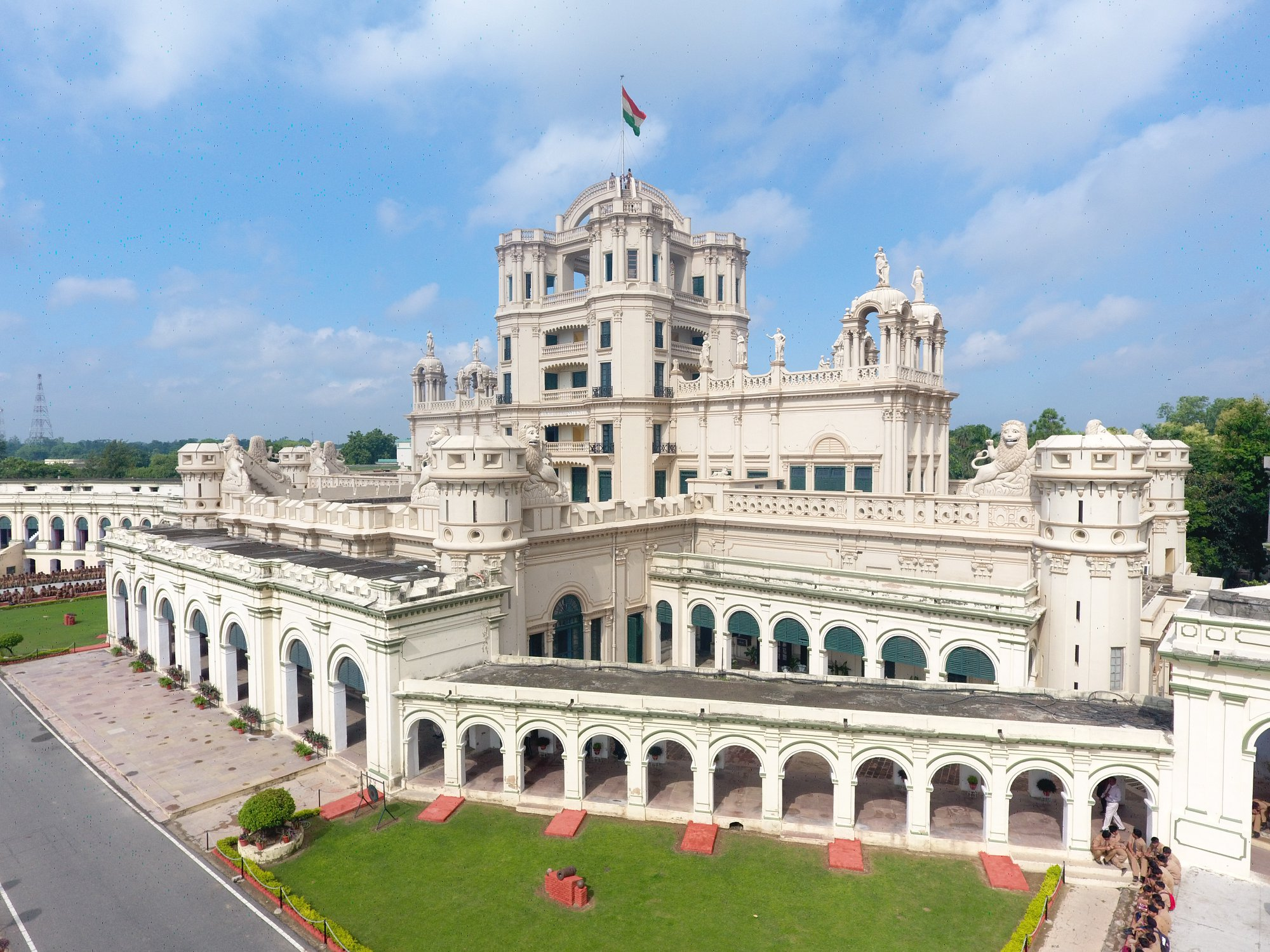
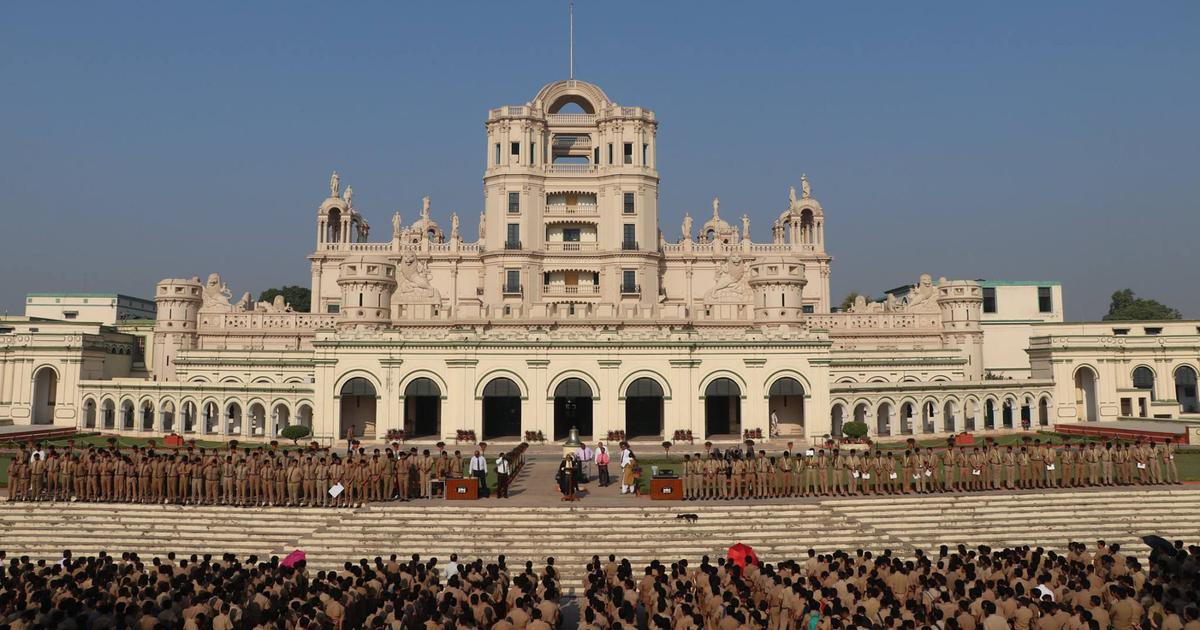
La Martiniere College is a working school. That is the first sentence worth putting on any Lucknow guide. Constantia, the great house on the Gomti, photographs like a palace, and tourism pages still talk as if you can wander in with an ice cream. You cannot, or at least you should not. Boys still file to class through those corridors. The chapel still sits for morning service. If you go, go as a guest of a school, not as a tourist who has mistaken a campus for a monument park.
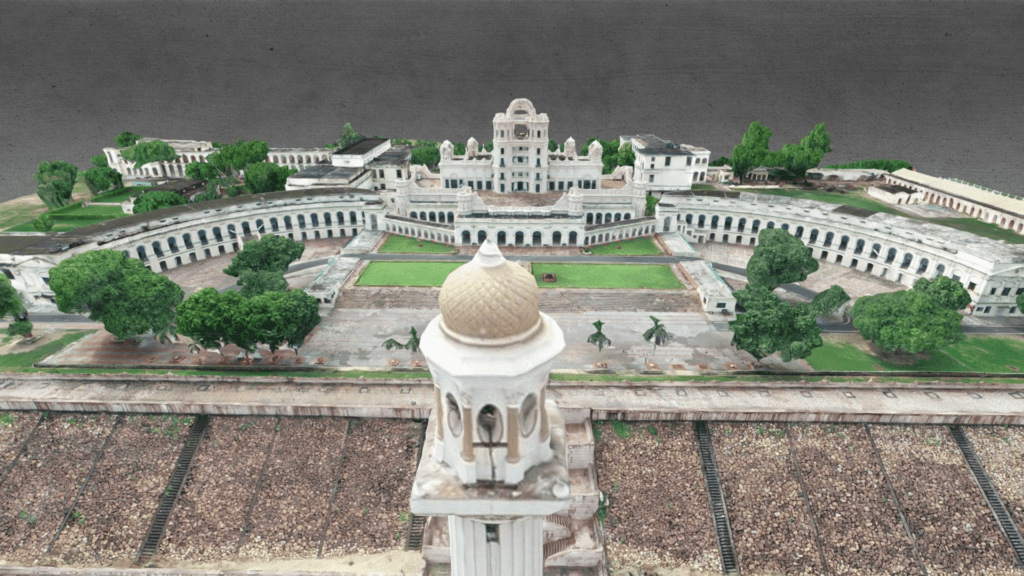
The college stands near Dilkusha, with Constantia facing the Gomti. Lucknawis know the silhouette from the road: the stacked house, the tall column in the water, the lawns. That view from outside is public. The grounds inside are not a casual park. Write to the college office, or join a heritage group that already has leave. Turning up at lunch break and walking toward the dormitories is rude, and it can get you stopped.
Claude Martin, the will, and Constantia
Major-General Claude Martin was born in Lyon in 1735, served first with the French and then with the East India Company, and lived in Lucknow from the 1770s until his death on 13 September 1800. He built Constantia as his country house. The core, often called Martin Sahab ki Kothi, mixes European baroque ideas with local craft. Martin never married and left no heir. His will, dated 1 January 1800, set aside money for schools in Lucknow, Calcutta and Lyon, each to bear his name. For Lucknow he directed that Constantia and its grounds were not to be sold, and that the house should serve as a “school or College” for young men. He also asked to be buried in a vault under the house. He is still there. Founder’s Day is 13 September, the day he died.
The will was fought over in the Calcutta courts for decades. A Supreme Court decree of 11 April 1839 said a college at Lucknow should be established as Martin had wished. A further scheme came in 1841. The boys’ college finally began work on 1 October 1845, with John Newmarch as the first principal and about seventy boys on the roll. That date, 1 October, is kept as Constantia Day. Martin himself did not “found the school in 1845”; he had been dead for forty-five years. The school is the product of his will, after a long legal wait.
La Martiniere Girls’ College is a later, separate story. Martin’s will had not funded a girls’ school at Lucknow. Trustees used a Female Education Fund. The girls’ school opened in 1869 at Moti Mahal, under Mr and Mrs Abbott, and moved in 1871 to Khursheed Manzil, which the government granted for that purpose. It remains a working girls’ college on its own campus, with its own gates and timetable. Do not treat the two campuses as one tourist estate.
The house, the school, the 1857 story
Constantia is the building people mean. District Lucknow’s note describes a tall house, later wings, an East Terrace with the cannon called Lord Cornwallis, and a column, the Lat, rising from an artificial lake. The largest hall became the chapel, with a pipe organ from 1895. A bust of Martin by Thomas Banks (commissioned 1796) stands in Memorial Hall among tablets for old boys. The Claude Martin Museum in Mahal Serai has galleries on the founder and the college, including battle honours. Those rooms exist for the school. They are not a walk-in city museum with a ticket window on the pavement.
In 1857 staff and boys left Constantia and took part in the defence of the Lucknow Residency. La Martiniere Lucknow was later granted royal battle honours for that role, a distinction often described as unique among schools. The Residency ruins, which you can visit as a historic site, are across town at the British Residency. The college’s own story of 1857 belongs inside the school, not as a reason to stroll the dormitories.
This is a school, affiliated to CISCE, with ICSE and ISC classes, not a university. Old Martinians from Lucknow include filmmaker Muzaffar Ali, actor Ali Fazal and presenter Roshan Abbas. Other famous names sometimes pasted onto this campus belong to different schools.
Can you visit?
There is no public entry fee because this is not a ticketed monument, and no published tourist hours a family can trust. Write ahead to the principal’s office, state why you wish to see Constantia, and wait for a yes. Heritage walks that already hold permission are cleaner than arriving unannounced. Do not photograph students, picnic on the playing fields, or enter hostels and classrooms.
If you only want the famous outline of the house and the Lat, you can often take that in from the public approaches without crossing into school life. That is enough for most visitors. For a ruin you may actually walk, go next door in spirit to Dilkusha Kothi, the Company-era country house whose shell is a historic site. Chattar Manzil and the zoo at Banarasi Bagh are short drives. The State Museum is the indoor history stop that does sell a ticket. More Lucknow places sit on the places list.
Look at Constantia with affection. Then leave the children in class.
\n\n
FAQs
What is La Martiniere College and why visit?
Constantia is Claude Martin’s riverside mansion that became La Martiniere College — architecture and 1857 memory, not a casual public park.
What can visitors do there?
Exterior views and permitted campus approaches only. It is a working school; access is controlled and often limited.
What are the timings or entry arrangements?
There is no open tourist ticket like an ASI monument. Respect school rules; visit only when public or guided access is clearly allowed.
How do I reach it and what should I know before going?
La Martiniere / Constantia by auto along the Gomti side. Do not enter restricted gates. Pair visually with Dilkusha nearby.
How long should I spend and what can I pair nearby?
A short exterior stop. Pair with Dilkusha Kothi or the zoo/museum cluster, not a forced campus tour.