
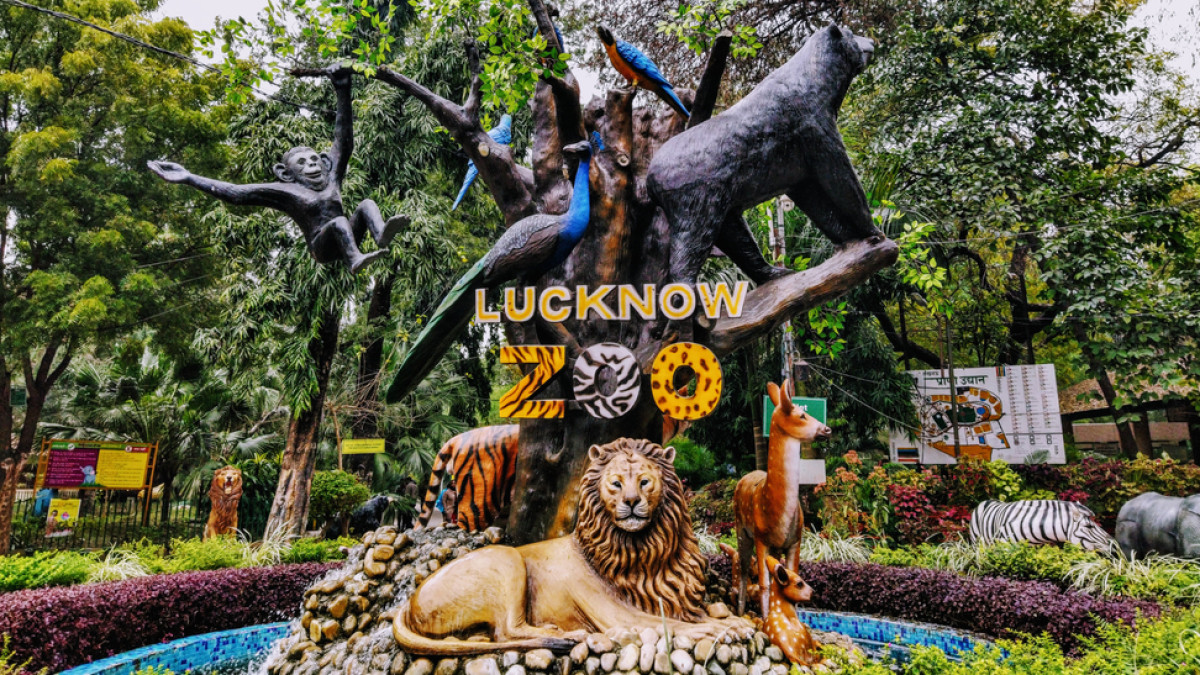
Lucknow Zoo
Lucknow Zoo is still Banarasi Bagh if you grew up here. The board now reads Nawab Wajid Ali Shah Zoological Garden. The gates stand near Hazratganj, on the Narhi / Banarasi Bagh side, opposite the Civil Hospital, not out at Kaiserbagh. Families come on winter Sundays. School groups come on weekdays. People who live close still use the lawns the way Lucknawis have used this orchard for two hundred years: walk, sit, let the children run, then go home for tea.
The grounds cover about 29 hectares, often written as 71.6 acres. The official zoo site counted around a thousand animals across a little over a hundred species, plus a separate aquarium. Come for the animals, stay for the old Baradari in the middle, and leave plastic packets in your bag.
A garden older than the zoo
Wajid Ali Shah did not found this zoo. He died in 1887, long before the first cages went up. The land itself is older. In the eighteenth century Nawab Nasiruddin Haider laid out a mango orchard here. Lucknawis called it Banarasi Bagh, and they still do. A Baradari was built for evening sitting, the sort of Awadh evening people still talk about. That pavilion is still in the middle of the garden. Film units have used it; the song “In aankhon ki masti” from Umrao Jaan was shot here.
The zoo began on 29 November 1921, as the Prince of Wales Zoological Gardens, to mark the Prince of Wales’s visit to Lucknow. The idea came from Sir Harcourt Butler, then Governor. Landlords and leading citizens gave money, animals and birds. Lintle Bogla of the Lucknow Improvement Trust laid out the buildings and cages. Twenty-six structures went up between 1921 and 1926 at a cost of Rs 2,08,800, according to the zoo’s own history. A managing committee, with Commissioner Colonel Fanthorpe as president and Sheikh Maqbool Husain as secretary, was registered under the Societies Registration Act on 17 August 1926. The main Narhi gate, Sir Ludovic Porter Gate, came later, in 1936.
After Independence, control moved to a public-health committee in 1950, then the Forest Department from 1966. In 2001 the trust was renamed Lucknow Zoological Garden. In 2015 it became Nawab Wajid Ali Shah Zoological Garden, Lucknow. The Nawab’s name honours Awadh. It does not mean he planted the zoo.
What to see inside
Give yourself two to three hours. Large-cat houses, ungulates, primates, birds and reptiles take up most of the loop. The official booking ticket bundles gate entry with the aquarium, nocturnal house and nature interpretation centre. A butterfly park, four lawns around the Baradari, drinking water and a food court make up the rest. Do not bring plastic or outside food into animal areas.
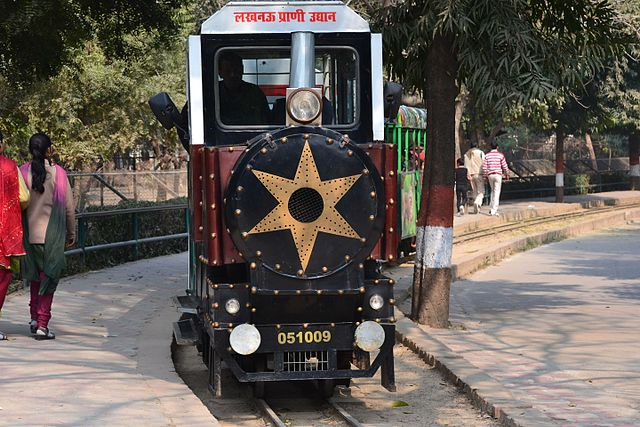
Children still ask for the toy train. Balrail first ran here on 14 November 1969. A new track, about 1.4 km, opened in February 2014. The ride is extra and does not always run every hour, so ask at the counter. Battery carts help older visitors who cannot do the full loop.
Inside the same precinct stands the State Museum, a separate building with its own ticket. Many visitors do the zoo first and the museum after lunch. This is the old state museum, not a private gallery in Hazratganj.
Hours, tickets, closed days
The zoo is closed every Monday, and also on Holi, according to the official booking page. Seasonal hours on lucknowzoo.com are: February to April, 8:30 am to 5:30 pm; May to July, 8:00 am to 6:00 pm; August to October, 8:30 am to 5:30 pm; November to January, 8:30 am to 5:00 pm. One official page says last entry is one hour before closing; the booking page says 30 minutes. Ask at the gate on the day. In late August that usually means a mid-afternoon arrival is safer than a last-minute rush.
From 1 October 2025 the zoo announced new rates, also printed on the contact and booking pages: Rs 100 for visitors above 12, Rs 50 for children aged 5 to 12, with children under 5 free. That ticket is described as covering entry, aquarium, nocturnal house and interpretation centre. A video camera is listed at Rs 100 extra. Online booking on the official site carried a 10 percent discount, with a further student concession for groups of 50 or more. Wristbands are issued at the window; even an e-ticket needs that band before you walk in. Book only on lucknowzoo.com. Rates change. If a blog still says Rs 60, ignore it and read the board at the counter.
Hazratganj Road, opposite the Civil Hospital, is the published address. Autos, buses and cabs all know “Chidiya Ghar” or “Banarasi Bagh”. Weekend mornings fill the parking in winter.
Around Banarasi Bagh
Nearby, La Martiniere College and Dilkusha Kothi are a short drive along the Gomti. The British Residency and Chattar Manzil sit on the old riverfront. Bara Imambara to Rumi Darwaza is a different half-day. More spots: Lucknow places.
Go on a Tuesday if you hate queues, and in December if you want the lawns green. Do not tap glass or feed the animals. On the way home, Lucknawis still call it Banarasi Bagh.
\n\n
FAQs
What is Lucknow Zoo and why visit?
Officially Nawab Wajid Ali Shah Zoological Garden, still Banarasi Bagh to locals — Lucknow’s main city zoo for a half-day family outing.
What can visitors do there?
Follow marked paths through animal sections, use shaded rests, and keep children off barriers. It is a zoo day, not a picnic lawn substitute for Janeshwar.
What are the timings or entry arrangements?
Closed Mondays and Holi per official booking pages. From October 2025 rates on zoo pages: about Rs 100 above age 12, Rs 50 for ages 5–12, under 5 free. Confirm at the counter.
How do I reach it and what should I know before going?
Banarasi Bagh / zoo gate by auto. Carry water; Mondays are the wrong day. Nearby State Museum can share the outing if energy remains.
How long should I spend and what can I pair nearby?
Two to three hours. Pair with State Museum or a short Dilkusha / La Martiniere drive, not a full old-city monument blitz.