
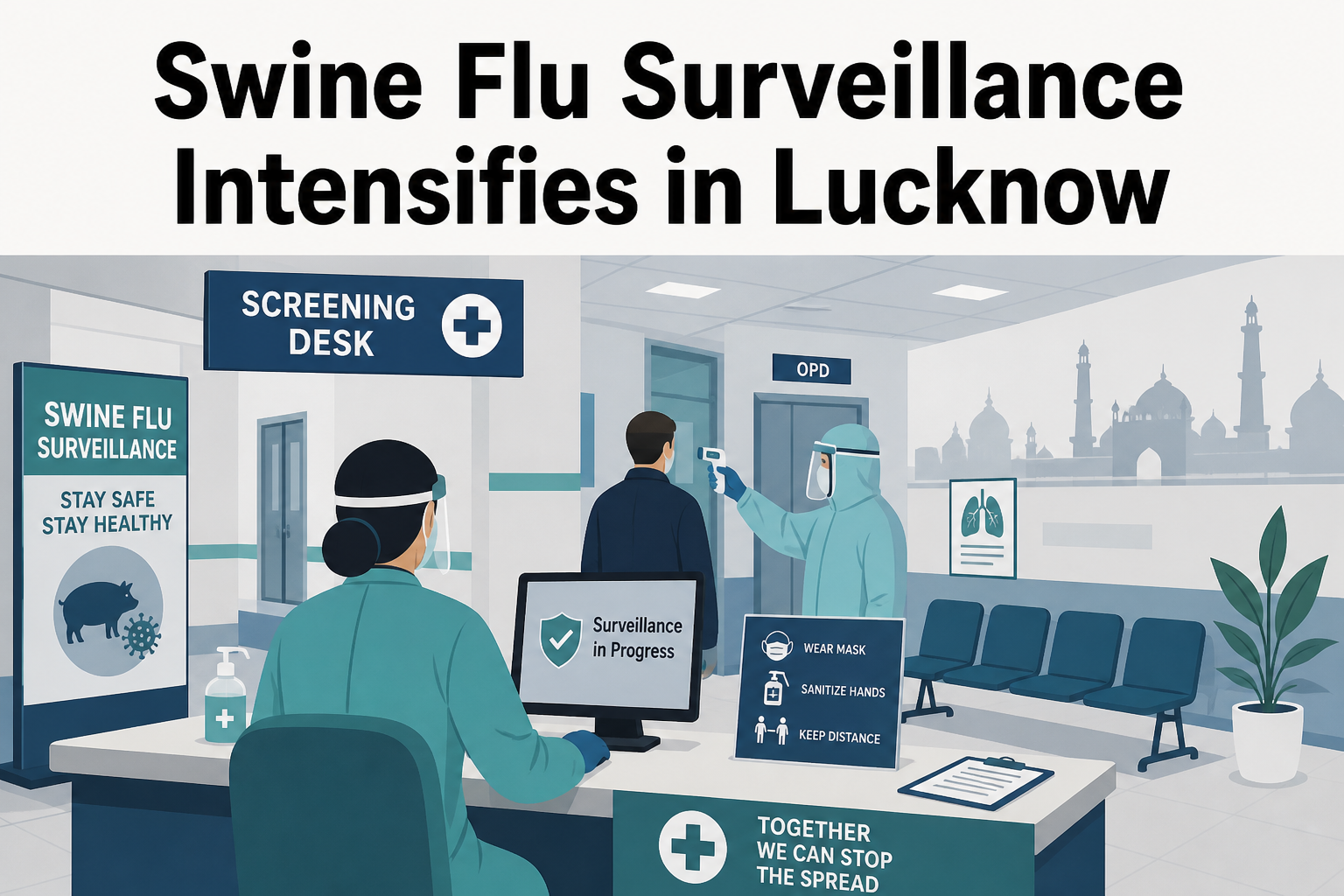
Swine flu surveillance in Lucknow intensifies after fresh health department advisory
Uttar Pradesh health authorities have stepped up Swine flu surveillance across Lucknow following the detection of three fresh H1N1 cases in the state capital over the past month. State surveillance officer Dr Vikasendu Agrawal confirmed that hospitals across all 75 districts received an urgent advisory on August 25, 2026, directing medical staff to rigorously track Severe Acute Respiratory Infection (SARI) patients and anyone presenting with persistent coughs. With 364 total cases reported statewide this year—including over 20 in Lucknow since January—the administration is moving quickly to contain potential seasonal outbreaks before they spread through crowded urban pockets.
Deputy chief minister Brajesh Pathak has instructed district health officials to review testing facilities and treatment infrastructure immediately. For residents navigating daily life in the city, the sudden uptick serves as a stark reminder of how quickly respiratory illnesses can circulate in closed spaces, offices, and educational institutions. Ground reports from local clinics highlight that doctors are seeing an increase in outpatient footfall for routine seasonal fevers, making administrative vigilance necessary.
Hospital Readiness and Local Testing Centres
Government hospitals in Lucknow are now on heightened alert. District health education and information officer Yogesh Raghuwanshi confirmed that reliable ELISA testing facilities are fully operational at key public healthcare institutions across the city. According to Hindustan Times reporting, local health teams are tracing contacts to isolate potential clusters early.
- Shyama Prasad Mukherjee (Civil) Hospital
- Balrampur Hospital
- Lok Bandhu Raj Narain Hospital
Medical professionals are screening patients reporting initial cold, cough, and flu-like symptoms. The health department’s directive emphasizes that even suspected cases must follow strict cough etiquette at home and in public spaces to minimize transmission risks. Similar administrative alertness echoes past civic challenges managed across the state, such as when authorities tackled infrastructure overhauls like the Ansal API Township LDA takeover or when heavy weather alerts triggered administrative action like heavy rain western UP waterlogging floods.
Civic Impact and Public Precautions
Lucknowites are being urged to exercise caution in crowded markets, local bazaars, and public transport hubs. Simple preventive measures—such as covering the mouth and nose while sneezing, washing hands frequently, and avoiding close contact with individuals showing flu-like symptoms—remain the first line of defense. Health workers are actively tracking outpatients to prevent minor viral complaints from escalating into severe medical emergencies.
The immediate priority for the health administration is early identification and rapid isolation to prevent a broader cluster outbreak in densely populated neighbourhoods.
For students and working professionals returning to daily routines, maintaining personal hygiene is paramount. This localized medical vigilance parallels broader policy shifts across Uttar Pradesh, mirroring how institutions adapt to sudden pressures, much like recent developments seen in Sarvodaya schools overhaul by UP government or student leadership focuses tracked during events detailed in UP governor student leadership convocation address. Whether dealing with educational reforms or campus debates like the Gorakhpur University tiffin warning, proactive administrative response dictates public safety outcomes. Additional administrative measures have also drawn comparisons to community engagement efforts seen in rural initiatives like the Dujana village model solar project and security reviews such as the UP police terror tag petition.
Residents seeking medical guidance or suspecting symptoms should visit designated government testing centres immediately. As highlighted in recent health bulletins, staying informed and practicing basic respiratory hygiene will protect vulnerable family members as the health department continues its intensified tracking campaign.
Why it matters
Effective swine flu surveillance protects high-density urban areas like Lucknow from sudden seasonal health crises. By tracking H1N1 cases early and maintaining active testing counters at civil hospitals, local authorities prevent minor viral spikes from overwhelming public healthcare infrastructure and safeguard vulnerable residents.