
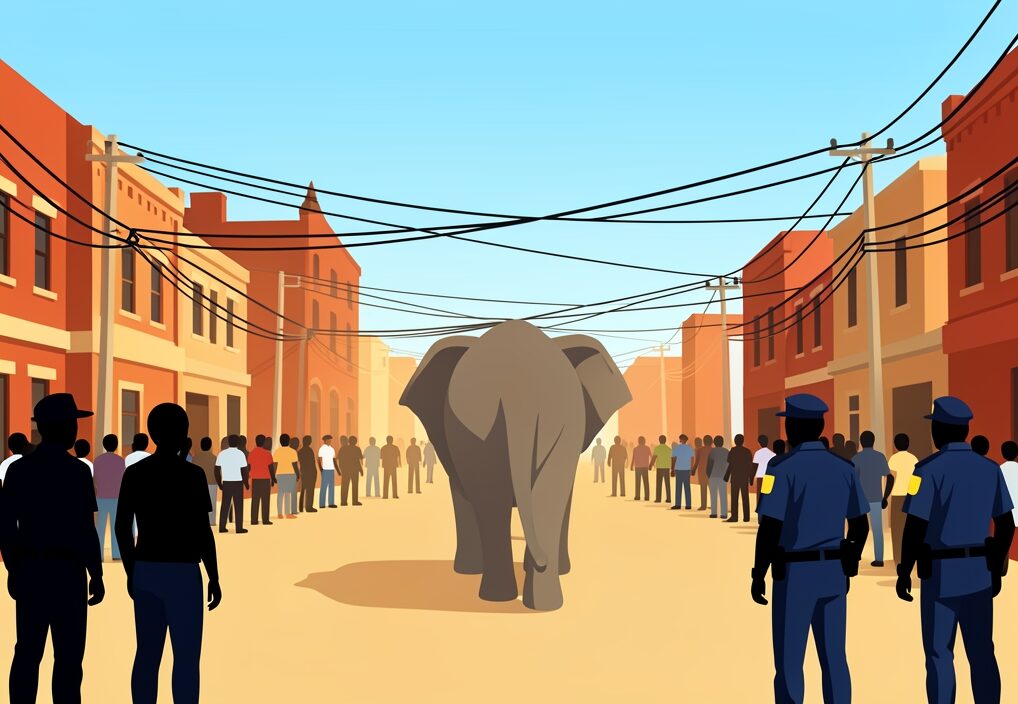
Varanasi elephant rampage highlights urgent safety gaps during festival preparations in UP
Varanasi elephant rampage incidents expose the raw vulnerabilities inherent in managing traditional pageantry alongside modern urban growth. Panic gripped the Ramnagar area in Varanasi on Sunday morning, October 18, 2026, when an elephant brought from Azamgarh for the historic Ramnagar Ramlila suddenly turned aggressive at the Panchvati ground. According to police reports highlighted by Hindustan Times, the animal lifted its mahout, identified as Chaplu, with its trunk and hurled him to the ground before systematically uprooting electric poles.
The incident occurred around 10:30 am when the caretaker attempted to feed the animal. Quick-thinking bystanders and local emergency responders rushed Chaplu to the trauma centre of Banaras Hindu University (BHU), where medical personnel reported his condition as stable and out of danger. Meanwhile, local law enforcement faced an uphill battle, restricting vehicle and pedestrian movement along the vital Lanka-Panchvati road as nearly 200 residents joined a tense, hours-long civilian and police effort to restrain the distressed animal.
Festivals, Public Safety, and Urban Realities
For residents across Uttar Pradesh, traditional celebrations form the bedrock of community life. However, integrating massive historical pageants into densely packed urban corridors introduces significant civic hazards. When large captive animals are brought into tight municipal spaces without robust fail-safes, public safety hangs by a thread. This event in Varanasi serves as an urgent reminder that municipal authorities and event committees must overhaul how they handle live animals and large crowds.
The state has seen various administrative interventions to address civic and cultural governance, ranging from high-profile policy addresses like the Yogi Adityanath Dharma Protection Statement Issued at Varanasi Centenary Event to extensive financial allocations like the Discretionary Fund Varanasi Crosses Rs 191 Crore in Medical Aid. Yet, ground-level operational protocols for wildlife and captive animals during mass gatherings often lag behind policy ambitions. When civic emergencies strike, the immediate burden falls on local police and everyday citizens, as seen when the Ghaziabad Police Investigation Triggers Fresh Safety and Urban Governance Concerns Across Uttar Pradesh.
Lessons for Lucknow and Beyond
As cultural capitals like Varanasi and administrative hubs like Lucknow prepare for overlapping festive calendars, crowd management requires rigorous planning. Recent events elsewhere, such as the Kolkata Pandal Stampede: Rain, Narrow Lanes, and Panic Offer Critical Safety Lessons for Festival Organizers in Lucknow, underscore how quickly celebratory environments can turn hazardous. Civic infrastructure across the state often struggles under sudden surges, mirroring vulnerabilities seen when communities face unexpected crises, such as the digital mobilizations during urban waterlogging addressed by Faizullaganj residents launch digital SOS as Lucknow flood rescue stalls online.
To prevent similar disasters during upcoming celebrations, municipal bodies must enforce strict guidelines:
- Mandatory pre-festival health and temperament veterinary clearances for all captive animals brought into urban venues.
- Designated secure perimeter buffers separating heavy livestock and festival pageants from general public viewing areas and electrical installations.
- Direct coordination channels between event organizers, municipal veterinary departments, and rapid-response police units.
Why it matters
For families living in Lucknow and visitors traveling across Uttar Pradesh, major cultural events should foster joy rather than anxiety. When safety protocols fail—whether on chaotic highways like those analyzed in Bhadohi bike accident highlights dangerous road infrastructure gaps across Uttar Pradesh highways or at local festival grounds—the entire community bears the human cost. Strengthening our civic infrastructure ensures that traditions endure without compromising human lives or animal welfare.
Key Takeaway: The Varanasi elephant incident demands a comprehensive review of captive animal usage and crowd safety regulations across all major cultural festivals in Uttar Pradesh.