
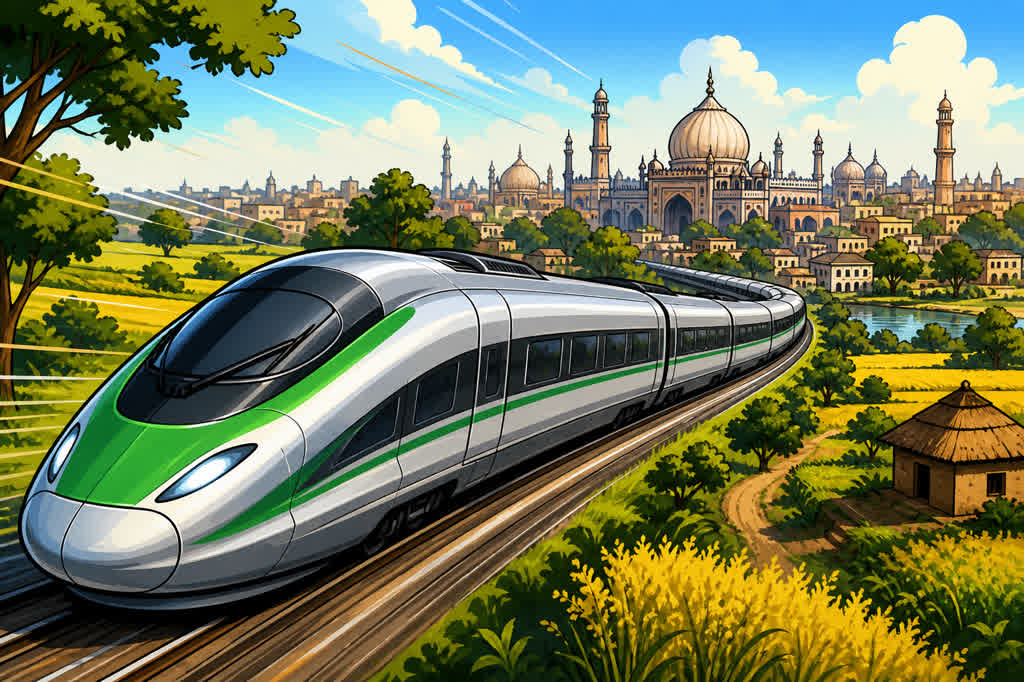
Delhi-Lucknow Bullet Train: Project Phase to Cut Travel Time to 2 Hours
Commuting between the national capital and Uttar Pradesh’s capital is set for a massive transformation. The Delhi-Lucknow bullet train project’s upcoming phase will reduce travel time between the two cities to just two hours, railway minister Ashwini Vaishnaw announced on Monday. Speaking virtually during a rail infrastructure inauguration, Vaishnaw outlined a high-speed corridor that will link Delhi, Agra, Kanpur, Lucknow, Varanasi, and Patna. For anyone living in Lucknow who frequently travels to Delhi for work, business, or family, this announcement offers a glimpse into a radically compressed geography.
The proposed corridor promises to shrink physical distances in a way previous rail upgrades have only hinted at. Under the plan detailed by the railway ministry, journeys to Patna from the national capital will drop to four and a half hours. By bypassing traditional rail bottlenecks, this high-speed network will integrate major economic centers along the Gangetic plain into a tightly bound commuter belt. Local professionals and students commuting between Lucknow and Delhi will no longer need to sacrifice entire days to transit. The reality of modern corporate life often demands physical presence in multiple cities, making this speed upgrade a vital piece of upcoming state infrastructure.
Reshaping Regional Transit and Local Mobility
Infrastructure announcements in Uttar Pradesh often focus on regional road projects, such as the New Gorakhpur Road Project Streamlines Commutes for Lucknow Travelers, but high-speed rail represents a generational leap forward. Fast transit corridors usually trigger secondary real estate booms, alter employment habits, and encourage reverse migration or dual-city lifestyles. When a resident can reach Delhi in 120 minutes, the economic gravity of the national capital shifts closer to Charbagh and Hazratganj. Local businesses, cafes, and service industries stand to gain as wealth and talent circulate with unprecedented speed.
This high-speed ambition also arrives alongside broader infrastructural evaluations across northern India. As planners grapple with urban expansion, environmental pressures like those highlighted in discussions on Himalayan Glacial Research: Why Himachal Chief Minister’s Warning Matters to Lucknow and the Plains of Uttar Pradesh remind urban centers of the delicate ecological balance required for large-scale construction. Efficient rail transport offers a greener alternative to expanding domestic flight corridors or adding more heavy traffic to aging highways. Similar urban challenges often appear during seasonal weather shifts, mirroring how Lucknow Monsoon Rain Floods Key Stretches and Paralyzes Traffic reminds officials of our current transit limits.
To keep municipal growth on track, local authorities have also had to step up oversight, mirroring the accountability seen when Lucknow Municipal Projects Face Scrutiny as Mayor Reprimands Contractors. Large national projects require equally rigorous local execution to ensure that terminal stations connect smoothly with city transport grids like the Lucknow Metro and auto networks.
Economic Opportunities and Daily Life in Awadh
For Lucknow residents, students, and the broader UP diaspora, shorter transit windows change everything about how career choices are weighed. You can maintain a home, cultural roots, and family life in Awadh while plugging directly into Delhi’s corporate and political job markets without relocating permanently. Similar economic shifts have followed past developmental milestones in the city, echoing the spirit of civic momentum seen during events like the Yogi Adityanath Leads Tiranga March in Lucknow on Kakori Train Action 101st Anniversary and the commemorative CM Yogi Adityanath Leads Tiranga Yatra in Lucknow to Mark 101st Anniversary of Kakori Train Action.
While project execution timelines and land acquisition hurdles remain ahead, the conceptual framework signals a decisive policy shift toward high-speed regional integration. Urban planners note that daily life in Awadh will adapt quickly once physical barriers dissolve. Families can plan weekend trips to the capital without booking overnight stays, and corporate consultants based in Gomti Nagar can attend morning meetings in Connaught Place and return home by lunchtime.
- Connects major hubs including Agra, Kanpur, Lucknow, Varanasi, and Patna to Delhi.
- Cuts Delhi-Lucknow transit down to a two-hour window.
- Reduces Delhi-Patna journey times to four and a half hours.
Why it matters
The proposed bullet train corridor bridges a massive physical divide, turning inter-state travel into a routine, short-haul commute that will permanently alter everyday life in Lucknow.
As detailed in reports by Hindustan Times, the railway ministry is moving forward with conceptualizing these sprawling regional networks to bind eastern and northern India closer together. For the everyday citizen, this means the future of travel is arriving faster than expected.