
Flood Control Uttar Pradesh: Yogi Adityanath Reports Sharp Drop in Affected Districts
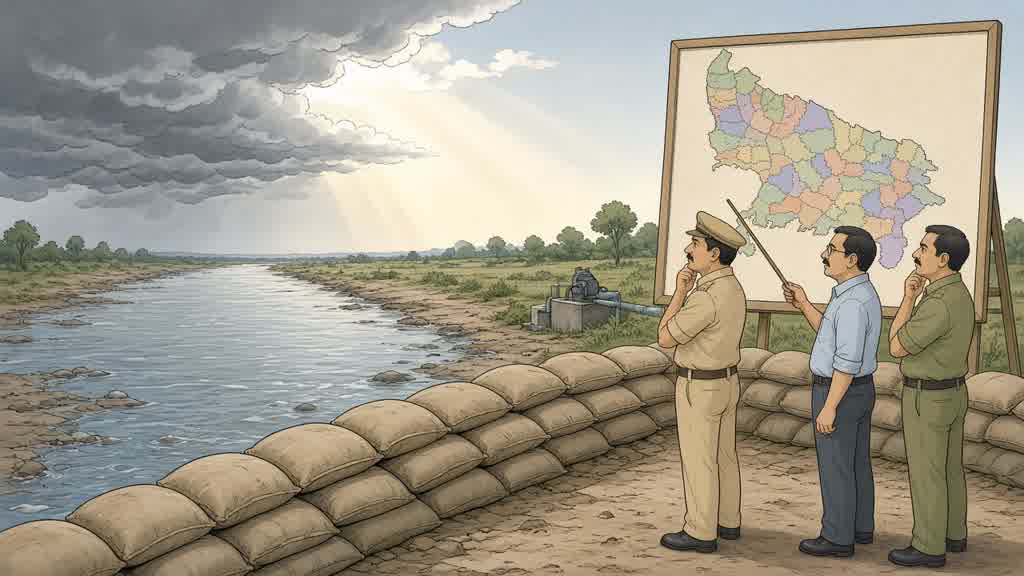
Uttar Pradesh chief minister Yogi Adityanath announced on Saturday that rigorous state interventions have significantly improved Flood Control Uttar Pradesh management, with only 14 districts facing minor monsoon impacts compared to 40 or 45 districts a decade ago. Speaking at a relief distribution camp at Vidyavihar Inter College in Varanasi’s Salarpur, Adityanath reviewed ground realities following an aerial survey of inundated zones. The administration continues to monitor river basins closely, contrasting current containment metrics with past seasons across the state.
For residents across Lucknow and neighboring river basins, shifts in regional monsoon management carry profound implications. Years past saw widespread displacement and agricultural disruption whenever major rivers swelled past danger marks. While urban drainage and rural embankment reinforcement remain active challenges for civic bodies—often discussed alongside local urban initiatives like Lucknow Cantt Development Projects Launch by Rajnath Singh and Yogi Adityanath—the state government’s reported containment metrics point to broader systemic shifts in disaster response and civic preparedness.
Emergency response teams have had to adapt to unpredictable weather patterns brought on by changing climate conditions in neighboring regions. When heavy downpours hit Himalayan foothills or neighboring countries, downstream water levels swell rapidly, prompting alerts such as those reviewed in UP Flood Alert Issued After Nepal Flash Floods Threaten Basins. Keeping vulnerable communities informed requires constant coordination between district magistrates, irrigation departments, and state disaster relief forces.
Assessing Monsoon Infrastructure and Regional Safety
During his visit, Adityanath distributed relief supplies directly to affected families and reiterated that administrative machinery stands ready to assist citizens at every turn. Observers note that timely administrative mobilization is critical, especially when upstream weather patterns threaten downstream settlements. Such vulnerabilities often trigger wide precautionary reviews across state departments, echoing the swift coordination seen during regional crises or when safety protocols are tested, as highlighted in incidents such as Varanasi Airport Firing Shocks UP Travelers as Passenger’s Gun Goes Off and subsequent legal follow-ups detailed in Varanasi Airport Firing: Gun Owner Released on Bail as Safety Questions Loom.
Effective disaster management extends far beyond immediate rescue operations; it forms the backbone of state economic stability. When agricultural tracts and transport networks remain shielded from prolonged inundation, supply chains into major urban centers like Lucknow stabilize. This operational resilience aligns with wider state ambitions to build robust economic corridors, drawing parallels to industrial pitches such as Uttar Pradesh Investment Destination: Yogi Pitch to Japanese Firms and enterprise frameworks launched under initiatives like Yogi Adityanath Launches UP Startup Mission Portal and Startup Policy 2026 in Lucknow.
Local businesses in Lucknow rely heavily on uninterrupted transport routes across the state. When rural highways and railway tracks remain clear of floodwaters, raw materials arrive on schedule, keeping local manufacturing and retail sectors humming. State planners frequently emphasize these cross-sector benefits when allocating state budget funds toward long-term embankment construction and dredging operations.
Why it matters
For families living in Uttar Pradesh, predictable seasonal management prevents massive crop loss, food inflation, and humanitarian displacement. Reliable infrastructure keeps commerce flowing and safeguards rural livelihoods from sudden catastrophe. Urban centers benefit indirectly as well, maintaining steady inflows of essential goods without severe supply chain disruptions caused by washed-out rural connectivity.
Key Takeaway: State leadership credits nearly a decade of targeted embankment and drainage upgrades for shrinking the state’s flood-vulnerable footprint from over 40 districts down to 14.
- Aerial surveys allow senior leadership to spot logistical gaps before relief delays compound citizen distress.
- Targeted interventions reduce long-term rebuilding costs for both rural farmers and state treasuries.
- Continuous monitoring remains essential as unpredictable weather events challenge historical basin averages.
As monsoon cycles progress, residents keep a watchful eye on local water levels. Broader political debates also intersect with administrative performance claims, keeping public accountability sharp across various forums, including discussions noted in SP leaders political trust questioned by Yogi Adityanath at Lucknow memorial event and policy addresses such as Yogi Adityanath Lucknow: Unveils Think Big Mantra During Hotel Launch. Maintaining transparent data on disaster response will ultimately determine public confidence in these long-term structural claims.
Civic groups in Lucknow continue to advocate for localized drainage audits to ensure that neighborhood-level waterlogging matches the positive macro-level trends reported by state ministries. Bridging the gap between macro flood defenses and micro urban drainage remains the next frontier for municipal authorities across Uttar Pradesh.