
Ghaziabad factory fire at Tronica City brings industrial safety back into focus
A sudden Ghaziabad factory fire erupted at a multi-story manufacturing unit in Tronica City early Wednesday, forcing a rapid deployment of emergency personnel to prevent a major disaster. The blaze, which began before dawn, tested local response systems as crews raced against time to contain flames threatening volatile materials stored inside the premises. While quick intervention averted tragedy, the incident serves as a sharp reminder of the constant vigilance required across industrial hubs in Uttar Pradesh, echoing past local concerns seen during incidents like Lucknow Illegal Firearms: Two Shootings, Six Deaths, and a Blank Wall on Weapon Sources where lax oversight created severe public dangers.
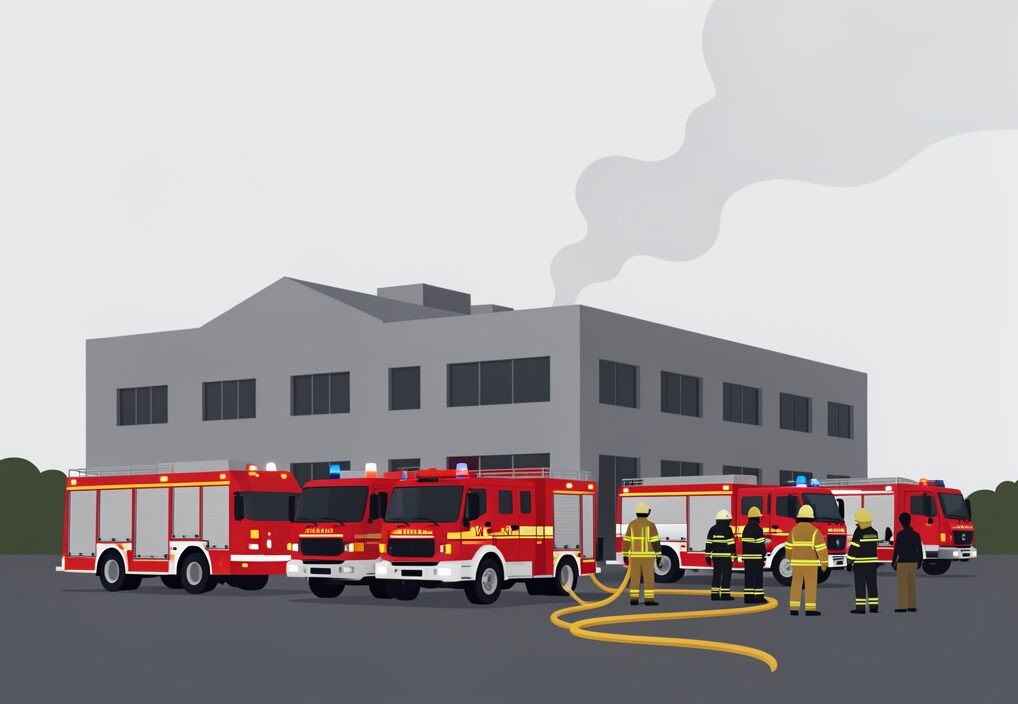
Local emergency control rooms logged the first alert at approximately 4:24 am on Wednesday. Officials initially dispatched three fire tenders to the scene, but swiftly scaled up operations by deploying three additional units as the severity of the situation became clear. The affected structure presented a complex challenge for firefighters due to its operational layout. The ground floor was dedicated to cardboard manufacturing, while the upper floor handled the production of car perfumes and related items—a dangerous combination of high-combustible packaging and volatile chemical products.
Firefighters successfully brought the blaze under control by 7:30 am, with officials confirming that no injuries or casualties occurred during the incident.
Understanding the Tronica City Industrial Risks
For residents and business owners watching from across Uttar Pradesh, industrial incidents in manufacturing clusters like Tronica City raise uncomfortable questions about baseline safety enforcement. Mixed-use manufacturing buildings—where heavy packaging materials sit directly beneath chemical-based consumer goods—pose unique containment challenges during electrical short circuits or accidental sparks. Industrial zones demand stringent compliance with fire safety norms, clear evacuation pathways, and regular audits to protect workers and neighbouring commercial properties. Similar preventative planning can be noted in seasonal protocols such as the Ghaziabad Green Firecrackers Sales Plan Sets Safety Precedent Ahead of Diwali, where authorities attempt to preemptively manage combustion risks.
Recent developments across the National Capital Region and western Uttar Pradesh highlight a growing urgency around structural and environmental safety. Similar hazards have previously surfaced in different contexts, such as the Noida Sector 125 fire leaves one dead as temporary food stalls turn into a blaze, demonstrating how quickly combustible environments can spiral out of control. Urban planners and safety regulators frequently debate how to enforce stricter compliance without disrupting daily commerce, yet industrial accidents continue to test local preparedness, much like the infrastructure strain addressed by the Noida Six-Lane Underpass Plan Moves Forward to Untangle Parthala Chowk Traffic.
- Emergency dispatch received the initial distress call at 4:24 am.
- Six total fire tenders were deployed to manage the multi-floor facility.
- Ground-floor cardboard and upper-floor car perfume production created severe combustible risks.
Why it matters for Lucknow and UP
Even though this incident occurred miles away in Ghaziabad, the implications resonate deeply with urban dwellers across Lucknow and the wider UP diaspora. Industrial corridors in Noida, Ghaziabad, Kanpur, and Lucknow share similar growth trajectories and infrastructural pressures. Ensuring that local municipal bodies enforce building codes, maintain functional fire hydrants, and audit hazardous manufacturing units directly affects regional economic stability and worker safety. Educational institutions are also adapting to higher safety and assessment standards, as seen when a Ghaziabad school adopts global Lexile framework to assess students’ reading skills to meet modern benchmarks.
Civic oversight remains a central theme for residents tracking urban development. Just as transit initiatives like the Ghaziabad Elevated Corridor Plan Offers a Blueprint for Uttar Pradesh Urban Transit shape how infrastructure gets built, industrial safety frameworks dictate how cities grow sustainably. Other security and investigative measures in the district, such as the Shahzad Bhatti network: NIA probe exposes Ghaziabad recruit or local enforcement actions like the Ghaziabad Gym Trainer Arrest: Police Unravel Deadly Plot in Vasundhara Murder Attempt, underscore a region under intense administrative scrutiny.
As local authorities investigate the precise cause of Wednesday’s outbreak, business owners across urban clusters will face renewed pressure to review their internal safety protocols. For Lucknawi readers and regional observers, incidents like this emphasize that urban growth must be matched by uncompromised emergency readiness across every district in the state.
Sources: Hindustan Times