IIT-Kanpur Comic Book Quantum Physics Initiative Brings Wonder to Higher Education
IIT-Kanpur Comic Book Quantum Physics Initiative Brings Wonder to Higher Education
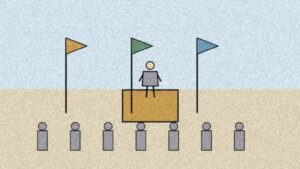
Forty-four physics students at the Indian Institute of Technology-Kanpur recently spent half an hour reading an IIT-Kanpur comic book during class. Professor Manoj Kumar Harbola orchestrated this unconventional lesson to tackle a persistent academic hurdle: student anxiety around quantum mechanics. Instead of diving straight into intimidating mathematical proofs, students flipped through illustrated pages designed to ignite genuine curiosity right here in Uttar Pradesh.
For students and academics watching higher education trends across our state, this experiment marks a deliberate shift away from rote memorization. Quantum mechanics regularly ranks among the most punishing subjects in any science curriculum. By introducing conceptual wonder first, the department hopes to reframe how young minds interact with complex physics before the heavy equations arrive.
Reimagining the Classroom Experience
Traditional lectures often front-load derivations, leaving little room for imaginative engagement. Professor Harbola drew inspiration for the comic format after attending a specialized talk on quantum physics. He realized that lowering the barrier to entry could keep students motivated when the coursework eventually demands rigorous calculation.
This pedagogical pivot is not happening in a vacuum. Educational institutions in the region are slowly re-evaluating how subjects are taught. While civic disputes like the Lucknow-Kanpur Expressway Controversy and local administrative actions such as the LDA bribery trap dominate daily headlines, academic corridors are quietly experimenting with structural reform. In 2025, the institute established the Centre for Educational Research and Teaching Excellence (CERTEX) specifically to institutionalize these sorts of classroom innovations.
Similar administrative wake-up calls are rippling through the region, from the LDA Enforcement Wing Vigilance Trap to local municipal investigations like the Kanpur Stray Animal Deaths CCTV Poisoning Probe. When systems face scrutiny, accountability improves. The same logic applies to academia, where traditional exam-centric structures are giving way to student-centric learning models.
Why It Matters
When premier engineering hubs rethink foundational teaching, the ripple effects travel far beyond campus boundaries. For aspirants across Lucknow and Kanpur, higher education is increasingly evaluated on its ability to foster real problem-solving skills rather than just exam scores. If comic-based conceptual framing succeeds at the tertiary level, secondary schools across Uttar Pradesh may soon adopt similar creative strategies to curb science dropouts.
We see this push for systemic modernization in various sectors across the state. Whether it is youth-led dialogues like the discussions surrounding Rahul Gandhi’s Prayagraj Event, anti-corruption crackdowns such as the CBI Ayodhya Cantonment Board Arrest, community safety debates highlighted by Gorakhpur Police Crime Reports, or celebrating local triumphs like SI Asmita Dey’s CWG Gold Medal, the region is hungry for progressive breakthroughs.
- Reduces initial intimidation factors associated with advanced quantum physics.
- Encourages critical thinking and narrative engagement in STEM fields.
- Demonstrates institutional commitment through dedicated bodies like CERTEX.
Local academic observers note that bridging the gap between abstract theory and accessible visualization remains the ultimate challenge for Indian science education.
As discussions around educational standards evolve alongside other regional updates—such as debates sparked by CPI(M) Kerala criticism on UP governance and infrastructure shifts like the Bundelkhand GBC-5 focus—ground-level teaching reforms prove that progress happens inside classrooms just as much as in administrative boardrooms. For more details on the original initiative, read the full report on Hindustan Times.