Aban Atiq Ahmed Burial Held in Prayagraj as Jailed Brothers Attend Funeral Under High Security
Aban Atiq Ahmed Burial Held in Prayagraj as Jailed Brothers Attend Funeral Under High Security
The quiet neighborhood around the Kasari Masari graveyard in Prayagraj witnessed tense scenes on Saturday evening as the Aban Atiq Ahmed burial took place under heavy police watch. Aban, the 21-year-old youngest son of slain mafia-turned-politician Atiq Ahmed, died in a road accident in Jhansi on August 6 alongside his friend Sonu. While Sonu was buried immediately in Hatwa village, Aban’s final rites faced a two-day delay.
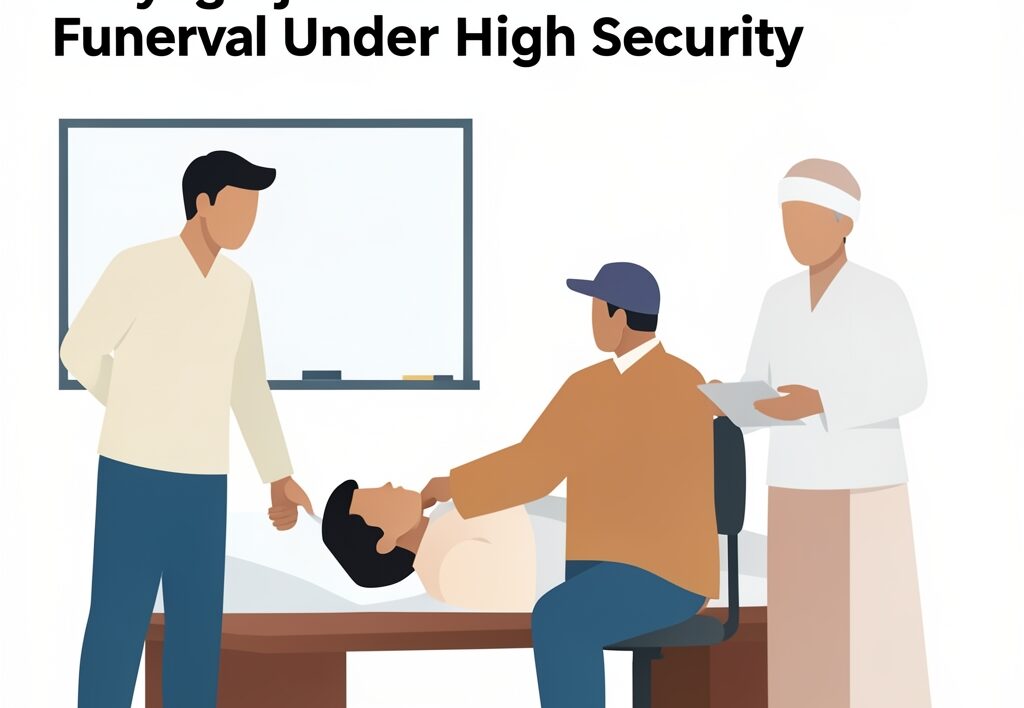
That delay stemmed from judicial logistics. His elder brothers, Umar Ahmed and Ali Ahmed, are currently lodged in Lucknow and Jhansi jails respectively due to pending criminal cases. Legal teams moved swiftly to secure emergency parole from the Allahabad High Court, enabling the brothers to travel under heavy armed escort to bid their final farewells next to the graves of their father and brother.
For everyday citizens across Uttar Pradesh, high-profile movements of prisoners demand immense state resources. District authorities coordinate closely with prison superintendents to maintain strict timelines and secure routes. This ensures that court-mandated furloughs comply with all legal frameworks without creating public disruptions along major transit corridors.
Parole Logistics and High-Security Transit Across UP
Moving high-profile inmates across Uttar Pradesh requires intricate coordination between district police lines, prison authorities, and state intelligence. Umar and Ali Ahmed were transported from their respective facilities under tight wraps, highlighting the administrative sensitivity surrounding the family. For readers tracking judicial protocols across the state, such transit operations recall similar enforcement measures witnessed during recent regional developments, including actions tied to Prayagraj protest arrests and security crackdowns.
The tragedy itself unfolded on a highway stretch in Jhansi when five individuals traveling together met with a devastating crash. Three surviving passengers remain hospitalized with serious injuries. Following mandatory postmortem procedures, the body was handed over to relatives, bringing a somber end to a journey that gripped newsrooms from Jhansi to Lucknow.
Local administration officials remained on high alert throughout the transit. Police barricades directed traffic away from the immediate vicinity of the burial grounds to prevent crowding. Intelligence units monitored local sentiment closely, reflecting the high stakes involved in managing sensitive public events within urban centers.
Impact on Local Discourse and Regional Governance
For residents across Uttar Pradesh and the diaspora keeping a close eye on home affairs, events surrounding the Ahmed family frequently ignite intense public debates. Law and order remains a primary barometer for the state administration. Incidents that draw heavy police deployment inevitably spark broader conversations about road safety, high-speed corridor accidents, and prisoner furlough guidelines.
Infrastructural and security investments continue to shift public attention toward the region. While infrastructural projects like the Prayagraj religious tourism investments aim to modernize the pilgrimage economy, urban centers also grapple with everyday civic hurdles, ranging from highway maintenance issues similar to those on the Lucknow-Kanpur Expressway to unpredictable transport safety hazards.
Citizens frequently discuss these incidents at local tea stalls and community hubs. People weigh the administrative costs of heavy security deployments against ongoing civic needs, such as better road engineering and reliable emergency medical response times on state highways.
- Aban Atiq Ahmed and his friend Sonu died in a Jhansi road accident on August 6.
- Umar and Ali Ahmed attended the Prayagraj funeral after securing high-court parole from Lucknow and Jhansi jails.
- Local authorities maintained a heavy security blanket around the Kasari Masari burial ground throughout Saturday.
The swift legal maneuvering for parole and the subsequent heavy police deployment underscore how closely state machinery monitors high-profile movements, balancing legal obligations with public safety concerns across Uttar Pradesh.
Why it matters
For people living in Lucknow and across UP, high-profile court orders and prison transfers directly impact local security protocols and traffic management. Understanding how judicial parole intersects with local policing provides vital context on the state’s administrative machinery. These developments also shape the broader social dialogue in local tea stalls and digital forums, influencing perceptions of justice, state oversight, and regional stability. For related civic developments, readers can review our Lucknow daily news roundup or catch up on discussions surrounding urban planning challenges such as Noida waterlogging issues.