
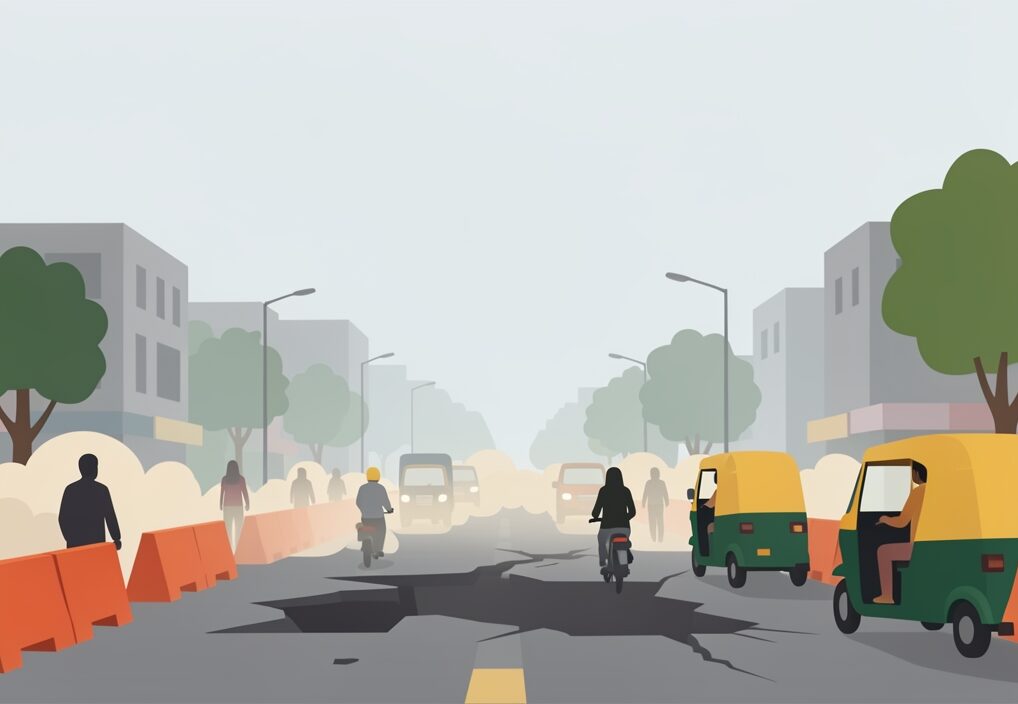
Lucknow air pollution spikes as unceasing road digging leaves residents choking in dust
Unceasing excavation chokes the City of Nawabs
Lucknow air pollution levels have crossed permissible safety thresholds once again, leaving commuters and residents gasping as uncoordinated construction work chokes the city. According to a post-monsoon assessment released by the CSIR-Indian Institute of Toxicology Research (IITR), relentless road digging and dust resuspension have driven particulate matter concentrations well above national standards across all nine monitored locations in the state capital.
For anyone navigating the city daily, the hazy skies and grit-laden winds feel all too familiar. Whether you are trying to cross bustling commercial corridors or catching a flight from the southern end, the environmental toll of unending civic infrastructure work is impossible to ignore. While the readings remain below the alarming peaks recorded back in 2022, the year-on-year uptick demands immediate intervention from municipal authorities.
The latest data highlights a worrying trend across major urban zones. The 24-hour average concentrations of both PM10 and PM2.5 have breached the National Ambient Air Quality Standards limits of 100 and 60 micrograms per cubic metre respectively. Amausi emerged as the city’s most polluted monitoring site, recording staggering average PM10 and PM2.5 concentrations of 188.5 and 93.5 micrograms per cubic metre.
Commercial hubs bear the brunt of particulate surge
Commercial nerve centres are bearing the heaviest burden of this airborne crisis. Areas like Charbagh, Alambagh, Aminabad, and Chowk recorded average concentrations touching 138.1 for PM10 and 72.4 for PM2.5. Charbagh alone logged individual averages of 157.2 for PM10 and 81.6 for PM2.5, fueled by massive pedestrian movement, vehicular emissions, and torn-up tarmac. Similar infrastructure bottlenecks have historically triggered severe local disruption, echoing past challenges seen around Alambagh transit corridors and busy school zones where traffic chaos compounds environmental hazards.
Beyond the immediate grit in our eyes, the public health implications run deep. Medical practitioners across the city are already reporting an upswing in respiratory distress and seasonal allergies, drawing parallels to how scrub typhus testing surges in Lucknow whenever seasonal transitions overlap with environmental stressors. Commuters relying on transit nodes like the Lucknow airport parallel taxi track or frequenting commercial districts find themselves constantly exposed to construction dust kicked up by unpaved verges.
- Amausi recorded the city’s highest PM10 level at 188.5 micrograms per cubic metre.
- Charbagh led commercial areas with PM10 at 157.2 and PM2.5 at 81.6 micrograms per cubic metre.
- Overall post-monsoon averages across major markets stood at 138.1 for PM10 and 72.4 for PM2.5.
As festive preparations unfold alongside heavy commercial activity—similar to the commercial buzz witnessed during recent Dhanteras automobile sales in Lucknow—the timing of these dust spikes threatens vulnerable populations, including children and the elderly. Civic bodies must enforce strict dust mitigation protocols at all active excavation sites immediately.
Key Takeaway: Unchecked infrastructure digging has pushed Lucknow’s particulate matter well past national safety limits, making stringent dust control at sites like Amausi and Charbagh an urgent public health imperative.
Why it matters
Clean air is not merely an environmental statistic; it dictates the daily quality of life for millions of residents and visitors in Uttar Pradesh. When municipal agencies dig up roads without mandating water sprinkling or green cloth barricades, the resulting particulate matter enters every household and lungs across the city. Recognizing these patterns helps residents demand better accountability from urban planners, ensuring that developmental progress does not compromise public health. For a comprehensive look at the raw data, review the full findings in the CSIR-IITR post-monsoon report.
Sources:
– Hindustan Times – Lucknow’s road digging raises dust levels