
Lucknow Poor AQI Exposes Enforcement Failure as Open Construction Sites Choke the City
As Lucknow poor AQI readings plague residents for four consecutive days, civic authorities remain paralyzed by bureaucratic buck-passing. Uncovered building sites across Gomti Nagar Extension and CG City continue to pump particulate matter straight into the winter air on Monday. While citizens wake up to stinging eyes and heavy smog, the two main agencies tasked with enforcing dust-control norms—the Lucknow Municipal Corporation (LMC) and the Lucknow Development Authority (LDA)—are busy pointing fingers at each other rather than deploying ground inspectors.
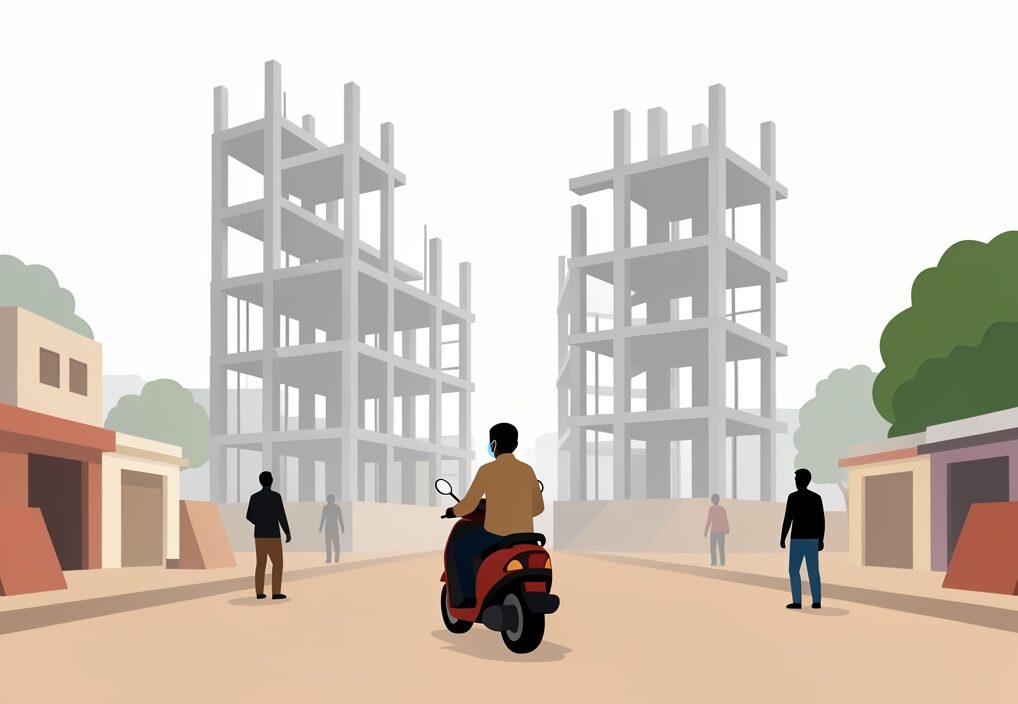
The numbers tell a grim story for anyone stepping outside in the City of Nawabs. Citywide air quality indexes hovered stubbornly in the ‘poor’ bracket between November 12 and November 15. Yet, a ground check behind the high-profile Signature Building and deep inside CG City revealed active construction projects operating entirely devoid of protective green nets, water sprinklers, or wind-breaking barriers. Heavy machinery grinds away, pulverizing earth and sending unchecked dust plumes sweeping across local residential roads.
Passing the Buck While the Air Chokes
Accountability has vanished completely from municipal corridors. Official records show that the LMC has failed to issue a single punitive notice against violating construction sites this entire year. When confronted with blatant flouting of National Green Tribunal guidelines, municipal officials retreat behind bureaucratic walls. Meanwhile, the LDA offers vague promises of retrospective action only after media spotlights expose their oversight failures.
This institutional inertia feels chillingly familiar to long-term residents who remember when Lucknow air quality plunges into poor category seasons without triggering meaningful administrative remedies. Environmental safety protocols drafted in air-conditioned offices dissolve the moment they meet ground reality. Contractors save money by skipping mandatory dust curtains, knowing that enforcement squads rarely visit active outer-zone developments.
Why It Matters
Clean air is a fundamental public health requirement, not an optional luxury. Prolonged exposure to particulate pollution directly strains healthcare infrastructure, mirroring how government hospitals in Lucknow brace for firecracker emergencies and seasonal respiratory surges. When municipal watchdogs sleep on basic civic rules, vulnerable demographics—children walking to school, delivery riders on open bikes, and senior citizens taking morning walks—bear the physical cost.
Consider the wider urban ecosystem facing residents today:
- Dust pollution compounds seasonal shifts, matching patterns seen when dense fog blankets Lucknow and Uttar Pradesh as visibility plummets.
- Real estate developers marketing high-end addresses should note that unregulated construction degrades the very localities drawing buyers, contrasting with trends where why Lucknow property market is pulling buyers from Delhi and Bengaluru based on lifestyle promises.
- Unchecked airborne particles aggravate overlapping health crises, much like how scrub typhus testing surges in Lucknow as seasonal infections overlap.
Without immediate administrative penalties, voluntary compliance from developers remains a pipe dream while Lucknow residents bear the toxic burden.
The Path Forward for Municipal Watchdogs
Solving this crisis requires immediate, unannounced inspections by joint task forces from both the LMC and LDA. Impounding equipment at sites operating without green nets would send an unmistakable signal to commercial builders. Until authorities step out of their offices and impose heavy fines, the dust will keep rising, and the city’s air will remain compromised.
For detailed updates on this developing situation, consult the original reporting on Hindustan Times regarding Lucknow faces poor AQI, open building sites; authorities yet to act, as well as background insights on uncovered construction sites add to Lucknow’s dust pollution woes.