
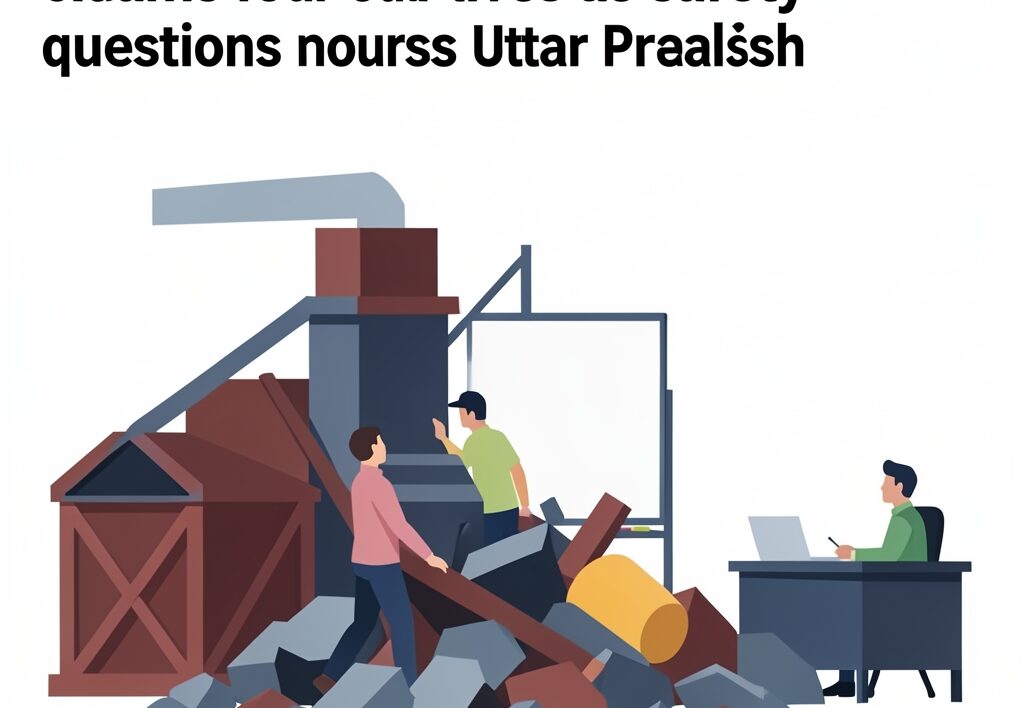
Mirzapur stone crusher plant tragedy claims four lives as safety questions mount across Uttar Pradesh
Four labourers died on Saturday afternoon when a makeshift room suddenly collapsed at a Mirzapur stone crusher plant located in Bhagwati Dei village within the Ahraura area, according to local police reports. The tragic incident, which unfolded on Saturday, has triggered urgent administrative reviews across Uttar Pradesh regarding industrial workplace standards, echoing past vulnerabilities seen in infrastructure accidents such as UP wall collapses claim five lives and highway mishaps like the Ghaziabad highway crash. When safety lapses occur, the ripple effects are felt far beyond remote rural pockets, connecting directly with broader discussions on public welfare and administrative accountability across the state.
District Magistrate Pawan Kumar Gangwar rushed to manage the site as rescue teams cleared the debris. Authorities are currently investigating whether continuous heavy seasonal rainfall weakened the foundation of the structure, or if tremors and vibrations from active blasting at a neighbouring mining site compromised the building’s structural integrity. Local residents and fellow workers have pointed out that makeshift residential structures near heavy machinery rarely undergo rigorous structural audits, leaving vulnerable populations exposed to sudden environmental stress.
Government Response and Official Intervention
Chief Minister Yogi Adityanath took immediate cognisance of the tragedy. He expressed deep condolences to the bereaved families and instructed district officials to arrive at the location instantly to supervise rescue operations. The administration has been tasked with providing all possible financial and medical assistance to the affected families. Such high-level directives underscore how serious industrial accidents command direct state oversight, similar to administrative crackdowns seen in other sectors, such as the crackdown detailed in the Basti RTO licence scam.
Incidents involving sudden structural failures demand absolute accountability from plant operators. While urban administrative focus frequently centers on metropolitan civic issues—such as monitoring Lucknow H1N1 cases rise or resolving procedural bottlenecks like KGMU autopsy delays in Lucknow—industrial zones in districts like Mirzapur face persistent oversight challenges. Rural manufacturing hubs often operate away from the public gaze, which makes routine safety inspections sporadic unless a major disaster forces authorities to take note.
Understanding the Wider Safety Implications
Industrial safety regulations in rural and semi-urban manufacturing pockets require strict adherence to building codes. Workers at stone crushers and mining operations often inhabit temporary shelters adjacent to heavy machinery, exposing them to compounding hazards. Recent administrative reviews on flood control Uttar Pradesh Yogi Adityanath initiatives show that preemptive planning saves lives, an approach that must be extended to industrial zoning.
- Incessant rainfall often softens soil beds around heavy industrial excavation sites.
- Proximity to active mining blasts creates continuous micro-vibrations that degrade unreinforced masonry walls.
- Enforcement gaps leave daily wage earners vulnerable to unsafe lodging conditions.
- Local labour departments struggle to audit remote crushing units due to staff shortages.
Strict compliance with structural safety protocols remains non-negotiable for safeguarding vulnerable manual workers across industrial corridors in Uttar Pradesh.
Why it matters
For residents, students, and the wider Uttar Pradesh diaspora tracking regional developments, industrial mishaps highlight the gap between written safety guidelines and ground-level execution. Accountability from plant owners and rigorous safety audits are essential to prevent recurring tragedies. Improved oversight protects the workforce that builds our cities and infrastructure, ensuring that economic growth does not come at the expense of human lives.
As state authorities examine the precise triggers behind the Ahraura collapse, the pressure mounts on local regulators to inspect similar crushing units across the Vindhyan region. Ensuring worker welfare requires proactive enforcement rather than reactive condolences. Citizens and civic groups across the state continue to demand transparent safety audits for all active mining and crushing operations to prevent future disasters.
Sources: Hindustan Times