
Bara Imambara
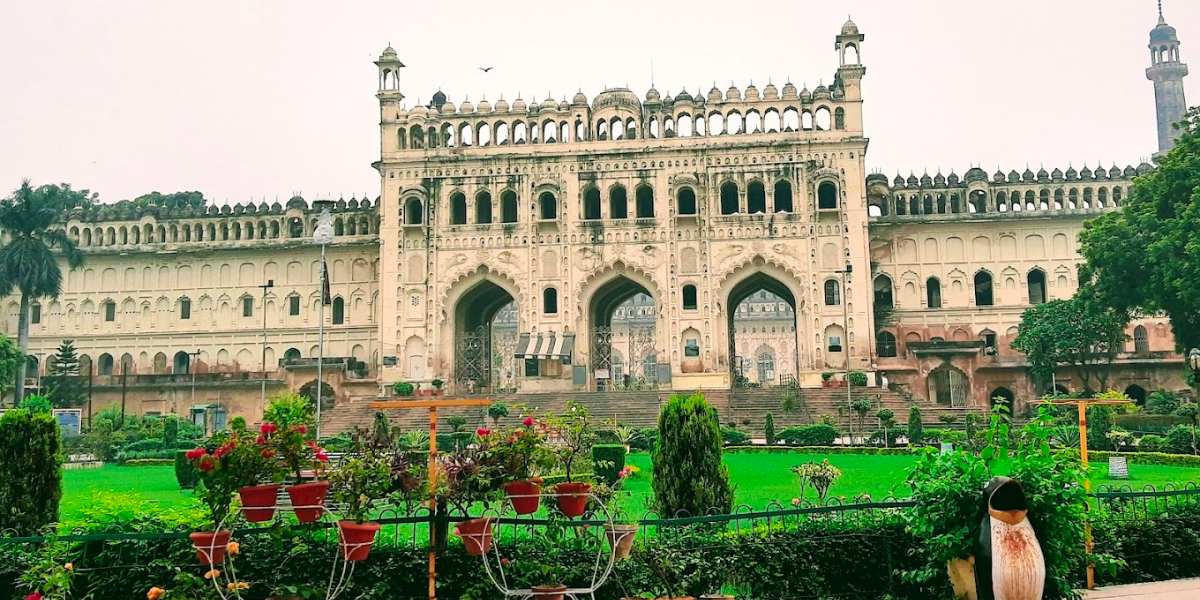
West of Hazratganj, in the old lanes of Hussainabad, the Asafi Imambara still does what Lucknow asked of it in a famine year: give people work, shade, and a hall in which to mourn. Locals call it Bara Imambara because it is the larger of the two great halls, and because so much of the city’s memory sits under that unsupported vault.
History
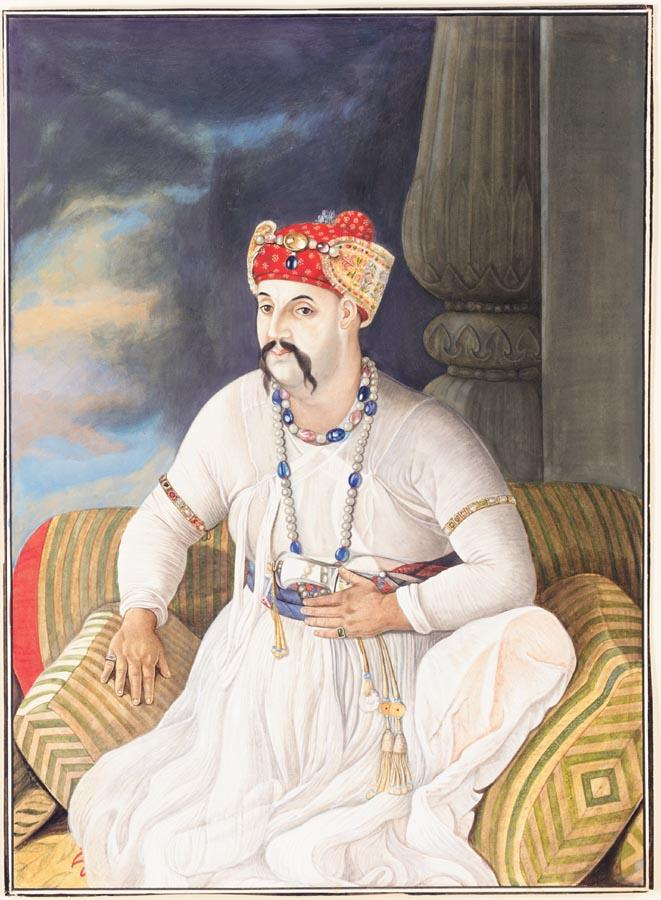
Nawab Asaf-ud-Daula ordered the complex in the mid-1780s, when Awadh was in a severe famine. The project was meant as work, not charity. Thousands of labourers raised brick and lime by day; Lucknow still tells the story that well-off families came at night to undo a little of the day’s work so wages would keep flowing. Building ran for several years and finished toward the end of that decade. The hall is also called Asafi Imambara, after the Nawab.
Source: Wikipedia
The design is credited to Kifayatullah of Delhi. Both the Nawab and the architect lie buried in the great hall. An imambara is a Shia congregation hall for azadari, the mourning of Imam Husain at Karbala. Asaf-ud-Daula built this one on a scale that still startles: a vaulted chamber about 50 metres long and more than 15 metres high, with no pillars, beams, or iron girders holding the ceiling. The roof is an interlocking brick vault. That hall is the hall. It is not the maze.
Around the vault sit eight chambers of differing heights. The space above those rooms was packed into a three-dimensional labyrinth so the mass of the building would sit evenly on marshy ground. That upper maze is the Bhulbhulaiya. Confusing the two is the most common error in old guidebooks, including earlier copy on this site. You walk the great hall first. Then you climb into the passages above it.
What to see
Enter through the Imambara’s own gateways, a pair of lofty tri-arched portals in the courtyard. The southern gate is the working entrance; the northern one was raised as a jawab, a matching face, and held a naubat khana. Neither of those gates is Rumi Darwaza. The Turkish Gate stands separately, about sixty feet high, on the road west of this complex, inspired by Istanbul’s Sublime Porte. You will pass it on the way to Chota Imambara. Do not treat it as the Imambara’s front door.
Inside, the unsupported vault is the first thing you feel. Guides like to show how a call carries from one end of the hall to the other. The Nawab’s grave is here. So is Kifayatullah’s. On the west side of the court stands the Asafi Mosque, still used for prayer, with three bulbous domes. Shoes come off at the mosque; modest dress is expected.
The Bhulbhulaiya sits above the hall, a warren of near-identical doorways and narrow turns. Estimates of the openings run into the hundreds; talk of a thousand passages is older colour, not a measured plan. A licensed guide is worth taking here. The roof terraces look west toward Rumi Darwaza and the Hussainabad Clock Tower.
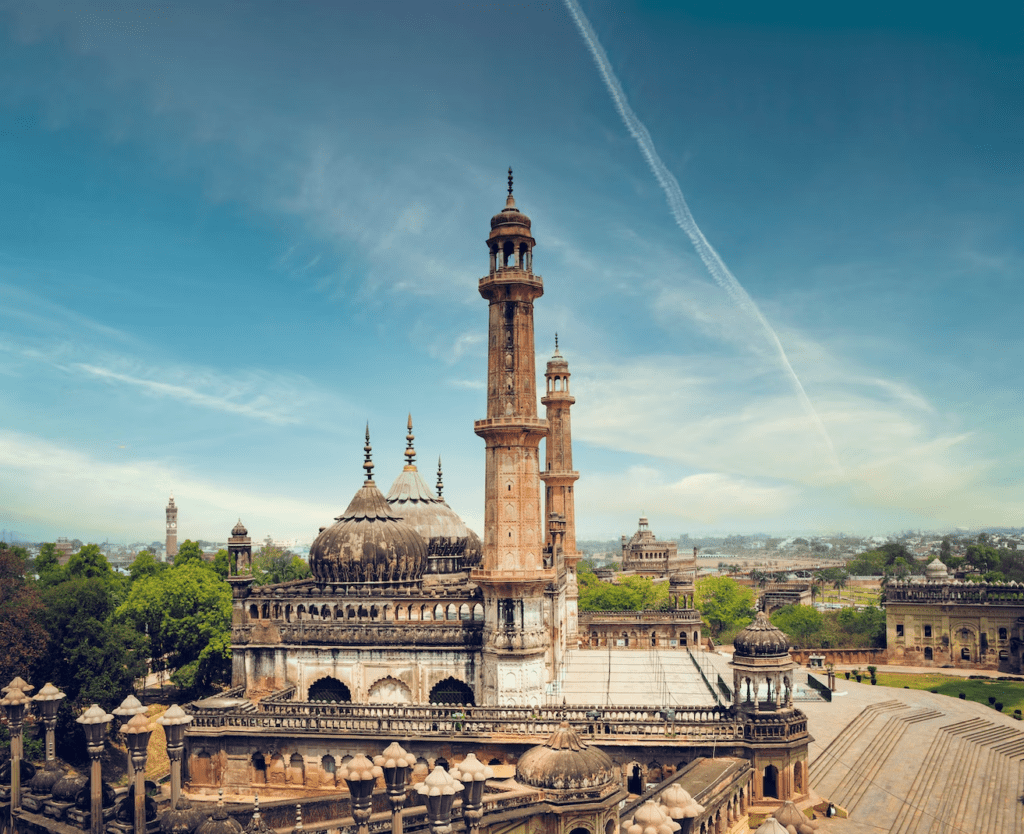
Image Source
Do not miss the Shahi Baoli, the stepwell in the complex. It supplied water during construction and later served as a cool, stepped court. The Trust also keeps small display rooms with paintings and Nawabi objects; treat labels as a starting point, not a full museum.
Visiting
The Husainabad and Allied Trust, founded in 1839 by Nawab Muhammad Ali Shah, sells day tickets for this monument along with Chota Imambara, Satkhanda, and the Picture Gallery. In August 2026 the Trust listed hours as 6 am to 6 pm, with Bara Imambara closed on Fridays from 10 am to 3 pm for prayers. A combined pass for the four sites was listed at Rs 60 for an Indian adult; Bara Imambara with the Bhulbhulaiya and baoli was listed at Rs 50 on its own. Foreign-visitor rates were listed much higher. Rates change. Buy at the counter or on the Trust portal and confirm the day’s hours at the gate.
From Charbagh, Hussainabad is a short auto ride through the old city. Lucknow Metro’s Red Line does not stop here; Hazratganj and KD Singh Babu Stadium are the usual stations, then an auto. Kaiserbagh bus stand is closer than Alambagh. Winter mornings, October to March, are the kindest for the maze and the roof. Chowk is a few minutes away for kebabs and sheermal. Hire only guides whose rates are posted at the Trust counter.
Nearby
Walk west through Rumi Darwaza to Chota Imambara, the Clock Tower, Satkhanda, and the Picture Gallery; one combined pass is meant to cover that cluster. The British Residency in Qaiserbagh is a separate ASI site and a different ticket. If you want paintings and archaeology after brick vaults, the Lucknow State Museum at Banarasi Bagh holds the city’s larger collection. More Lucknow places sit on this map if you are building a full day.
A note on etiquette
This is a living imambara, not a stage set. Muharram processions and majlis still use the hall. Speak softly in the vault, keep shoulders covered at the mosque, and do not treat the graves as a photo prop. Professional shoots need Trust permission. Friday midday is for namaz; plan around the published closure rather than arguing at the gate.
\n\n
FAQs
What is Bara Imambara and why visit?
West of Hazratganj, in the old lanes of Hussainabad, the Asafi Imambara still does what Lucknow asked of it in a famine year: give people work, shade, and a hall in which to mourn.
What can visitors do there?
Enter through the Imambara’s own gateways, a pair of lofty tri-arched portals in the courtyard.
What are the timings or entry arrangements?
The Husainabad and Allied Trust, founded in 1839 by Nawab Muhammad Ali Shah, sells day tickets for this monument along with Chota Imambara, Satkhanda, and the Picture Gallery.
How do I reach it and what should I know before going?
From Charbagh, Hussainabad is a short auto ride through the old city.
How long should I spend and what can I pair nearby?
Walk west through Rumi Darwaza to Chota Imambara, the Clock Tower, Satkhanda, and the Picture Gallery; one combined pass is meant to cover that cluster.