Stray dog menace on PGI campus exposes enforcement gaps despite Supreme Court orders
The Stray dog menace on PGI campus continues unabated, leaving patients and attendants visiting the Sanjay Gandhi Postgraduate Institute of Medical Sciences (SGPGIMS) in Lucknow to face persistent hazards. Despite repeated reports of dog bites and explicit judicial instructions, municipal authorities struggle to balance public safety with activist opposition.
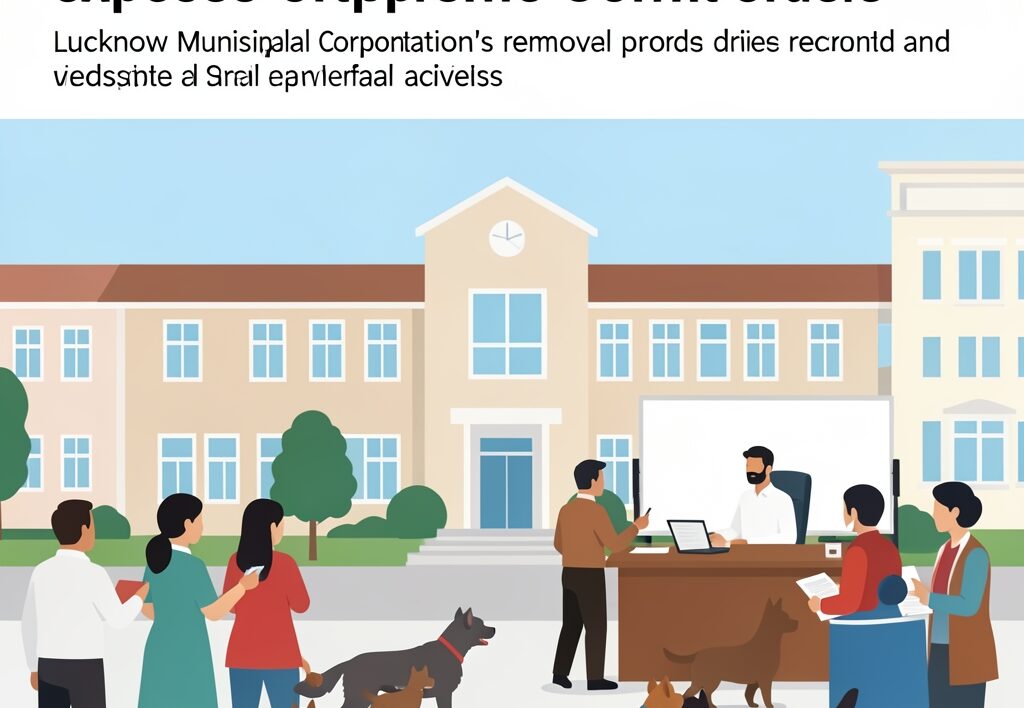
The core of the crisis lies in the friction between civic implementation and local resistance. Even though the Supreme Court issued clear directions prohibiting stray animals from entering healthcare institutions, executing these mandates on the ground remains a fragile task. When the Lucknow Municipal Corporation (LMC) recently dispatched a squad to clear the super-speciality hospital grounds, operations stalled abruptly following strong pushback from local animal lovers.
The widening gap between judicial orders and ground execution
Apex court guidelines explicitly mandate that hospitals must designate a specific nodal officer to keep their premises free of stray animals. Local civic bodies are expected to run periodic inspection and removal cycles. Yet, premier medical hubs like SGPGIMS find themselves caught in a deadlock. Hospital administrators previously formed an internal committee after receiving multiple complaints regarding animal attacks on visitors, which ultimately forced them to rely on LMC intervention.
When municipal squads attempt to clear the grounds, they face immediate roadblocks. This dynamic echoes other institutional friction points across the state, such as recurring disputes over urban pet management highlighted in viral incidents like the Ghaziabad elevator pet dog dispute viral video, which underscores how complex urban animal management has become for residents.
- SGPGIMS administration constituted an internal safety committee following multiple bite complaints.
- LMC sterilization and removal squads face direct physical opposition from community animal welfare groups.
- Supreme Court directives explicitly order hospitals to maintain strict, animal-free campus perimeters.
Balancing patient safety with animal welfare protocols
For families traveling across Uttar Pradesh to access advanced medical care at PGI, navigating aggressive packs of dogs adds an unacceptable layer of physical risk to an already stressful hospital visit. Vulnerable patients, elderly attendants, and young children walking across expansive campus blocks find themselves exposed to sudden attacks. Institutional safety must take precedence in emergency healthcare zones, yet municipal agencies often lack the legal cover or administrative backbone to override local protests without clear escalation protocols.
Similar institutional anxieties regarding safety compliance and court oversight mirror debates seen in cases like the Nishu Aazad security concerns mount as student protestor fears safety despite Supreme Court order, proving that judicial mandates alone cannot solve deep-rooted administrative bottlenecks without sustained local accountability.
Strict enforcement of hospital campus boundaries is non-negotiable for public health, but civic bodies must coordinate transparently with welfare groups to avoid violent deadlocks.
Why it matters
Healthcare facilities are sanctuary zones where patients should focus entirely on recovery, not personal defense against stray animals. When premier medical institutions fail to secure their grounds, it exposes systemic gaps in municipal enforcement across Lucknow. Resolving this issue requires transparent dialogue between the LMC, animal welfare advocates, and hospital management to ensure public safety is never compromised.
For more updates on urban governance and local developments, readers can review related legal discussions such as the Noida DM Compensation Supreme Court proceedings, examine accountability measures in the Uttar Pradesh GST Probe High Court case, or track judicial updates concerning the Atiq Ahmed son extortion case high-security appearance.