Sultanpur expressway accident: 4 killed as ambulance carrying soldier’s body crashes into truck
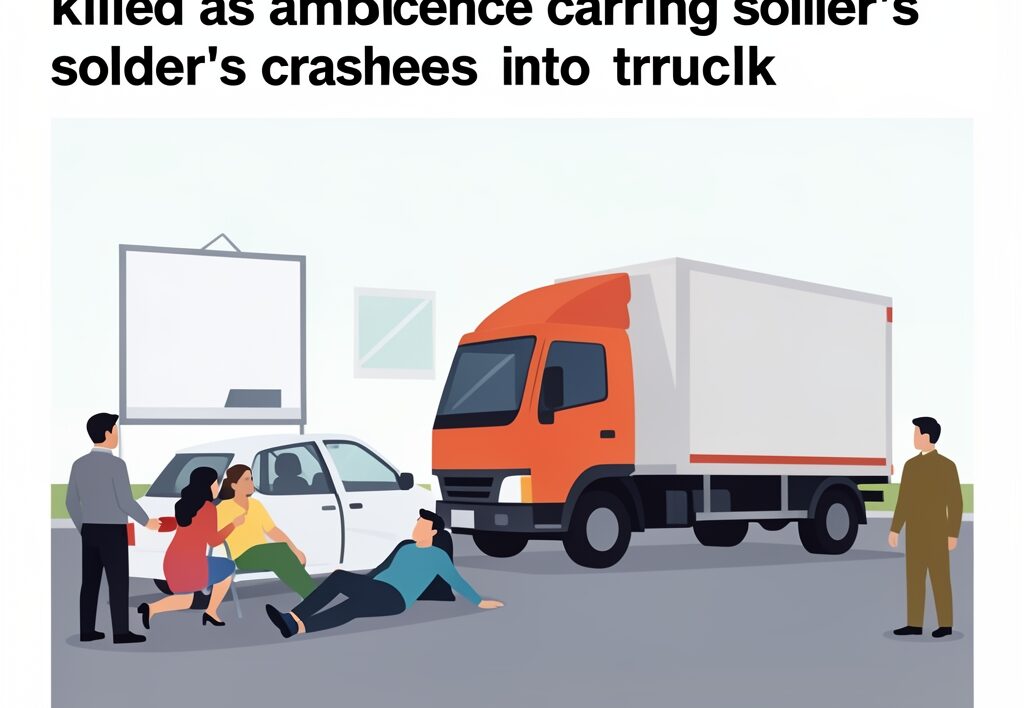
A devastating Sultanpur expressway accident on Sunday morning left four people dead after an ambulance carrying a soldier’s mortal remains rammed into a stationary truck on the Purvanchal Expressway in Uttar Pradesh. The tragedy unfolded around 8:15 a.m. near Haliyapur on the Ayodhya-Sultanpur border, compounding an already unbearable family grief as relatives escorted the body of Subedar Major Satyawan Singh from Panchkula back to his native Deoria district.
According to local police reports, the impact was severe enough to instantly claim the lives of four passengers inside the vehicle. The victims included the soldier’s son, his brother, and a relative’s son. Expressway transits across Uttar Pradesh have increasingly faced scrutiny over safety hazards involving parked or broken-down heavy commercial vehicles left unattended on high-speed corridors. Such highway dangers echo past regional incidents, much like how families track updates during state security incidents such as the Brajesh Ganjhu encounter in Varanasi by UP ATS when state law enforcement makes critical interventions.
Tragic Journey Cut Short on the Purvanchal Expressway
The ambulance was making the long journey from Panchkula to Deoria when the fatal collision occurred. High-speed corridors like the Purvanchal route are designed to cut travel times across the state, yet nighttime and early morning visibility issues frequently create blind spots for motorists. Commuters traveling from Lucknow toward eastern districts often report stationary trucks parked improperly along slow lanes, creating severe bottlenecks and collision risks.
For families traveling across UP, road safety remains an urgent discussion point. Similar transit risks have occasionally disrupted regional connectivity, prompting commuters to monitor highway updates closely, much like how travelers check Sultanpur festival special trains announced for Diwali and Chhath rush when avoiding road journeys during peak congestion periods. Meanwhile, administrative shifts such as the BJP UP headquarters relocation to Jiamau marks major upgrade show how urban infrastructure changes constantly draw public attention across the state capital.
Road Safety Challenges and Administrative Oversight
Political figures across party lines frequently comment on infrastructure developments and state governance, with regional leaders discussing future electoral strategies such as the recent statements surrounding the BJP UP Elections where Nitin Nabin predicts massive majority in 2027. Yet, everyday citizens face immediate ground realities like highway mishaps that demand rigorous policing and active patrol enforcement.
Job seekers and students monitoring administrative announcements also navigate complex state systems, comparing them with employment shifts such as the UP assistant prof recruitment opens doors for candidates with allied subjects or legal updates like the Allahabad HC screening exam ruling changes reservation rules in UP recruitment. Public safety remains a unifying civic priority that affects every tier of society, from employment exams to transit corridors.
Official Response and Financial Relief
Taking immediate cognisance of the disaster, Chief Minister Yogi Adityanath expressed profound condolences to the bereaved family. The state government announced an ex gratia of ₹2 lakh for the next of kin of each deceased victim. District officials were directed to expedite rescue operations, coordinate medical assistance for any injured survivors, and extend full logistical support to the grieving relatives.
- Victims included the son, brother, and relative’s son of late Subedar Major Satyawan Singh.
- The crash took place near Haliyapur on the Ayodhya-Sultanpur border at approximately 8:15 a.m.
- The state administration dispatched local authorities to manage relief operations and provide direct assistance to the family.
Why it matters
For residents of Lucknow and the wider UP diaspora, highway safety on major arterials directly affects daily travel and emergency transit. Expressway accidents highlight systemic gaps in highway monitoring, stray vehicle management, and enforcement against illegal parking on fast lanes. Understanding these risks pushes civic advocacy toward stricter patrols and better commuter safety measures across state infrastructure networks.
The sudden loss of four lives during a solemn journey underscores the urgent need for stricter enforcement against illegally parked heavy vehicles on high-speed expressways.