Agra river crossing crisis exposes rural infrastructure gaps across Uttar Pradesh
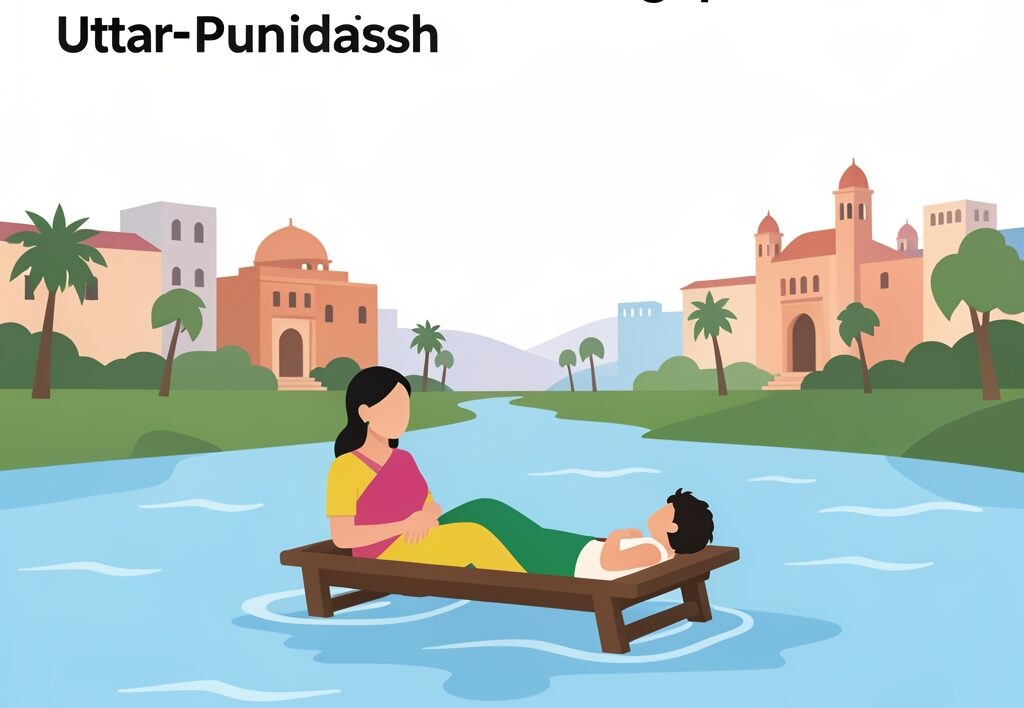
Agra river crossing realities hit home sharply this week when a viral video exposed the perilous conditions faced by rural families during the monsoon. In Sukhlal Pura village of Agra district’s Bah tehsil, a newly delivered mother and her newborn baby had to be carried across the flooded Utangan river on a makeshift float consisting of a wooden cot placed on a rubber tube. Because the area lacks proper road connectivity and a bridge, ordinary medical emergencies turn into life-threatening ordeals that demand urgent policy intervention from state authorities.
The incident occurred on Thursday after Keshwati, wife of Raggi Kumar, went into labour late Wednesday night. While an ambulance managed to reach the vicinity of Jai Singh village on the Agra-Bah road, the swollen river barrier meant that conventional transport failed to complete the journey. Local administrative officials, including Sub-divisional magistrate Vinod Kumar of Bah, acknowledged the persistent connectivity crisis. However, block-level coffers lack the funds needed to bridge the gap independently, forcing officials to forward a formal funding proposal to the state government for approval.
The Wider Toll of Infrastructure Gaps Across Uttar Pradesh
For residents watching from Lucknow and across the state diaspora, this episode cuts close to the bone. It raises difficult questions about how rural hinterlands connect to emergency services when seasonal rains swell local water bodies. While major expressways and urban transit corridors command headlines, basic last-mile connectivity in pockets of Agra and beyond remains dangerously fragile. Families facing medical crises are left to improvise with rubber tubes and rope while local leaders debate jurisdiction and budgets.
This rural isolation mirrors infrastructural stress points witnessed in other parts of the state. Monsoon-related vulnerabilities have repeatedly disrupted daily life, whether through urban waterlogging or structural failures. Much like the planning debates sparked by Noida waterlogging urban planning flaws across Uttar Pradesh, the airport flooding examined in Noida Airport waterlogging sparks fresh infrastructure debates across Uttar Pradesh, or the structural tragedies seen in Meerut roof collapse tragedy highlights urgent monsoon safety concerns across Uttar Pradesh, the Agra river crossing highlights a baseline governance challenge. Safety and administrative accountability must extend equally to remote riverbanks and expanding metropolitan hubs.
Furthermore, district incidents often reveal deeper systemic lags. For instance, administrative friction and public security breakdowns have previously surfaced in regional headlines, such as the alarming events noted in the Agra station master assault: RPF staff suspended as Parliament steps in report, or the complex criminal cover-ups explored in Delhi Murder Staged in Agra: How Family Crime and Cover-Ups Unravel Across Uttar Pradesh. When public institutions face pressure—whether protecting railway personnel or building bridges over the Chambal and Utangan river networks—rural citizens bear the brunt of administrative delays.
Civic Accountability and Political Discourse in the State
State leaders frequently clash over regional development priorities. Political speeches, such as the one analyzed in Yogi Adityanath Agra speech targets ‘Saifai syndicate’ and museum plans, often highlight historical disparities in fund distribution and regional neglect. Yet, for an ordinary family stranded on a muddy riverbank at midnight, political rhetoric offers little immediate comfort. What matters is concrete administrative delivery: all-weather roads, functioning culverts, and reliable primary health care access that does not require risking a newborn infant’s life on an inflated rubber tube.
Other routine civic disruptions across the state also compound public anxiety during peak seasons. The massive logistical shifts required during major annual events, detailed in the Kanwar Yatra Traffic Restrictions Imposed Across Uttar Pradesh as Annual Pilgrimage Begins overview, demonstrate how quickly civil administration can mobilize resources when priorities are aligned. Citizens naturally wonder why similar urgency cannot be applied to building permanent bridges in isolated ravines where women give birth without medical supervision.
Why it matters
Basic civic infrastructure is the foundation of public welfare. When basic transit depends on makeshift rafts during a health emergency, it points to a systemic lag in resource allocation. For Lucknow readers and state policymakers, incidents like this underscore the urgency of accelerating rural bridge projects before seasonal weather exacts a heavier human toll.
- Emergency medical transport is severely compromised during monsoon months in unbridged rural sectors across districts like Agra.
- Local block administration remains financially constrained, pushing accountability upward to state-level planning departments.
- Public scrutiny via viral documentation continues to drive pressure for long-delayed rural infrastructure projects.
Safe and reliable transit infrastructure remains a fundamental right for every citizen, regardless of whether they live in a major city or a remote riverside village.