
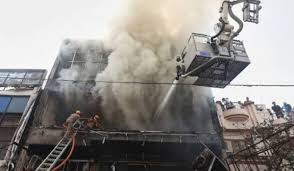
Aliganj Fire Aftermath: Why Lucknow Residential Misuse Still Threatens Safety
One month after the Aliganj fire tragedy that claimed 15 lives, the issue of Lucknow residential misuse remains a pressing concern for our city’s safety. Despite the June 22 disaster, commercial establishments are still operating out of residential buildings. This shows that the Lucknow Development Authority’s (LDA) recent crackdown has yet to solve the problem on the ground.
The tragedy in Aliganj was a wake-up call for all of us. When a massive fire breaks out in a densely populated colony, the impact on our families and neighbors is immediate and devastating. Following the incident, the LDA and the fire department launched joint inspections across various zones to find establishments breaking building and fire safety rules. However, the reality a month later suggests that the threat has not been neutralized.
The Gap Between Notices and Enforcement
According to recent reports from the Hindustan Times, the LDA has issued notices to more than 122 commercial entities. These are not just small shops; they include larger operations that change the nature of a neighborhood:
- Hotels and guest houses
- Marriage lawns
- Banquet halls
- Large-scale commercial hubs in residential lanes
The inspections revealed a pattern of negligence. Many of these buildings feature unauthorized construction that makes them structurally unsound or hard to evacuate during an emergency. Officials also found widespread misuse of residential premises for commercial activities and blatant violations of mandatory fire safety norms. While the notices have been served, the continued operation of these businesses suggests that the enforcement drive lacks the teeth needed to ensure compliance. People in Lucknow are starting to ask more questions about why these businesses aren’t being shut down.
We see this demand for accountability in other parts of our civic life, such as the Ajay Rai led protests regarding student rights. Just as the city manages large-scale security operations in nearby Varanasi, our local authorities must manage the safety of Lucknow’s residential zones with the same level of rigor.
The Hidden Dangers in Our Neighborhoods
For a resident living in a colony like Aliganj, this isn’t just a matter of zoning laws. It is a matter of daily survival. When a residential street is converted into a commercial hub, the entire neighborhood changes. Narrow lanes meant for local families become clogged with commercial traffic, making it nearly impossible for an ambulance or a fire engine to pass through quickly during a crisis.
Beyond the traffic, there is a massive technical risk. Residential electrical grids are often not designed to handle the heavy loads required by hotels or banquet halls. When businesses plug in industrial-sized air conditioners and heavy kitchen equipment, the risk of a short circuit increases significantly. This is exactly how many fires start. This need for systemic reform mirrors calls for education system reform and even the organized management seen in the Ayodhya Ram Temple committee news. For residents, staying updated on these civic changes is as vital as tracking RBI currency updates.
The persistence of these businesses shows that a notice from the LDA is often treated as a mere formality rather than a command to shut down. Without actual closures and strict penalties, the cycle of unauthorized construction and misuse will continue, leaving the city vulnerable to another disaster. As reported by the Hindustan Times, the gaps in enforcement are glaring.
Why it matters: For Lucknow residents, this issue is about the fundamental right to a safe living environment. When commercial interests override residential safety, the entire community pays the price through increased fire risks, traffic congestion, and weakened infrastructure.
Key Takeaway: Issuing notices is only the first step; without strict enforcement and the actual closure of illegal units, the risk of another tragedy remains high.
Sources: Hindustan Times