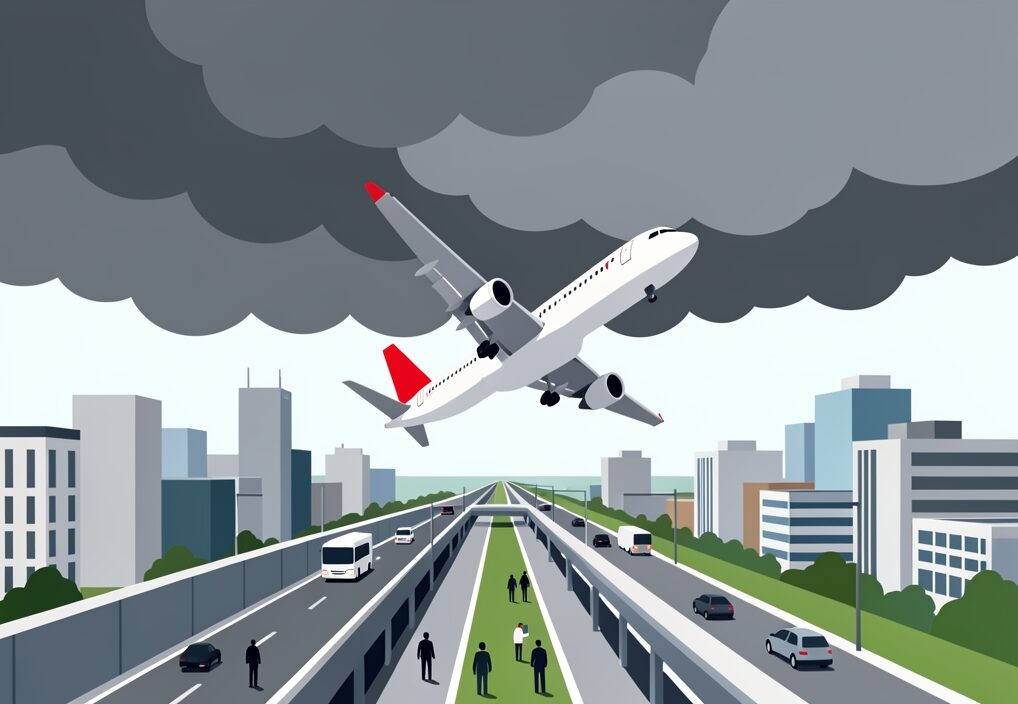
Delhi Flight Diversions Disrupt Travel for Uttar Pradesh Flyers Amid Severe Weather
Delhi flight diversions caused widespread chaos on Thursday afternoon as sudden, heavy downpours swept across the national capital, forcing aviation authorities to scramble. For travelers originating from Uttar Pradesh or connecting through Delhi’s Indira Gandhi International Airport, the afternoon storm brought immediate delays and sudden route changes. The India Meteorological Department issued a strict red alert for moderate showers, thunderstorms, lightning, and gusty winds, transforming regular flight schedules into a logistical puzzle that left hundreds of passengers waiting in terminals across the country.
According to aviation officials, at least five flights failed to land at their scheduled destination during the peak of the storm. These included three Air India services, one Air India Express flight, and a dedicated cargo freighter. Instead of touching down in central Delhi, four aircraft found themselves redirected to Jaipur International Airport. Meanwhile, another crucial flight successfully utilized expanding aviation infrastructure closer to home, touching down at the newly emerging Noida International Airport, proving the value of regional alternatives when core metropolitan hubs face sudden weather lockouts.
How Sudden Weather Shocks Ripple Across Uttar Pradesh
For residents of Lucknow, Kanpur, and the broader UP diaspora who frequently fly through Delhi for international connections, family functions, or urgent business meetings, weather disruptions in the capital always trigger an immediate cascading effect. When flights from major hubs like Bengaluru, Bhopal, and Ahmedabad are pushed off course, the delay echoes through subsequent schedules for hours. Passengers often find themselves stranded without luggage or scrambling for alternative transit options, such as high-speed trains or highway cabs to complete their journeys back home.
The situation highlights how regional transit is deeply interconnected across North India. Travelers frequently combine air transit with ground infrastructure, keeping a close eye on developments like the Barapullah Phase III Opening or checking updates regarding Delhi Protest Train Cancellations when weather or civil disruptions hit the capital region simultaneously. Furthermore, commuters traveling for exhibitions or official tasks often monitor local transport solutions, such as Electric Buses in Greater Noida Prepare to Move UPITS Visitors This Week, to navigate the National Capital Region smoothly when flights fail.
Infrastructure Readiness and Alternative Landing Hubs
Thursday’s diversions also put a sharp spotlight on the shifting geography of North Indian aviation and ground logistics. The successful diversion of a major commercial flight to Noida’s facility underscores its growing capacity to absorb overflow traffic from the increasingly congested skies of central Delhi. As commercial aviation expands across our state, projects tied to the region—including executive movements managed during events like CM Yogi Adityanath Women PAC Batallions Announced at Greater Noida Event or administrative accountability cases like the Noida DM Compensation: Supreme Court Reserves Order on Personal Salary Recovery—showcase a state administration increasingly equipped to handle massive logistical shifts and rapid urbanization.
- Three Air India flights coming from Ahmedabad, Bhopal, and Bengaluru were diverted mid-air.
- One Air India Express flight originating from Bhubaneswar was redirected to alternative runways.
- A heavy cargo freighter from Macau joined the diverted aircraft heading toward regional landing alternatives.
Key Takeaway: Severe weather in Delhi directly impacts UP’s travel ecosystem, making real-time flight tracking and flexible itineraries essential for anyone crossing state lines for work or family obligations.
Why It Matters
When capital airspace locks down, the emotional and financial toll is felt instantly in Lucknow, Varanasi, and Gorakhpur. Business executives, students heading abroad, and families visiting relatives rely heavily on seamless transfers through Delhi’s aviation network. Understanding these recurring weather vulnerabilities helps local travelers plan buffer days, select alternative routes, and stay updated on changing aviation advisories before heading to the airport. For further context on regional weather extremities that disrupt daily life, many locals still remember when Lucknow Weather Drops to 12-Year Low in September, proving that unpredictable skies are becoming the new normal across Uttar Pradesh and requiring all of us to stay prepared for sudden climatic shifts.