
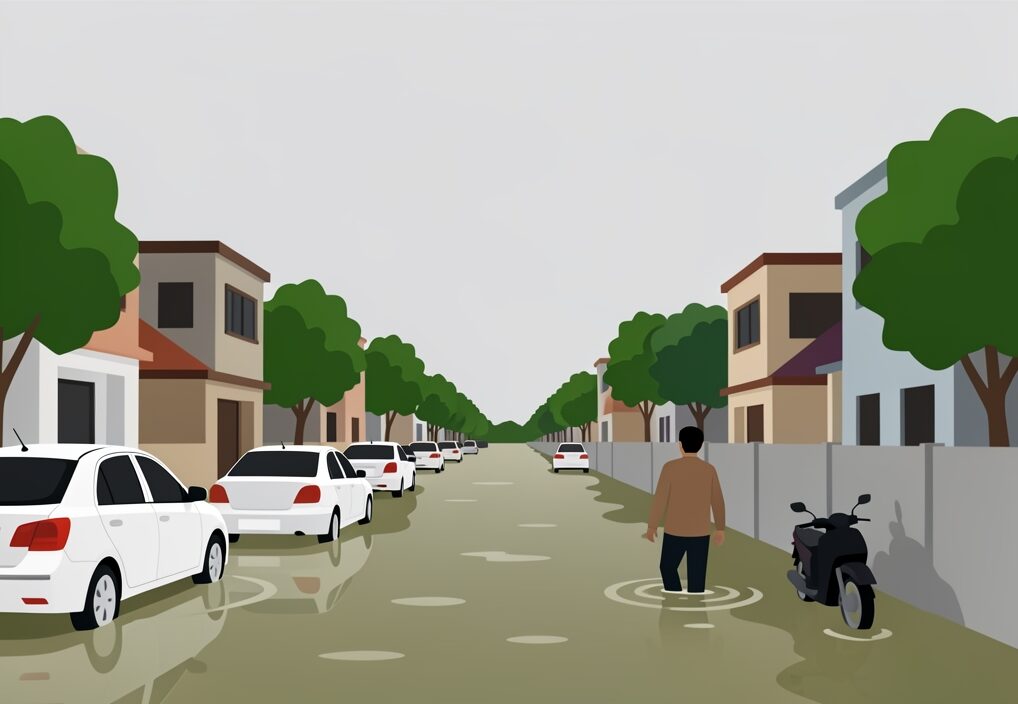
Gomti Water Level Drops Upstream, But Lucknow Waterlogging Persists in Low-Lying Neighborhoods
Even as the gomti water level begins a steady retreat upstream, floodwaters continue to trap residents in several low-lying neighborhoods across Lucknow. According to the irrigation department, while gauges at points like Neemsar and Bhatpurva show welcome drops after peaking, downstream stretches inside the state capital are reacting slowly. Local officials stated on Saturday that it may take another full week for the water to drain completely from affected localities, leaving families marooned in waterlogged lanes.
The sluggish exit of water highlights a familiar civic bottleneck for the city. When heavy downpours swell the river, low-lying residential zones bear the brunt as backflows choke local stormwater drains. For a closer look at how the river’s initial surge engulfed local landmarks, read our report on how the Gomti River Swells Eight Feet Above Normal, Swallowing Lucknow’s Riverfront. The current conditions also echo historical monsoon challenges detailed in our archives on Lucknow Weather Drops to 12-Year Low in September and seasonal shifts tracked in Lucknow Weather: Daylong Rain as Monsoon Begins Retreat.
Upstream Recession vs. Downstream Realities
Data shared by executive engineer Mukesh Kumar Vaish of the irrigation department paints a picture of contrasting dynamics. At Neemsar, the river’s level fell by 87 cm from its peak of 122.02 metres down to 121.15 metres. Similarly, at Bhatpurva, the level dropped by 38 cm from a peak of 113.16 metres down to 112.78 metres. These upstream drops offer genuine hope of relief, provided no fresh spells of heavy rainfall disrupt the basin.
However, that relief has been slow to travel downstream. While Gaughat held relatively steady, monitoring points like Hanuman Setu and the Gomti barrage recorded marginal rises. This variance explains why neighborhoods near the riverbanks remain inundated. For families navigating these flooded thoroughfares, the daily commute requires detours and patience, echoing the challenges highlighted when monitoring the Gomti Water Level in Lucknow: Upstream Recession Brings Hope After Flooding.
Civic Impact on Daily Life
For residents living close to the active flood zones, life remains disrupted. Stagnant water brings immediate concerns regarding public health, mosquito breeding, and mobility. Local administrations are coordinating relief efforts, while law enforcement and civic bodies monitor vulnerable embankments. Residents seeking safe alternative indoor activities during these damp conditions often consult guides like Rainy Day Lucknow: Indoors That Actually Work. Meanwhile, emergency responses from municipal departments remain active, drawing parallels to how authorities manage urban disruptions, much like the coordination seen during incidents covered in Lucknow Police Response Steps Up Amid Rising Gomti Waters and Flooded Service Lanes.
- Neemsar water level fell by 87 cm from its recent peak.
- Bhatpurva recorded a drop of 38 cm over the past week.
- Hanuman Setu and Gomti barrage continue to show stubborn readings.
Key Takeaway: While receding upstream waters mark the beginning of the end for Lucknow’s flood crisis, slow drainage means waterlogged neighborhoods must brace for several more days of disruption before normalcy returns.
Why It Matters
Urban flooding in Lucknow is no longer just an environmental footnote; it is a critical test of municipal drainage infrastructure. When the Gomti swells, the pressure it places on stormwater networks affects thousands of residents, commuters, and local businesses. Understanding these river dynamics helps communities prepare better for extreme weather events driven by shifting climate patterns across Uttar Pradesh.