
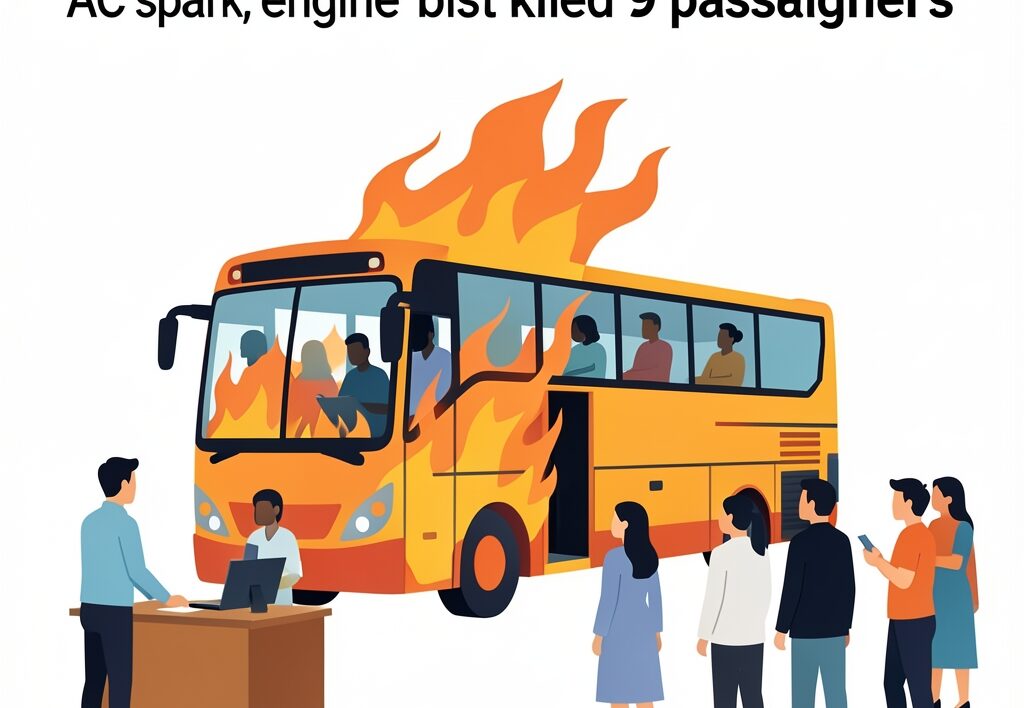
Greater Noida bus fire tragedy: AC spark, engine oil blast killed 9 passengers
Greater Noida bus fire triggers urgent transit safety questions across Uttar Pradesh
A Greater Noida bus fire tragically turned a routine night journey into absolute horror when a sleeper bus caught fire near Dayanatpur village on the Yamuna Expressway, killing nine passengers through severe burns and suffocation. The vehicle, bearing a Bihar registration number, was carrying 35 passengers from Noida toward Mahoba when the disaster struck around 11 PM on Wednesday.
For families across Uttar Pradesh watching transit safety reports, this incident hits painfully close to home. Long-distance road travel remains a lifeline for students, working professionals, and families commuting between state hubs. Yet, recurring mechanical failures on highways continue to place ordinary passengers at extreme risk. When tragic accidents happen within the state, they force a hard look at vehicle maintenance standards and regulatory enforcement on interstate highways.
Commuters rely heavily on reliable roadways every single day. Whether traveling for employment or returning to native towns for festivals, people trust that transport operators follow strict safety rules. Unfortunately, enforcement lapses often leave passengers vulnerable to sudden mechanical failures that turn deadly in minutes.
How an AC spark and engine oil turned a sleeper bus into an inferno
According to investigations by local police authorities, the disaster began with a mechanical malfunction inside the vehicle’s climate control system. A sudden spark or blast in the bus’s air-conditioning unit ignited the engine’s lubricating oil. Because of the highly flammable nature of engine oil, the flames spread rapidly through the passenger cabin before many could escape.
Transport safety experts note that sleeper buses often lack adequate emergency egress points or swift fire suppression systems. When electrical shorts trigger fuel or oil fires in enclosed compartments, passengers have mere seconds to react. While regional authorities work hard to upgrade transit networks—such as deploying electric buses in Greater Noida and integrating modern transit solutions—private long-distance carriers require stringent oversight to prevent preventable mechanical catastrophes.
- Thirty-five passengers were onboard the Mahoba-bound sleeper bus when the fire broke out near Jewar.
- Nine individuals lost their lives due to burns and smoke suffocation.
- Prime Minister Narendra Modi expressed deep grief and announced financial assistance from the Prime Minister’s National Relief Fund.
In response to the tragedy, central leadership condoled the loss of lives and announced an ex gratia amount of ₹2 lakh for the families of each deceased individual. An additional amount of ₹50,000 has been allocated for those injured in the blaze. While financial relief offers immediate support, commuters and resident welfare groups across the state demand stricter fitness clearances for buses operating late-night intercity routes.
Strict safety compliance and mandatory thermal audits for long-distance commercial carriers are non-negotiable prerequisites to protect everyday commuters on Uttar Pradesh highways.
Why it matters for everyday commuters in Uttar Pradesh
For residents, students, and local families keeping track of regional developments, highway safety directly impacts everyday life. Whether commuting for education, business, or family visits, passengers rely heavily on state roadways. This accident highlights persistent gaps in vehicle maintenance protocols that affect transit security across districts, echoing broader conversations around urban transit security risks and rash driving near Greater Noida colleges. Addressing these vulnerabilities requires rigorous enforcement rather than reactive measures, ensuring that journeys across the state do not end in tragedy.
As state agencies investigate the exact sequence of mechanical failures, commuters hope this serves as a wake-up call for transport operators. Public advocacy groups continue to push for transparent safety audits, mirroring discussions seen during major events like the UP International Trade Show 2026 where state infrastructure and safety standards take center stage. For more updates on regional transit and civic affairs, readers can also review infrastructural updates such as the Barapullah Phase III opening.
Local communities expect transport departments to conduct random checks on interstate buses, verifying fire extinguishers, emergency hammers, and electrical wiring before vehicles receive permits for long hauls.
Sources
- https://www.hindustantimes.com/india-news/blast-in-ac-set-engine-oil-ablaze-what-caused-greater-noida-bus-fire-that-killed-9-101790222860049.html
- https://www.hindustantimes.com/india-news/pm-modi-condoles-greater-noida-bus-fire-announces-2-lakh-ex-gratia-for-families-of-deceased-101790225199929.html