
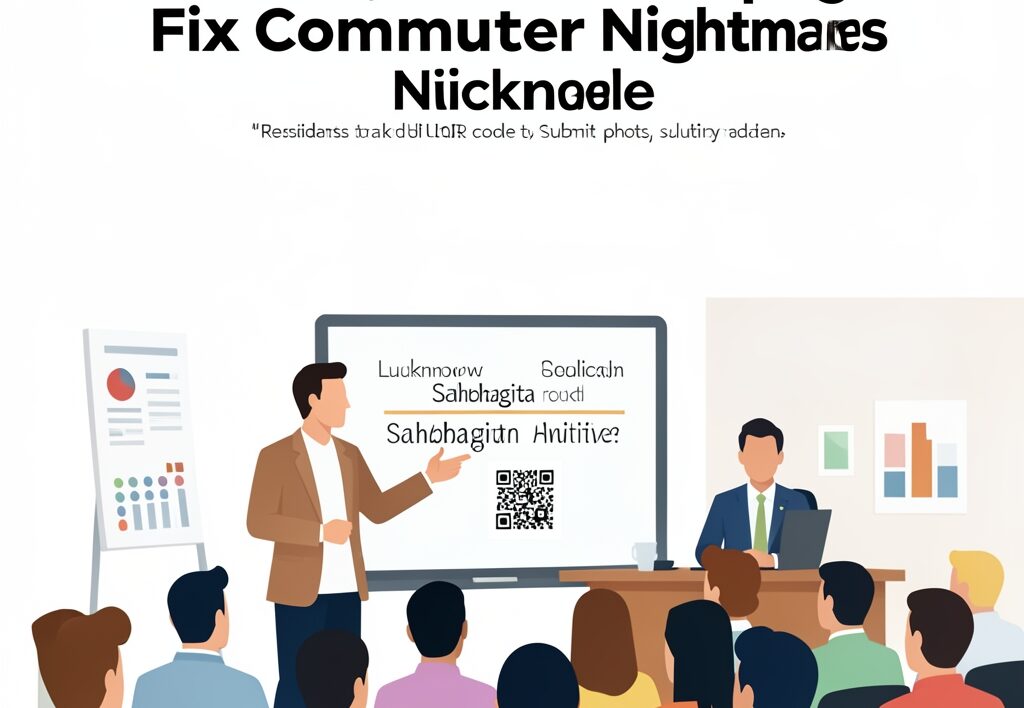
Lucknow Traffic Police Launch QR Code Campaign to Fix Commuter Nightmares
Lucknow traffic police rolled out a new public outreach push on September 14, 2026, inviting daily commuters to take matters into their own hands by reporting bottlenecks and proposing fixes. If you have ever cursed a congested intersection and wondered why municipal planners missed the obvious flaw, the Lucknow traffic police initiative gives you a direct line to the department. The Sahbhagita campaign invites residents across the city to flag recurring commuter hazards by submitting photos, precise locations, and concrete solution ideas through a bilingual Google Form.
For years, residents have relied on informal complaints or social media rants to highlight bad urban planning. This digital portal changes the dynamic by creating a structured intake channel for civic feedback. Drivers navigating crowded corridors can now document specific pain points rather than simply enduring daily gridlock. Local administration often struggles with resource allocation, but crowd-sourced inputs can help target trouble spots much faster than internal surveys alone.
How the Sahbhagita Initiative Works
The core mechanic relies on crowdsourced reporting aimed at practical urban interventions. Instead of generic grievances, the police department wants actionable data from people who actually use the roads daily. Commuters can pinpoint several specific urban trouble spots:
- Problematic and poorly timed traffic junctions
- Unsafe U-turns that invite sudden collisions
- Hazardous pedestrian crossings lacking signals
- Severe school-zone congestion during morning and afternoon peaks
- Unregulated parking bottlenecks choking narrow commercial lanes
Traffic authorities will assess these public submissions for engineering feasibility and road-safety impact. Once screened, viable proposals will move to relevant municipal and civil departments for potential implementation. This framework attempts to bridge the gap between commuter frustration and bureaucratic action. When citizens see real changes resulting from their submissions, trust in local governance grows stronger.
Civic Impact and Broader Context
This initiative arrives alongside other recent enforcement drives across the city, such as crackdowns on loud bike silencers and the deployment of upgraded racer mobiles converted into marshals to tackle sudden blockages. Unlike punitive measures, however, this campaign leans heavily on participatory governance. It recognizes that police patrols alone cannot redesign broken infrastructure without local intelligence from everyday road users.
Mobility challenges intersect with many other municipal responsibilities. For instance, just as monsoon waterlogging paralyzes key stretches, poor road engineering worsens every downpour. Citizens also notice wider administrative shifts, ranging from police reviews of pending cases to large-scale infrastructure plans like Lucknow Cantt development projects. Ensuring that daily transit keeps pace with these broader developments requires constant dialogue between residents and officials.
At the same time, authorities must balance community feedback with legal and administrative boundaries, keeping in mind rulings such as Allahabad HC cautions on police juvenile arrests and protocols seen during prisoner transfers on Sultanpur Road during heavy rain. Civic order involves multiple moving parts, and smooth traffic flow is foundational to city life.
Why it matters
Commuter safety directly affects productivity, stress levels, and economic activity across the capital. When residents actively participate in municipal planning, accountability shifts from isolated agency silos to a shared community responsibility. If traffic planners genuinely act on high-impact public submissions, this QR code project could transform how local administration tackles persistent urban bottlenecks.
Sources
Sources
- https://www.hindustantimes.com/cities/lucknow-news/lucknow-traffic-police-launch-qr-code-campaign-to-fix-traffic-calls-on-suggest-fix-101789363402213.html
- https://www.hindustantimes.com/cities/lucknow-news/lucknow-traffic-police-launch-qr-code-campaign-to-fix-traffic-calls-on-citizens-to-suggest-fix-101789363402213.html