Noida vehicle fire: Moving WagonR cab incident sparks safety concerns across Uttar Pradesh
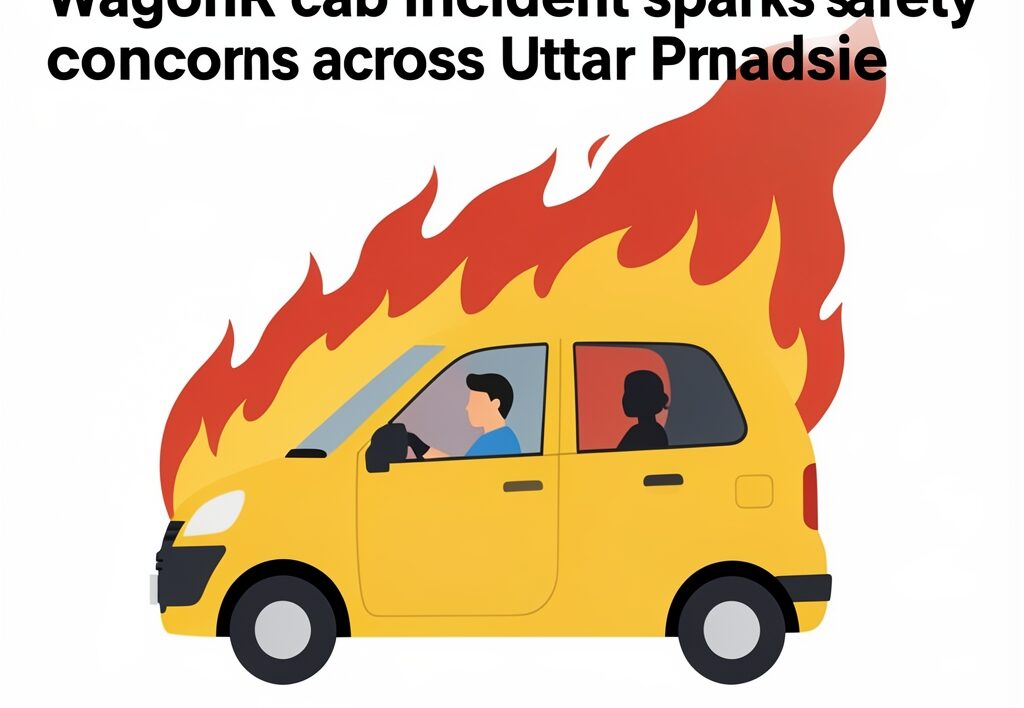
Commuters across Uttar Pradesh woke up to alarming visuals on Monday as a moving Noida vehicle fire consumed a standard taxicab in broad daylight. The incident, which unfolded in front of the Sector-100 villas near Sector 99, left a WagonR completely gutted and its number plate reduced to twisted metal. While frantic smartphone videos captured the vehicle turning into a massive fireball on a busy thoroughfare, local authorities confirmed a fortunate outcome: the driver escaped the cabin moments before total devastation occurred, avoiding any loss of life.
For residents navigating traffic from Lucknow to Noida, sudden vehicle combustion is a terrifying nightmare that turns routine commutes into hazards. Similar transit risks often dominate local conversations, paralleling concerns seen when Noida Airport waterlogging sparks fresh infrastructure debates across Uttar Pradesh. When everyday transport links fail due to mechanical neglect, substandard aftermarket fittings, or extreme seasonal heat, ordinary citizens bear the brunt of administrative blind spots.
Broader transit networks face continuous stress as commercial fleets log thousands of kilometers without adequate checks. Urban planners and local families frequently discuss whether regulatory bodies track these vulnerabilities with enough urgency. Similar regulatory gaps appear in other sectors, such as the trends highlighted when Uttar Pradesh Government Shifts GBC-5 Focus to Bundelkhand Amid Greater Noida Crowding, showing how officials continually recalibrate infrastructure and safety priorities across the state.
The Anatomy of a Highway Hazard
Transport department analysts note that spontaneous fires in commercial compact cars usually stem from unmonitored electrical modifications, poorly installed CNG kits, or neglected engine cooling systems. Monday’s episode in Noida underscores the fragile margin of safety on urban expressways. A car moving at speed transforms into a chimney within seconds once fuel lines rupture or short circuits ignite synthetic dashboard materials. Footage from the scene showed onlookers filming from a distance as thick, toxic smoke blanketed the roadway, leaving the chassis completely charred.
These sudden road emergencies echo other urban safety crises that test emergency response frameworks statewide. Much like the systemic risks uncovered after residential incidents such as the Aliganj Fire Aftermath: Why Lucknow Residential Misuse Still Threatens Safety, proactive enforcement remains reactive rather than preventive. Vehicle fitness certificates are routinely bypassed or obtained through informal channels, leaving thousands of commercial cabs operating with compromised wiring harnesses.
Furthermore, vulnerable victims of fire accidents often face grueling medical recoveries, a reality brought home by local reporting on the Aliganj Fire Survivor Discharged From KGMU After Month-Long Battle. When safety lapses lead to disasters, the physical and emotional toll extends far beyond the initial burst of flames, affecting entire households across the region.
What This Means for Lucknow and UP Commuters
Lucknowites and the wider UP diaspora tracking urban mobility trends must look past the viral shock value of the Noida video. Public transport reliability depends directly on rigorous fitness checks at regional transport offices. If commercial operators bypass standard maintenance protocols, urban arteries across Lucknow, Kanpur, and Noida remain ticking time bombs.
- Ensure routine checks of car wiring, fuel lines, and aftermarket accessory installations.
- Demand stricter compliance and transparent vehicle fitness audits from regional transport authorities.
- Equip personal and commercial vehicles with accessible, certified fire extinguishers.
State authorities have previously pushed for modernized fleet upgrades, including measures highlighted when the UP fire fleet upgrade: State sanctions ₹25.79 cr for new tenders. Yet, ground-level vehicle inspection protocols require much tighter implementation to catch failing engines before they erupt on public roads. Enhanced policing and technical checks can curb these disasters, protecting both drivers and pedestrians.
Drivers must prioritize regular mechanical servicing, while transport authorities need to crack down on unauthorized vehicle modifications to prevent future tragedies on our highways.
Why it matters
Urban transit safety directly impacts every family stepping out onto Uttar Pradesh roads. When moving vehicles become sudden fire traps, public trust in municipal infrastructure and regulatory oversight erodes. Addressing these mechanical hazards requires coordinated vigilance between vehicle owners, commercial fleet operators, and state transport inspectors.
For further regional crime and security updates, readers can examine how law enforcement handles organized threats, such as the incidents detailed in the Greater Noida Police Encounter: Two Injured After Abduction and Extortion Bid. Additionally, state supply chains and transit corridors face scrutiny from other angles, evidenced by cases like the Gurugram MDMA Arrest: Pilot Caught with Contraband Linked to Noida. Meanwhile, public welfare discussions must continue to pressure policymakers into tightening safety standards across all transit corridors.