
Kukrail Picnic Spot
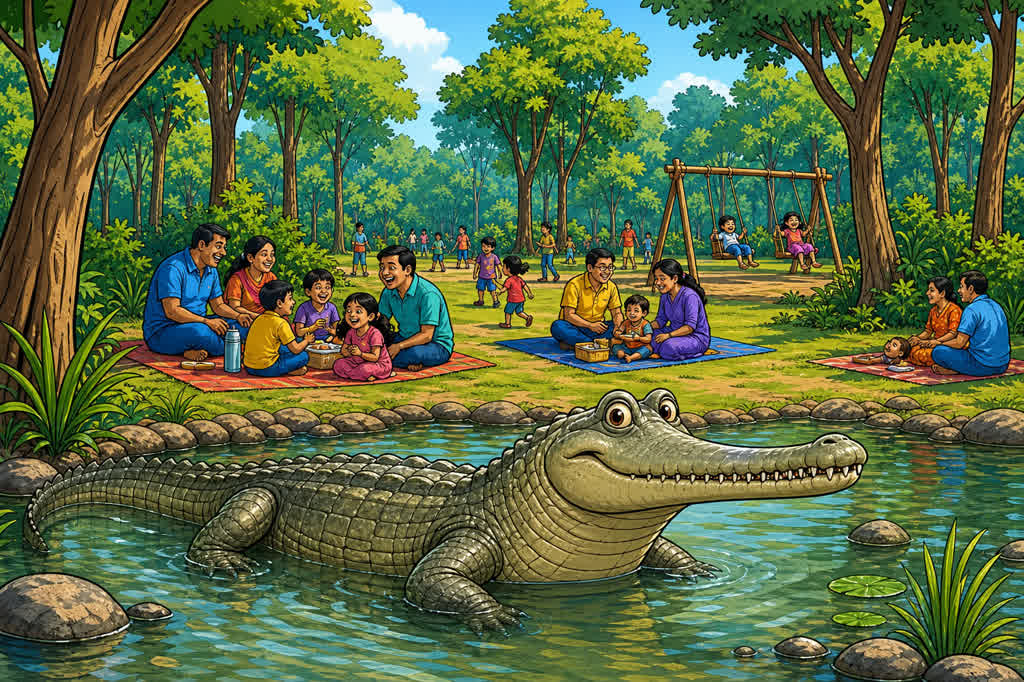
East of the city, past Indira Nagar and the Kukrail Pul, the road slips into plantation forest and a picnic ground Lucknow has used for decades. People say Kukrail. It is a UP Forest Department reserve and a gharial breeding centre, not a zoo. You come for trees, a stream, a children’s play corner, and, if the keepers are showing them, the long-snouted gharials that this centre has been raising since 1978. Do not expect the labelled enclosures of Lucknow Zoo.
History
The plantation went in during the 1950s, on a large tract often cited at about 5,000 acres, as urban forest for a growing capital. The name follows the Kukrail nala and the old pul. In 1978 the Uttar Pradesh Forest Department, with the Union environment ministry, set up a gharial rehabilitation centre here. Freshwater gharial numbers in the state’s rivers had fallen badly. Eggs were collected from banks of the Chambal, Girwa, Suheli, Ramganga and other rivers, hatched and reared, then released. Forest and conservation notes have long counted Kukrail among a handful of such centres in India. By 2016, published tallies spoke of thousands of juveniles released over the life of the programme, including a few hundred into the Ganga. Those figures are programme records, not a promise of what you will see in a pond on Saturday.
A small deer enclosure, rose beds in season, forest nurseries, and a children’s park grew around the picnic habit. Plans for a leopard rescue centre and a night safari have been discussed in city reporting for years. As of this writing they are projects, not a second zoo you can buy a night ticket for. If a safari is running the day you visit, the Forest board will say so. If it is not, you still have the trees.
What to do
Walk the plantation roads. Listen for birds; winter is the better season, with residents and migrants both on the Kukrail. Look at the gharial ponds from the paths and platforms the department provides. Do not cross railings. Do not tap glass. Children use the play area; families spread dhurries in the designated picnic pockets. Nurseries sometimes sell saplings at forest rates. A cafeteria or tea stall is a local habit, not a restaurant reservation. Carry water. Carry your plastic back out. This is forest land, even when it feels like a park.
It is not Janeshwar Mishra’s lawns and it is not Lohia Park’s jogging tracks. Those are LDA. This is Forest. The animals you see are there because of a breeding programme and a small enclosure, not because someone designed a safari circuit for Instagram. If you want a proper zoo, that is Banarasi Bagh, across town. If you came only for a large city lawn, turn toward Gomti Nagar instead of waiting for a night safari that may not exist yet.
Visiting
We did not find a 2026 Forest Department tariff PDF that we could treat as official. Travel pages for years have printed 9 am to 5 pm, often with free entry and a parking charge, sometimes with a small boating fee. A few listings invent other clocks and gate rates. None of those should win an argument at the barrier. Confirm hours, any entry or parking fee, and whether the gharial section is open, at the Forest gate. Closed days, if any, are a board fact. Do not pay a private “guide” for a forest you can walk yourself.
Kukrail sits in east Lucknow, toward Khurram Nagar / Indira Nagar extension, a drive from Gomti Nagar or from the Ganj. Autos and app cabs know the picnic spot. There is no Metro station at the gate. Winter and the monsoon edge are kinder than May. Weekends fill with city families; a weekday morning is quieter for birds. Janeshwar Mishra Park is the large LDA alternative if you wanted lawns rather than plantation.
Nearby
Gomti Nagar’s parks are the other east-side outing: Lohia Park in Vipin Khand, Ambedkar Memorial Park, and Janeshwar Mishra Park further out. Hazratganj is the city centre you left. The zoo remains the place for a ticketed animal collection. More Lucknow ground is listed under places.
Come for shade and the gharials if they are on view. Leave the forest as a forest. Kukrail was planted so the city could breathe, not so it could become another mall with peacocks.
\n\n
FAQs
What is Kukrail Picnic Spot and why visit?
East of the city, past Indira Nagar and the Kukrail Pul, the road slips into plantation forest and a picnic ground Lucknow has used for decades.
What can visitors do there?
Walk the plantation roads. Listen for birds; winter is the better season, with residents and migrants both on the Kukrail.
What are the timings or entry arrangements?
We did not find a 2026 Forest Department tariff PDF that we could treat as official.
How do I reach it and what should I know before going?
Kukrail sits in east Lucknow, toward Khurram Nagar / Indira Nagar extension, a drive from Gomti Nagar or from the Ganj.
How long should I spend and what can I pair nearby?
Gomti Nagar’s parks are the other east-side outing: Lohia Park in Vipin Khand, Ambedkar Memorial Park , and Janeshwar Mishra Park further out.