
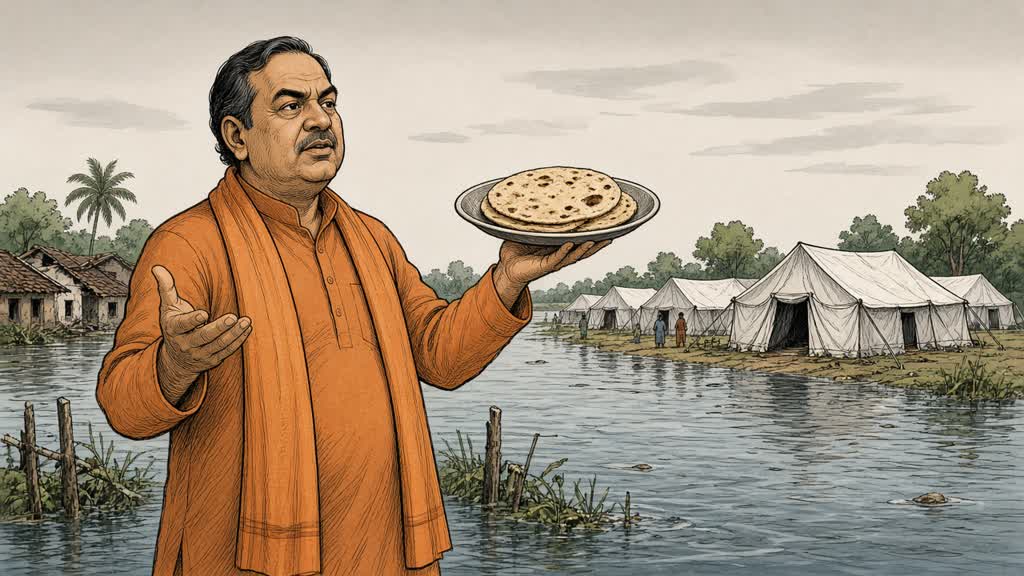
Yogi Adityanath Flood Relief: Past Regimes Only Offered Dry Bread, Claims CM in Chitrakoot
Chief minister Yogi Adityanath flood relief efforts took center stage on Sunday when he conducted a low-level aerial survey of flood-affected regions in Chitrakoot. Interacting directly with local residents, the chief minister distributed vital relief kits to 800 families who suffered severe losses from the overflowing Mandakini River. While assessing the ground situation firsthand, Adityanath launched a sharp political attack on previous state administrations, reshaping the narrative around disaster response across Uttar Pradesh.
Addressing a public gathering in the flood-ravaged district, the chief minister recalled how past governments handled natural disasters before 2017. He alleged that previous leaders ignored crisis situations entirely, leaving ordinary citizens to fend for themselves without administrative support or timely evacuation help.
Shifting Standards in Disaster Management
The contrast between past apathy and current administrative action forms the core of the state’s ongoing political messaging regarding disaster response. According to Adityanath, historical relief distribution under older regimes was plagued by systemic embezzlement and indifference. Disaster victims routinely received nothing more than dry bread, he claimed, while public funds meant for rehabilitation disappeared into bureaucratic black holes.
For residents across Uttar Pradesh, shifting political expectations around disaster relief shape how communities prepare for monsoon crises. Tracking administrative readiness remains vital, especially as various districts monitor rising river levels and seasonal challenges. Readers can review broader regional trends through updates on Uttar Pradesh Flood Alert Sounds Across State As Major Rivers Cross Danger Mark and official assessments detailed in Flood Control Uttar Pradesh: Yogi Adityanath Reports Sharp Drop in Affected Districts.
Effective disaster management requires continuous oversight rather than delayed intervention. Recent administrative measures reflect a push toward direct benefit transfers and accountable distribution systems. Observers following state policies often compare current ground responses with historical vulnerabilities highlighted during seasonal emergencies, such as those discussed in UP Flood Alert Issued After Nepal Flash Floods Threaten Basins.
Ground Realities and Accountability
When natural disasters strike, the speed of government machinery dictates community survival. Chitrakoot residents experienced this shift as officials arrived with packages containing rations, clean water, and medical supplies. Local administrative machinery has been directed to stay on high alert, ensuring that no pocket remains isolated as water levels fluctuate.
- Aerial inspections allow state leadership to spot isolated pockets quickly.
- Direct distribution aims to bypass bureaucratic hurdles and local corruption.
- Expanded aid packages look beyond basic rations to support family rehabilitation.
As governance debates continue to evolve across the state, political figures frequently leverage past governance failures to validate current structural reforms. Whether evaluating infrastructure projects near the capital—such as those covered in Lucknow Cantt Development Projects Launch by Rajnath Singh and Yogi Adityanath—or analyzing wider policy rollouts like Yogi Adityanath Launches UP Startup Mission Portal and Startup Policy 2026 in Lucknow, public scrutiny remains high. Additional context regarding political discourse in the capital is available through reports on SP leaders political trust questioned by Yogi Adityanath at Lucknow memorial event and debates surrounding Yogi Adityanath Slams Rahul Gandhi Over Manusmriti Remarks in UP Politics.
The administration’s ability to transition from symbolic relief to sustained rehabilitation will ultimately define public trust during recurring monsoon emergencies.
Why it matters
For residents, urban diaspora, and local observers in Lucknow, state-level disaster management sets a direct precedent for civic accountability. When top leadership highlights historical governance failures during active rescue operations, it signals a deliberate effort to tie administrative competence directly to electoral performance. Understanding these shifts helps citizens evaluate ongoing public works, civic readiness, and the true cost of disaster relief implementation across UP.
Further details regarding the Chitrakoot survey can be found in the primary report by Hindustan Times.
Sources
- Hindustan Times: Before 2017, dry bread was given to flood victims: Yogi