Gorakhpur flood situation turns grim as Saryu and Rapti swell across eastern Uttar Pradesh
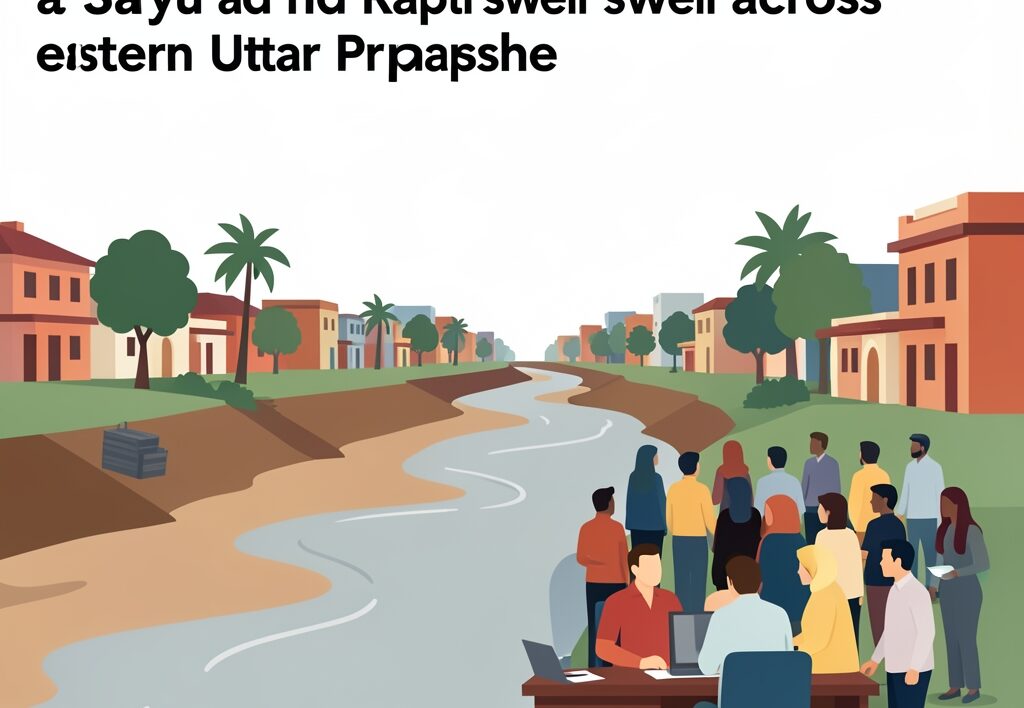
The Gorakhpur flood situation worsened dramatically on Thursday morning as relentless rising waters from the Saryu, Rapti, Gorra, and Rohin rivers breached danger marks across eastern Uttar Pradesh. Heavy downpours and swollen catchment basins have inundated dozens of residential settlements, swallowed vast tracts of standing crops, and severed critical road links across the Gorakhpur and Basti divisions, leaving communities scrambling for safety while local administrations race against time to prevent further loss.
According to updates from the Central Water Commission (CWC), river surges are intensifying pressure on vulnerable rural infrastructure. The Saryu river measured at approximately 107 metres at Elgin Bridge—nearly a metre above the warning threshold—while holding steady near 92.7 metres at Ayodhya, just past the danger mark. Additional surges are being tracked downstream at Barhaj in Deoria, Turtipar in Ballia, and Chandrdeep Ghat in Gonda. These rising currents send immediate ripples of anxiety through local families who remember past inundations, mirroring concerns seen when heavy rains trigger regional disruptions such as NR Station Charbagh train disruptions and diversions across major transit corridors.
Embankment Breaches and Rescue Operations
The human toll is mounting quickly across the countryside. Approximately 35 villages in Gorakhpur alone face severe inundation, with muddy currents spilling directly into village courtyards and forcing families onto rooftops. Fresh structural concerns emerged in Kushinagar, where new embankment breaches allowed torrents to sweep unchecked across agricultural lands, while heavy seepage threatened fragile flood defenses in Deoria. Similar municipal vulnerabilities often spark broader safety debates across the state, such as those discussed during Kanpur crime and business homicide safety fears, highlighting how civil security intersects with local infrastructure.
Local administrations have scrambled emergency personnel to the worst-hit zones. Teams from the National Disaster Response Force (NDRF) and the State Disaster Response Fund (SDRF) are operating around the clock. Because rising waters have completely cut off several hamlets, flat-bottomed boats have become the primary mode of transport for families seeking dry ground or basic supplies. Meanwhile, urban centers are grappling with their own weather-induced strains, much like the disruptions reported during Lucknow power crisis rain shatters grid infrastructure and Ghaziabad restaurant hygiene standards spark intense food safety debate, pointing to a widespread seasonal challenge for Uttar Pradesh administration.
- Saryu river crosses warning and danger thresholds at key observation points including Elgin Bridge and Ayodhya.
- Fresh breaches in Kushinagar and structural seepage in Deoria escalate rural vulnerabilities.
- NDRF and SDRF deploy rescue boats as dozens of villages lose all road connectivity.
Why it matters
For residents across Lucknow and the wider UP diaspora, these seasonal deluges highlight the persistent fragility of regional flood management infrastructure. While urban centers battle localized issues like Lucknow rain waterlogging and Lucknow thunderstorm waterlogging and power cuts, eastern districts face catastrophic displacement. Economic linkages between rural agricultural hubs and city markets snap when transport corridors flood, affecting supply chains and grain prices across the state.
State planners have continually reviewed regional safety blueprints, such as recent administrative assessments seen in Gorakhpur infrastructure projects reviewed by CM Yogi Adityanath with advocate support. Yet, the sheer velocity of monsoon runoffs continues to test the limits of civil engineering. As climate patterns shift unpredictably, municipal bodies from Lucknow to Gorakhpur must accelerate long-term drainage overhauls to prevent recurring humanitarian alerts. At the same time, isolated incidents in public institutions—such as the recent checks highlighted in Gorakhpur girls hostel warden booked after hidden phone camera discovery—show that administrative oversight remains stretched across multiple fronts.
The immediate priority remains swift evacuation and medical aid delivery for stranded families before further upstream discharges reach downstream barrages.
Sources
This report is based on live updates and data published by Hindustan Times, incorporating official observations from the Central Water Commission.