Yamuna Expressway Bus Fire Prompts Supreme Court Demand for UP Government Affidavit on Safety Compliance
Yamuna Expressway Bus Fire Prompts Supreme Court Demand for UP Government Affidavit on Safety Compliance
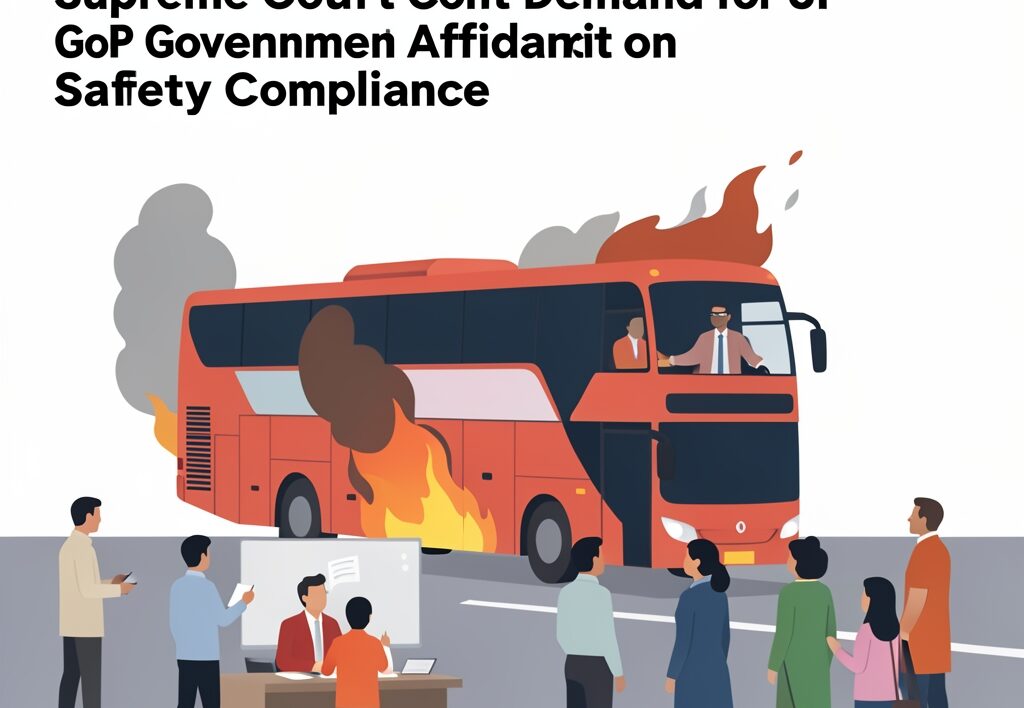
The Yamuna Expressway bus fire inquiry intensified on Wednesday as the Supreme Court directed the Uttar Pradesh government to submit a detailed affidavit regarding accountability and regulatory enforcement. Following a devastating late-night blaze on September 23 that claimed nine lives near Greater Noida, the apex court bench comprising justices JB Pardiwala and KV Viswanathan demanded absolute clarity on the arrests of the driver and registered owner. For residents across Lucknow and commuters who frequently travel across state highways, this judicial intervention shines a sharp light on long-standing vulnerabilities in public transport and highway safety governance across Uttar Pradesh.
The incident unfolded around 11:30 PM near the 33-kilometer point of the Yamuna Expressway. A sleeper bus transformed into a death trap, charring nine passengers to death inside the vehicle. Investigations into the Greater Noida bus fire tragedy have previously pointed toward mechanical hazards like AC sparks and engine oil blasts. Now, the highest court of the land wants to know whether the vehicle met mandatory regulatory requirements before hitting public asphalt. The bench explicitly questioned whether law enforcement has apprehended those directly responsible and if the registered owner adhered to every statutory protocol.
Accountability and Regulatory Lapses
The court’s directive goes beyond immediate punitive measures. Justices Pardiwala and Viswanathan expanded the scope of inquiry by directing responses from the UP chief secretary, the Centre, and the secretary of the Ministry of Road Transport and Highways. Authorities must now lay bare the documentation surrounding the ill-fated double-decker carrier:
- Comprehensive details on the bus permit and commercial licensing validity.
- Verification of vehicle fitness certificates issued prior to the trip.
- Status of third-party and commercial insurance coverage.
- Compliance records concerning mandatory onboard safety installations.
Public transport safety routinely sparks anxiety among urban commuters and families traveling out of Lucknow. While administrative machinery often promises strict enforcement after catastrophes occur, structural oversight on long-distance private operators remains patchy. Local travellers often find themselves weighing convenience against safety when booking sleeper buses connecting state hubs to the national capital region. Incidents like this echo broader anxieties about urban safety, reminiscent of discussions following the Lucknow Morning Brief: National Headlines and Urban Safety or structural disputes closer to home such as the Wazirganj building safety dispute.
Furthermore, residents keeping a close tab on daily civic conditions often connect highway disasters to the wider state infrastructure. From unpredictable weather patterns affecting road travel, noted during periods when the UP monsoon withdrawal delayed record rainfall, to local policing controversies such as the recent Lucknow Police Sub-Inspector slap Ganesh Chaturthi Aliganj incident, civic accountability remains a central topic of discussion in local tea stalls and residential welfare meetings.
What This Means for Lucknow Commuters
For citizens living in Lucknow and the wider UP diaspora keeping a close eye on home state affairs, accountability cannot stop at issuing show-cause notices. The demand for an affidavit forces executive machinery to answer tough questions in public view. When commercial vehicles operate with impunity, flouting fitness and fire-safety norms, passengers pay with their lives. Ensuring strict action against negligent owners sets a necessary legal precedent. Similar vigilance is vital across all administrative tiers, whether monitoring highway transport or urban residential zones like those discussed in recent Ghaziabad armed robbery reports or local civic friction.
Legal experts note that Supreme Court interventions of this nature often trigger wide-ranging bureaucratic overhauls across regional transport offices. Transport operators who previously bypassed fitness checks through systemic loopholes are now facing intense scrutiny. For families who rely on private bus networks to reach weddings, festivals, or business meetings in Delhi-NCR, these legal developments offer a glimmer of hope that passenger safety will finally supersede commercial greed.
The Supreme Court’s insistence on tracking down vehicle owners and verifying statutory compliance signals a zero-tolerance approach toward lethal negligence on high-speed corridors.
Why it matters
Highway safety directly impacts millions of residents traveling across Uttar Pradesh for work, education, and family visits. When judicial pressure forces systemic reviews of vehicle fitness and regulatory enforcement, it pushes transport departments to clean up corrupt licensing practices. For everyday travelers, this means safer journeys and stronger legal protections against rogue operators who prioritize profit over human life.
Detailed reporting of this judicial development can be read via Hindustan Times.