
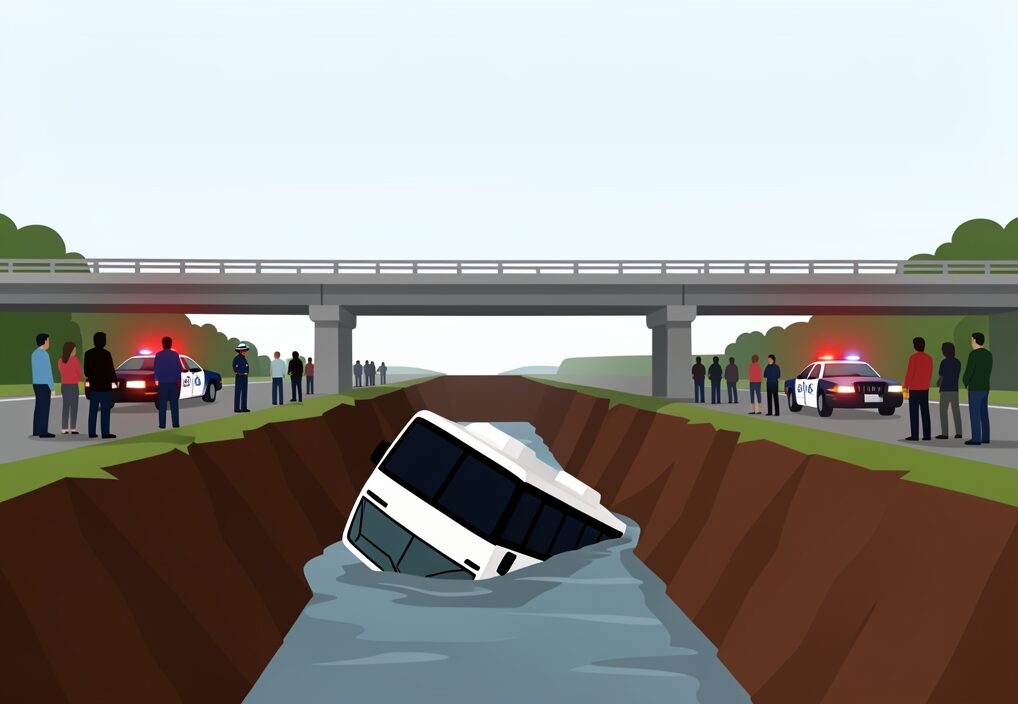
Lucknow-Agra Expressway accident: Three killed, 45 injured as long-distance bus plunges into ditch near Para
Tragedy strikes at the expressway zero point
The devastating Lucknow-Agra Expressway accident unfolded early Monday morning when a long-distance passenger bus veered out of control and plunged into a roadside ditch. Three people died and approximately 45 others suffered injuries in the crash, which took place right at the zero point within Lucknow’s Para police station jurisdiction around 7 am. The vehicle, bearing registration number BR-28P-4332, was ferrying 50 to 55 passengers on a grueling cross-country journey from Beawar in Rajasthan all the way to Chhapra in Bihar.
Local authorities and emergency responders scrambled to the scene after receiving alerts at approximately 7:15 am. Police personnel, backed by swift local intervention, pulled trapped passengers from the mangled wreckage of the overturned bus. Deputy Chief Minister Brajesh Pathak visited the surviving victims at the hospital, while district officials coordinated emergency medical care for the injured. Families anxiously following updates recall similar commuter hardships detailed in past reports like Lucknow Road Accidents Claim Three Lives in Alambagh and BKT.
The hidden risks of long-distance transit corridors
High-speed arterial corridors designed to shrink travel times across Uttar Pradesh often harbor severe safety hazards during dawn hours. While preliminary assessments suggest the driver may have dozed off behind the wheel or suffered a sudden tyre blowout, transport safety advocates point to persistent structural fatigue among long-route drivers. When massive commercial vehicles traverse multiple state boundaries without mandated crew rotations, fatigue-induced lapses become catastrophic.
This incident compounds ongoing anxieties surrounding commuter safety on major regional routes. Civic commentators frequently highlight how vital infrastructure projects lack adequate wayside amenities, rest stops, and active speed-monitoring mechanisms to prevent drivers from falling asleep on high-speed stretches. Commuters traveling through these corridors often worry about environmental stress and pollution, similar to concerns raised when Lucknow air quality plunges into poor category ahead of Diwali celebrations.
Systemic safety challenges and emergency preparedness
Managing mass transit risks requires robust institutional frameworks and proactive oversight. The aftermath of such expressway crashes puts immense pressure on local civic infrastructure, echoing the emergency readiness seen when Government hospitals in Lucknow brace for firecracker emergencies. Furthermore, monitoring public safety involves addressing security vulnerabilities in public spaces, a challenge reflected in measures such as Lucknow Festive Security: Undercover Cops Deployed in Markets.
Interstate travel safety also intersects with legal accountability and judicial action across Uttar Pradesh districts. Swift justice in major criminal and accidental negligence cases remains a priority for district administration, comparable to outcomes seen under initiatives like Mission Shakti Lucknow Zone Courts Hand Down Three Life Terms. Meanwhile, public spaces and transit hubs must be monitored against rising criminality, from street-level disputes to regional heists and tragic domestic altercations such as the one documented in Lucknow parking dispute turns fatal as ex-merchant navy officer guns down three family members in Saadatganj.
Cultural reflections and civic resilience
Beyond immediate enforcement, public safety debates often influence local arts, cultural expression, and community resilience in the capital city. Creative directors and filmmakers frequently draw inspiration from local realities and civic friction, much like the creative energy behind works noted in Mark Bennington Short Film Born From Lucknow Festival Inspiration. At the same time, daily municipal maintenance—ranging from sanitation management to tackling public grievances highlighted in Lucknow garbage crisis persists despite civic crackdowns and punitive action—shapes overall urban well-being.
- Bus route: Beawar (Rajasthan) to Chhapra (Bihar)
- Time of crash: Approximately 7:00 am on Monday
- Location: Zero point, Para area, Lucknow-Agra Expressway
For families tracking loved ones across state lines, early morning news alerts bring immediate dread. The Hindustan Times report on the Lucknow-Agra Expressway accident underscores the sheer vulnerability of passengers relying on commercial interstate transit networks.
Why it matters
The staggering toll on the Lucknow-Agra Expressway zero point highlights systemic gaps in interstate transport oversight and driver fatigue management. For residents, frequent visitors, and the broader UP diaspora, expressway safety remains a pressing public concern that demands stricter enforcement of driving hours, mandatory vehicle fitness checks, and immediate medical response infrastructure along high-speed transit corridors.
Sources
Primary reporting and casualty figures are sourced from the Hindustan Times ground coverage.