Mayawati Ballot Papers Demand in Lucknow Revives Old Debate Over EVMs
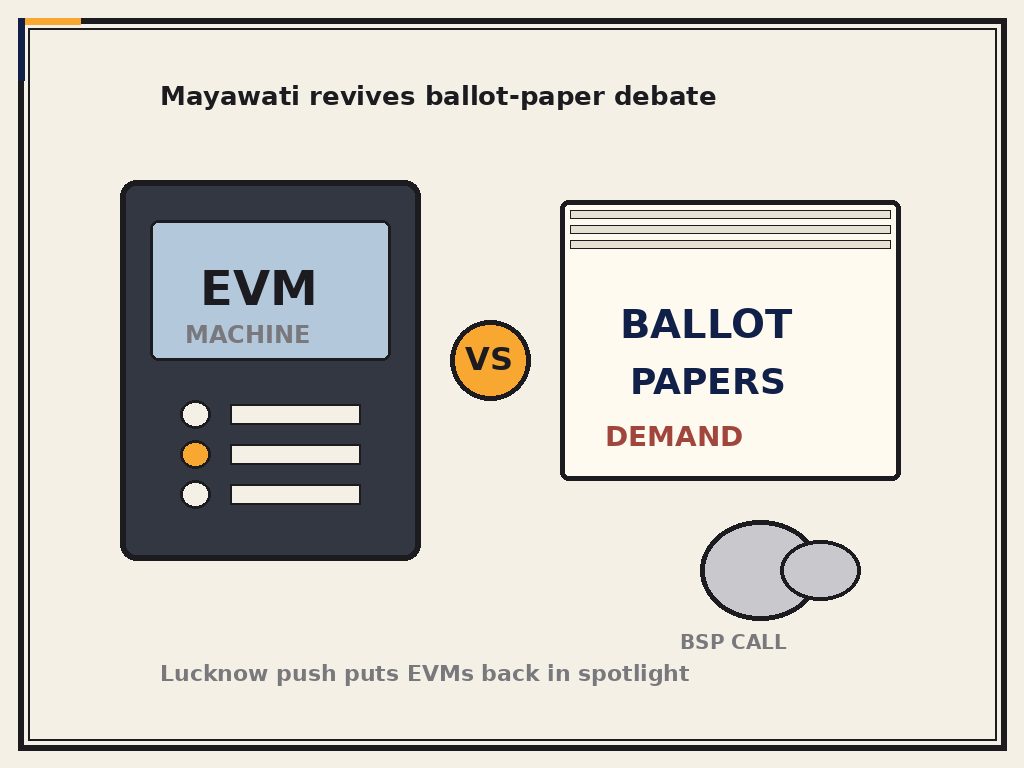
Bahujan Samaj Party chief Mayawati ballot papers demand took center stage on Monday as she urged election authorities to scrap electronic voting machines and restore the traditional voting system. Addressing a packed press conference in Lucknow on September 28, the former Uttar Pradesh chief minister argued that persistent skepticism regarding EVM manipulation is actively eroding public trust in democratic institutions. For residents across Lucknow and the wider UP diaspora tracking state political shifts, her remarks reopen a fierce debate that has long simmered in Indian electoral politics.
The veteran leader emphasized that voters must possess absolute confidence that their ballots register correctly without diversion. According to Mayawati, when citizens harbor deep doubts about whether their votes go to their intended choice, the very foundation of representative governance cracks. This messaging comes on the heels of other intense political friction points in the state capital, reminiscent of recent controversies over electoral rolls and opposition allegations regarding vote theft.
Targeting the Nagina Outcome and Shifting Alliances
Beyond her structural critique of polling technology, Mayawati trained her sights on regional rivals. She specifically targeted Azad Samaj Party president and Nagina MP Chandrashekhar Azad. The BSP chief claimed that despite lacking a substantial grassroots support base in Nagina, Azad secured victory in the 2024 Lok Sabha elections through what she characterized as EVM rigging. Such direct accusations highlight the intense local competition for Dalit and marginalized votes across Uttar Pradesh as parties prepare for upcoming electoral battles.
Observers in Lucknow note that the party has been undergoing internal realignment to recapture its foundational base. These strategic recalibrations follow organizational tweaks and debates over leadership structures, including discussions surrounding party reorganisation and internal conditions for cadre mobilization. Whether addressing capitalist profiteering, watching statewide campaigns by figures like Asaduddin Owaisi, or questioning voting machinery, the party leadership is clearly attempting to reassert its role as a primary voice for social justice in Uttar Pradesh.
Why It Matters for Lucknow and UP Politics
- Electoral Integrity: Demands to return to paper ballots force a broader conversation about transparency and voter confidence.
- Shifting Dynamics: Direct attacks on emerging political competitors signal a fierce scramble for marginalized voter loyalty in western and central UP.
- Grassroots Mobilization: High-profile press conferences in Lucknow keep pressure on administrative bodies and energize party cadres ahead of local polls.
The ultimate impact of Mayawati’s renewed push against EVMs depends on whether opposition parties can forge a unified narrative ahead of future legislative battles, keeping institutional accountability at the forefront of public discourse.
As political maneuvering intensifies across the state, voters in Lucknow will be watching closely to see how the Election Commission and rival factions respond to these persistent challenges against automated voting technology. Similar debates over institutional transparency mirror other civic grievances in the city, such as recent infrastructure strain from road cave-ins and the ongoing struggle to stabilize power network grids after heavy seasonal downpours. Meanwhile, citizens navigating urban investments are also keeping an eye on administrative updates from bodies like the Lucknow Development Authority regarding schemes such as Varun Vihar Yojna, showing how civic administration and political news constantly intertwine in daily life here.